Chronicle Editor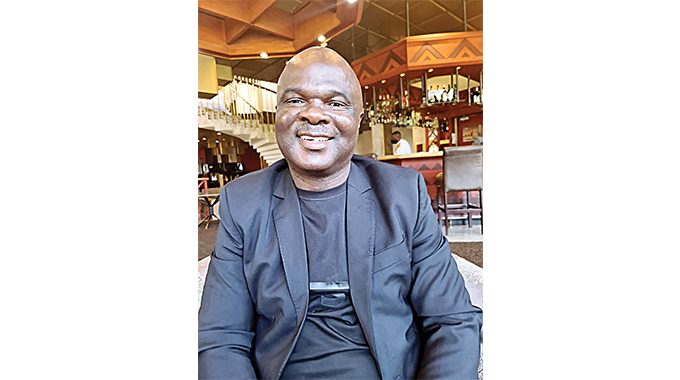
Judith Phiri, Business Reporter
THE Business Economic Empowerment Forum (BEEF) will be partnering the Government to develop strategies that will empower and capacitate locals so that they can manage, own or expand local enterprises in line with the country’s revised indigenisation and empowerment policy.
The organisation said the strategies would particularly focus on policy formulation and financial capacitation of local enterprises, especially small, medium and micro enterprises (SMMEs).
BEEF is an organisation that was created by Zimbabwean business people, for Zimbabwean people in the new dispensation to take businesses to a higher level while assisting in resolving challenges that businesses come across.
The forum’s president, Dr Solomon Matsa said they were going to work with the Government to develop strategies that would empower and capacitate Zimbabweans.
“The organisation will achieve its objectives through policy formulation and reforms, financial initiatives and capacitation of local enterprises, especially SMMEs.
“It will also advocate where necessary for business policies which will benefit local owned enterprises including calling on Government to focus more on policies that support indigenisation,” said Dr Matsa.
He said they would continue advocating for private sector investment initiatives that benefit and empower local enterprises and push for foreign investors to adhere to the country’s laws and participation in community initiatives and social responsibility programmes.
Dr Matsa said as an organisation they were going to prioritise commitments and efforts to promote and advocate for marginalised groups, primarily women, youth and people with disabilities.
He said those groups continue to require great assistance in the areas of access to capital, land, resources, training and mechanisation.
Dr Matsa added: “As an organisation we will assist to empower rural and local communities by facilitating and assisting with access to land, infrastructure, ownership, skills training, health facilities and any other basic life needs they might require.”
He said throughout their interactions with the private sector, foreign and local businesses they sought to effectively communicate and interpret the Indigenisation and Empowerment Act, while seeking recourse where lines cross between investor, community, businesses and the Government.
Dr Matsa said they anticipate that the opportunities for development provide a strong -basis to work with relevant Government departments towards the realisation of President Mnangagwa’s Vision 2030 of creating an upper middle-income economy.
Among other key achievements, Dr Matsa said: “It gives me great pride as the BEEF president to have launched the revised Indigenisation and Economic Empowerment Policy with the Government in two provinces.
We commend Government on this great step towards developing policies which promote economic growth and formalisation within the indigenous private business sector.”
He said these were exciting times for business in Zimbabwe as the indigenous business people welcomed the relaunch that was in tandem with the ongoing implementation of the devolution and decentralisation of Government structures.
“In addition, development, democracy, as well as the imperative issue of sustaining national unity and peace will be achieved.
We are indeed on the road to a more prosperous Zimbabwe as this will surely impact business positively across our nation,” said Dr Matsa.
He said as an organisation they were positioned to play a critical role in all provinces for the creation and transfer of wealth from a private sector perspective through proper business practices.
Dr Matsa said as a growth vehicle, they will serve to help facilitate Government’s economic empowerment strategy to realise the country’s full economic potential.
“As BEEF we play an active role in lobbying private sector business people to work in harmony with Government to obtain solutions for the achievement, full participation and inclusion of local Zimbabwean enterprises, particularly in policy formulation, formalisation, procurement, licensing and concessions, public-private partnerships, employment equity and community trusts,” he said.
Dr Matsa said their current structures allow for proper engagement and fostering of frontline relationships with the business community at local, provincial, national and international levels.



 Online Reporter