

 Online Reporter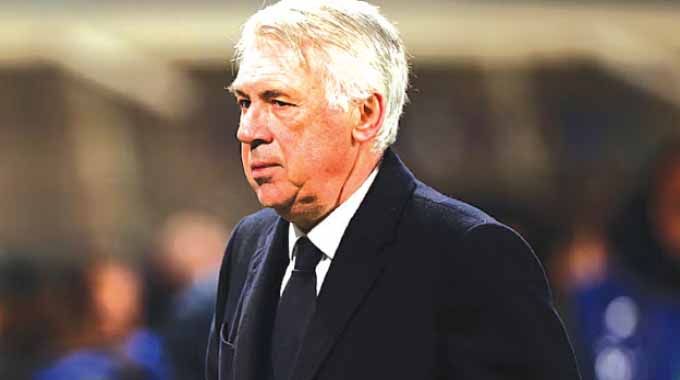
CARLO Ancelotti has agreed to take over as head coach of the Brazil national football team — one of the most eye-catching appointments in the history of international football.
For a team so deeply tied to the nation’s identity as the home of the “beautiful game,” the decision to appoint a foreign coach — one of Europe’s elite — signals both a desperate desire to win and a bold ambition for the struggling Seleção to change course.
“Ancelotti was the main choice because he has an unrivalled tradition of success, winning in five countries,” said South American football expert Tim Vickery.
So, with the 2026 World Cup on the horizon, can Ancelotti fix Brazil?
Brazil’s footballing dominance has diminished over the past two decades.
Despite lifting two Copa América titles — in 2007 and 2019 — their World Cup record, the ultimate benchmark of success, has been disappointing. They have not won the tournament since their fifth triumph in 2002, and their recent exits have been painful indicators of decline.
The most dismal came in 2014, when Brazil, as hosts, were humiliated 7–1 by Germany in the semi-finals. Belgium knocked them out in the 2018 quarter-finals, while their 2022 campaign ended in heartbreak with a penalty shootout defeat to Croatia in the last eight.
“Every campaign since 2002 has ended as soon as the side has come up against a European team in the knock-out stages. It’s become a hoodoo they want to overcome, and another reason they’ve gone with a European coach this time around. They’re saying, ‘If we want to beat them next time, we need someone who knows them’,” said Vickery.
Brazil’s current World Cup qualifying campaign has also raised alarm bells. While qualification still appears likely, a dire run —including a humiliating 4–1 defeat to Argentina — has sparked a frantic search for answers.
Managers have come and gone in recent years amid the clamour for a winning formula. Tite, respected for restoring order and pride, stepped down as planned after Qatar 2022. His successor, Dorival Júnior, was dismissed following the Argentina collapse.
This has led the Brazilian Football Confederation to activate a bold plan, long in the making: Project Ancelotti. It will officially begin on May 26, when the 65-year-old Italian concludes his tenure at Real Madrid, where Xabi Alonso is expected to succeed him.
“We were hearing last year that the senior players weren’t sold on Dorival Júnior, but there will be none of that with Carlo Ancelotti. He has instant credibility in the dressing room,” said Vickery.
In over a century of international football, Brazil’s federation has largely avoided appointing foreign managers to its top job. Only three non-Brazilians have ever led the team, and they managed just seven matches in total. Uruguayan Ramón Platero was the first in 1925, overseeing four games. Portuguese coach Joreca managed two in 1944, while Argentine Filpo Núñez was the last foreign appointment, taking charge of a single match in 1965.
It has been a similar story in Brazil’s domestic league, Série A. The prevailing belief was that only a Brazilian could truly understand what it means to play football there. That mindset began to shift in 2019 when Portuguese coach Jorge Jesus — recently linked again to the Brazil job — took over at Flamengo.
His arrival was initially met with scepticism over whether a pragmatic European system could succeed. But Jesus led Flamengo to both the league title and the Copa Libertadores, delivering one of the club’s most successful seasons. His team won 43 of 57 matches before his departure in July 2020.
Since then, there has been a domestic shift and growing acceptance of foreign coaches —and now, that change has reached the national stage.
“This is an important wall coming down. Especially as it now seems that Ancelotti wants to do the job from Europe, which is going to be very controversial,” Vickery told BBC Sport.
Ancelotti will be the first true European titan to take charge of Brazil, bringing with him a trophy cabinet that includes five Champions League titles and domestic league triumphs in Italy, England, France, Spain and Germany.
One of Ancelotti’s greatest strengths is his ability to steady teams without drama. His famously calm demeanour — often captured in a single raised eyebrow during tense moments — has brought stability to some of the world’s most high-pressure dressing rooms.
“Ancelotti was the main choice because he has an unrivalled tradition of success,” Vickery reiterated.
Although the 2024–25 season at Real Madrid has been challenging — with defeats to Barcelona in the Copa del Rey final and to Arsenal in the Champions League quarter-finals — Ancelotti’s past achievements still carry significant weight.
He cultivated an elite culture during his time in Madrid. Consider the 2022 Champions League campaign: comeback victories over Chelsea and Manchester City were followed by a 1–0 win against Liverpool in the final. That Real Madrid side played with tactical precision and exceptional emotional composure — qualities Brazil has often lacked on the biggest stages.
BBC/Sports Reporter


 Bongani Ndlovu