Online Reporter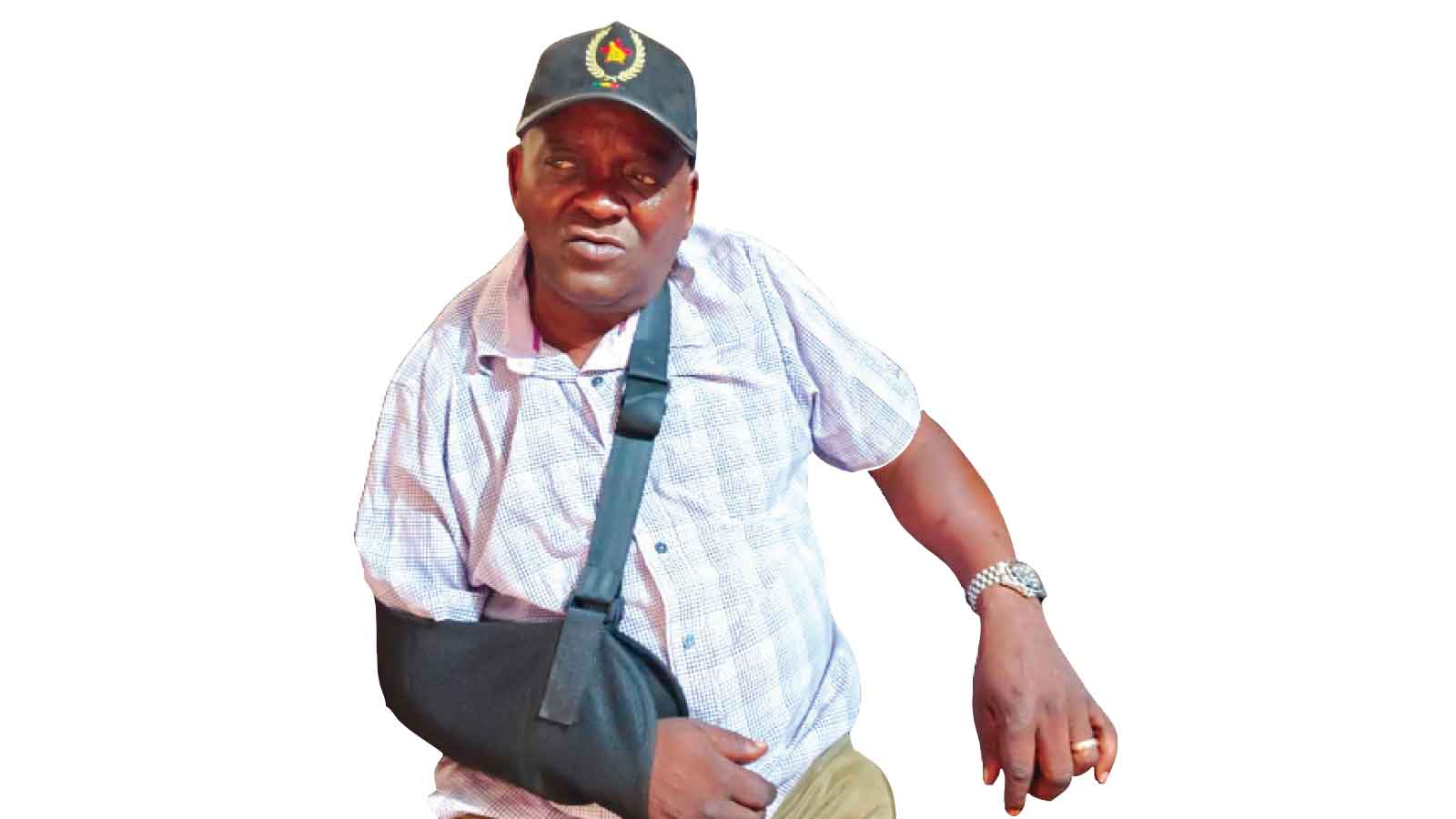
Chronicles from the 2nd Chimurenga
Last week, CDE KOSSAM MUTSINZE, whose nom de guerre was Cde Ignatius Toda Zimbabwe, recounted the dramatic moments he saved the lives of Cdes Kumbirai Kangai and Didymus Mutasa following a Rhodesian onslaught on Chaminuka Security Camp in Mozambique. This week, in his final instalment, he details to Zimpapers Politics Hub’s KUDA BWITITI his role as an intelligence operative. He also speaks about his time working under President Mnangagwa, as well as the tragic news of General Tongogara’s passing away.
************************
Q: Cde Mutsinze, please tell us about your transition into the world of intelligence. What did your training entail and who guided you into this world in the shadows?
A: I was initiated into the world of intelligence by a comrade named Edgar Chihota. He was a sharp operative, having been trained by the KGB in the former Soviet Union. He was a master of his craft, but while he was busy moulding us into operatives, he was unaware that the High Command was also keeping a very sharp eye on him.
During training, Cde Chihota became romantically involved with a high-ranking female member of the High Command, Cde Sheba Tavarwisa. In the bush, discipline, especially regarding social conduct, was paramount. After I completed my training, the hammer fell on Cde Chihota. He was picked up by Cdes Tsuro and Kamhiripiri for interrogation.
We later received the sombre news that he had died due to his misdeeds and breach of protocol. It was a stark reminder that in the struggle no one was above the law of the revolution.
Q: Following your training, what were your specific responsibilities at Chaminuka Security Camp?
A: My primary role was the collection and processing of intelligence. Field reports from various fronts would come to me. I would gather them and bring them to what was formerly Cde Chihota’s office for analysis.
We did not just read these reports; we dissected them to understand the enemy’s movements and our own tactical strengths. Once refined, this intelligence was forwarded to our leader, Cde Robert Mugabe, in Maputo. The conduit for this vital information was none other than Cde Emmerson Mnangagwa, who was then the Special Assistant to Cde Mugabe.
Q: You worked very closely with the current President during a pivotal time in the war. Describe that working relationship.
A: I began working under Cde Mnangagwa in 1977. Our relationship was professional and very cordial. He was a man of immense focus. I can say he was an intelligence supremo par excellence. He was a master of the craft, who always made shrewd decisions. He was a man who paid attention to detail.
I remember vividly when he learned about the death of Cde Chihota. He was deeply troubled by it. He didn’t mince his words; he criticised those responsible for the extrajudicial nature of the handling of the situation, stating firmly that he would not tolerate such actions.
As a result of that incident, Cde Tsuro was eventually removed as the camp commander at Chaminuka and replaced. Following that change, the situation stabilised. Those internal “disappearances” ceased. This shows how astute Cde Mnangagwa was in making crucial decisions that were for the good of our department. I remained in the analysis branch.
I was in a privileged position, privy to the ins and outs of the entire war effort. Countless reports from the frontlines passed through my hands. We were the nerve centre, analysing every battle and refining raw data into actionable intelligence for the leadership.
Q: So, what was the atmosphere like under Cde Tsuro’s command?
A: Chaminuka was the nerve centre for security and intelligence, but under Cde Tsuro, it became a place of dread. Tsuro lacked formal education and relied on brute force. He was notorious for the brutal beating of suspects. Many comrades perished at his hands or under the watch of his subordinates. While he claimed to be purging the ranks of enemy infiltrators, his violence was often headless and unjustified.
The death of my trainer, Cde Edgar Chihota, sent shockwaves through the movement. This is why, when word reached Cde Mnangagwa in Maputo, he didn’t just listen to reports. He came to the camp personally to investigate. He demanded to know why Cde Chihota had been killed and why blood was being spilled without proper interrogation or justification. He brought the hammer down.
He issued a definitive standing order that the killings had to stop immediately. He was categorical, stating that no one had the right to extrajudicially take the life of another.
He directed that if anyone was suspected of being a double agent or a “sellout”, the proper revolutionary protocol, detention, rigorous interrogation and thorough investigation must be followed.
He told them bluntly, “I don’t want to hear of these killings anymore.” His intervention saved countless lives. Consequently, Cde Tsuro was stripped of his command at Chaminuka and redeployed to Tete province, where he remained until the move to assembly points in 1980.
Q: What was the nature of your mission in Pakistan, and what were the circumstances surrounding the death of General Josiah Tongogara?
A: We went to Pakistan via Maputo, where I met comrades like the late national hero Elias Kanengoni. In Pakistan, our mission was to enhance our intelligence and security skills, focusing on policing the nation, preparing for how we would govern and secure the country after independence. While there, we were always glued to the radio, following the Lancaster House talks. Then, the world stood still. News began to filter in that General Josiah Magama Tongogara had died. Initially, the Pakistani authorities tried to hide the news from us to maintain our morale. We only found out days later.
Q: How did the group react to such a devastating blow?
A: It was a tragedy of immense proportions . . . it was heartbreaking.
We were paralysed with grief and took several days off to mourn a man who was the heartbeat of our military operations.
As the 1980 elections approached, our three-year course in Pakistan was compressed into a crash programme. The Pakistanis realised we needed to be home to help the ZANU campaign. We left Pakistan in early 1980, travelling back through Maputo and eventually arriving in Zimbabwe alongside Cde Simon Muzenda.
Q: Upon your return, you found yourself back in the fold with Cde Mnangagwa. Tell us about those first days of freedom.
A: When I returned to the country, because we were considered “elite forces”, we weren’t sent to the assembly points. I flew into the country, accompanying Cde Simon Muzenda. I was deployed to Masvingo as a security representative for ZANU, working closely with Cde Dzingai Mutumbuka.
I remember the day of the independence celebrations at Rufaro Stadium when Bob Marley performed. I was in Harare, and Cde Mnangagwa called me to collect a vehicle, a Toyota Cressida. It was the first car I ever owned, though I didn’t even know how to drive.
He told me, “Take it, you will learn on the way.” I desperately wanted to stay and watch Bob Marley perform, but the supremo gave me a direct order, “Go back to Masvingo immediately.” True to his nature as an intelligence chief, the moment I arrived in Masvingo, the phone rang. It was Cde Mnangagwa calling to confirm I had reached my post. He was always three steps ahead.
Q: Your career later took you into the diplomatic service. How did that transition happen?
A: After our landslide victory in the 1980 elections, I was selected for the pioneer group of diplomats to be trained at Ranch House College. However, a conflict arose when I was posted to Ethiopia. At that time, the Ogaden War between Ethiopia and Somalia was raging. Having just emerged from years of bush warfare, I was psychologically exhausted; I simply could not face another war zone so soon, and I refused the posting.
There were those within the new establishment who were incensed. They labelled me a rebel and pushed for my immediate dismissal from the service. However, Cde Mnangagwa stood his ground for me. He understood the toll the war had taken on his officers. He blocked my firing, insisting that I be retained. It was through his protection that I was able to continue my service to Zimbabwe for decades to follow.