onlinemedia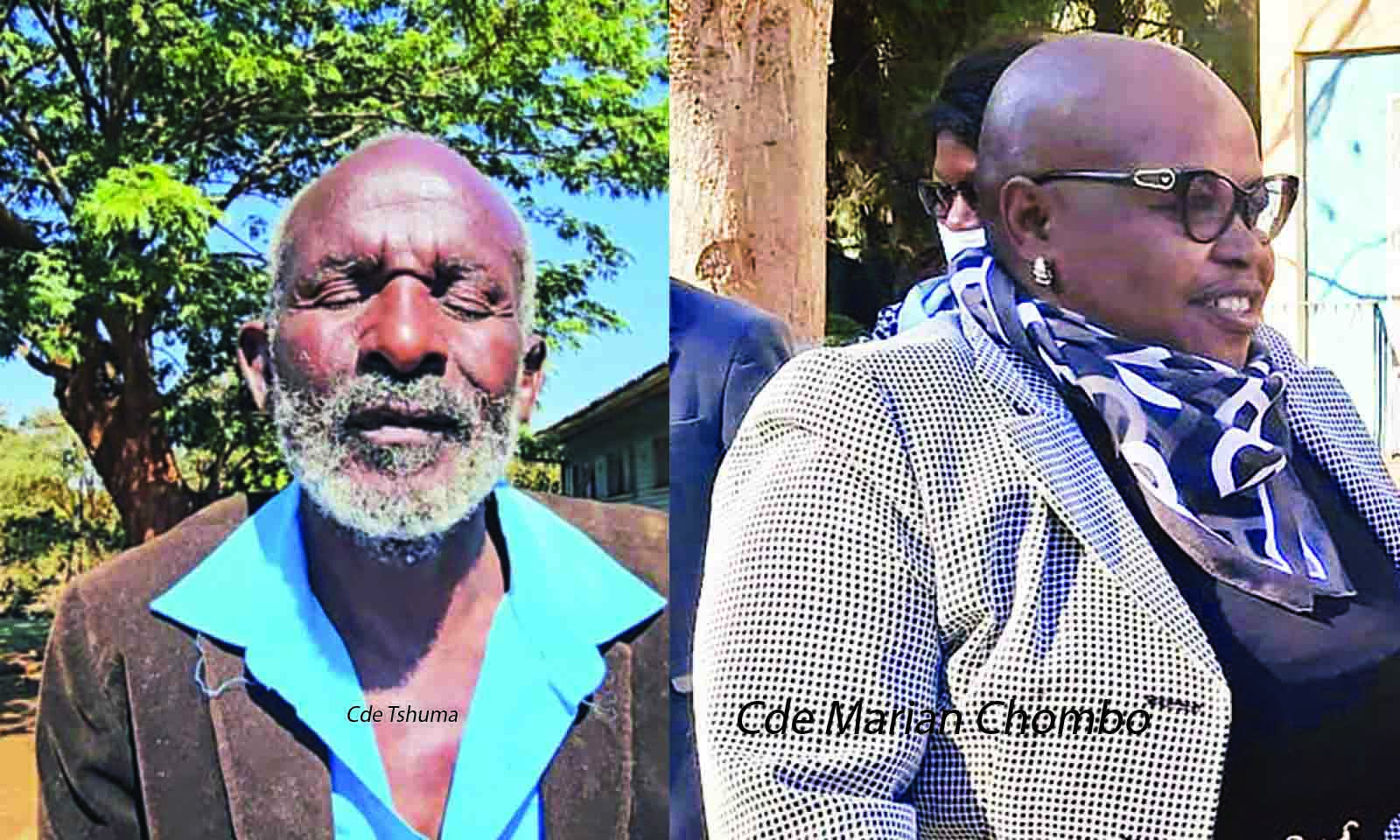
Conrad Mupesa
Features Writer
SIXTY-FIVE-YEAR-OLD Cde Joel Tshuma may be visually-impaired now, but memories of his daring adventures during the liberation struggle cannot be dimmed, and he remains a key figure in Chegutu, Mashonaland West Province.
A war collaborator, Cde Tshuma is an invaluable repository of knowledge, recounting intense experiences that shaped Zimbabwe’s path to independence.
His voice echoes the haunting memories of families torn apart and communities left in despair, as he shared what transpired during the conflict.
Having lived in Chegutu for decades, he shares the traumatic yet heroic tales that defined an era.
Operating from his roots in Filabusi, a historic region steeped in the struggle, Cde Tshuma served as a vital link between local communities and ZIPRA forces, relaying life-or-death messages.
Filabusi is not just any place, as it bears the scars of history, dating back to 1896 when white settlers brutally clashed with the resilient local populace.
Today, the Filabusi Memorial and the haunting Edkins Store killings are solemn reminders of the fierce resistance against colonial rule.
These events ignited the First Chimurenga and laid the groundwork for the struggles that followed.
Cde Tshuma, whose ancestral blood runs thick with the tales of oppression, navigated dangerous terrain, risking everything to protect freedom fighters from the brutal regime.
He recalled the chilling moments when bullets whizzed past him, and lives hung in the balance.
“We sometimes dodged bullets as we got into the crossfire. But, despite the challenges, we pressed on, driven by the vision of reclaiming our motherland,” he said.
The violence was relentless.
Cde Tshuma lost family members to the wrath of colonial forces and saw the horror of war first-hand.
“The white minority regime was ruthless. They raped, murdered and imposed unbearable taxes on us while we endured unimaginable hardships,” he shared.
Cde Tshuma lives in a farming town, surrounded by his family, but his legacy echoes in the stories of others like Cde Marian Chombo, Mashonaland West Minister of State for Provincial Affairs and Devolution.
The fierce woman from Chibuwe in Chipinge had her brushes with death.
In 1978, while riding a bus to Chipinge, she experienced a heart-stopping moment; a landmine explosion sent their vehicle soaring into the air.
“I was just 18, running errands for the cause when the unthinkable happened,” Cde Chombo recalled the heart-wrenching memories.
That fateful day, she suffered a painful leg injury, a scar from her courageous contribution to the struggle, an injury she still suffers from today.
Recently, she had a procedure on the injury to correct what she has been suffering from for over four decades.
Like Cde Tshuma, Cde Chombo supported the ZANLA forces, delivering critical messages and even cooking for the comrades.
Her resilience carried her far beyond the war. She later ventured to the United States to earn an Information Technology degree and advanced her education with a Master’s in Business Administration and a Doctor of Philosophy (PhD) candidacy at Chinhoyi University of Technology.
Today, Cde Chombo stands proud not just as a survivor but as a testament to the power of women in the liberation struggle.
She ventured into politics and soared high to be a minister, after spending five years as Local Government and Public Works Deputy Minister.
While the battle raged, women like her fought not only for freedom, but for access to education and opportunities, a legacy that continues to flourish in liberated Zimbabwe.
These tales of bravery and sacrifice remind us of the relentless spirit that forged a nation, as Cde Tshuma and Cde Chombo embody the essence of resilience and hope in a new dawn for Zimbabwe.


 Online Reporter