Online Reporter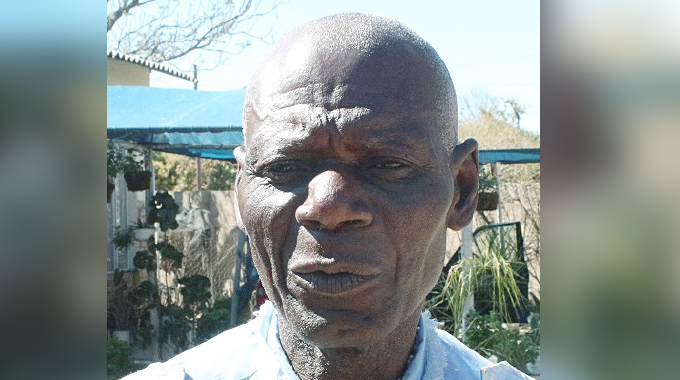
Lovemore Dube, [email protected]
THE funeral of former Eastlands goalkeeper William “Gorilla” Chirwa will take place in Bulawayo on Wednesday, closing the chapter on one of the city’s most recognisable football figures of the 1960s and early 1970s. Chirwa died on Friday at the age of 85 after a long illness linked to kidney failure, which worsened in October last year.
His son, Joseph Chirwa, confirmed on Tuesday that the family had settled on Luveve Cemetery as the burial site. “We agreed as a family that he will be laid to rest at Luveve Cemetery on Wednesday,” Joseph said. “He had been unwell for some time, but his condition deteriorated towards the end of last year.”
Chirwa’s death has thinned a fast disappearing generation of former Eastlands players, many of whom defined club football in Bulawayo before independence. Of that group, only Cosmas Zulu, Chris Mhlanga and Richard Kasawaya are alive, a reality that former teammates say has sharpened the sense of loss.
Cosmas “Tsano” Zulu, who played alongside Chirwa at Eastlands FC, said the news landed heavily. “It’s painful. Just last week I spoke to Kasawaya and we were counting ourselves, saying only four of us were still here,” Zulu said.
“Now it’s three. I feel empty. I want the children to know their father mattered to this game.”
Zulu said Chirwa’s reputation rested on more than longevity. “You can’t talk about goalkeepers of that era and leave him out,” he said. “He was agile, he read the game early, and his distribution was deadly. His kicks from the back often left strikers running at a defender with space. I scored plenty from his clearances.”
Born in Malawi in 1940, Chirwa moved to Zambia at the age of 12 and began playing organised football two years later. His career took shape across borders before he arrived in the then Rhodesia, where mining teams formed the backbone of competitive football. He first turned out for Feoch Mine in Mashonaland West, where he crossed paths with Joseph Zulu, another name woven into the game’s early fabric.
A move to Gaths Mine followed, but it was in Bulawayo where Chirwa’s career found definition. He initially reported to Mashonaland United, only to find the goalkeeping position locked down by Adam Maseko, a Rhodesia trialist at the time. With first-team chances limited, he was redirected to Eastlands in 1969 by a prominent city businessman, Nyaguze.
The timing proved decisive. Chirwa arrived at Eastlands around the same period as Tymon Mabaleka, as the club grew into a national force with heated, diarised derbies against Mashonaland United. Those matches drew crowds and sharpened rivalries, and Chirwa’s presence between the posts became constant.
He shared a dressing room with players such as Lovemore Nyabeze and Ben Makadzange. Makadzange would later feature for Zimbabwe Saints, while Nyabeze went on to coach national junior teams carrying forward lessons from that era.
Another contemporary, Lawrence Phiri, who played through the 1960s and 1970s, described Chirwa as both formidable and understated. “He was a great goalkeeper of his time, but also a gentleman,” Phiri said. “Quiet, respectful, and serious about his work. He earned his place.”
He also played for Mashonaland FC, a splinter club from Zimbabwe Saints who were Mashonaland United up to 1975.
Chirwa’s nickname came from his physical presence and style. His long reach and acrobatic dives earned him the tag “Gorilla,” a label that stuck due to his command of the penalty area as a result of his reflexes. In an age before specialised goalkeeper coaching, teammates say his instincts and preparation set him apart.
As Bulawayo prepares to bury him, those who played with and against Chirwa say his passing marks more than a personal loss. It signals the steady fading of a generation that carried the city’s football through its formative years, when clubs were built around mines and neighbourhoods.