Online Reporter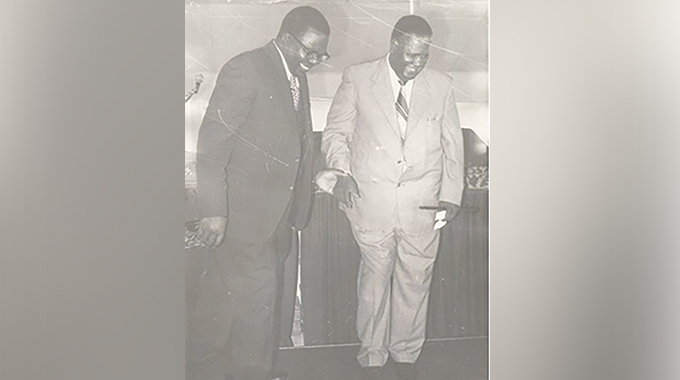
Mashudu Netsianda, Deputy National Editor
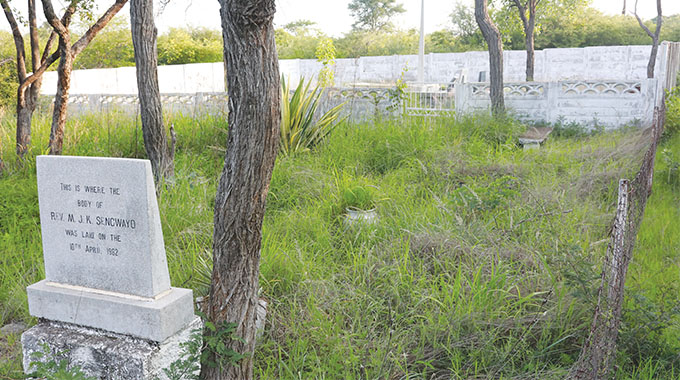
THE late founder of the Apostolic Faith Church, Reverend Morgan Sengwayo — a towering figure in Zimbabwe’s religious and liberation history — lies in a neglected grave, a jarring contradiction to the immense spiritual and national legacy he left behind.
Tucked away in quiet obscurity at Greengables Farm near Khami Ruins on the outskirts of Bulawayo, the graveside where Rev Sengwayo is buried alongside his wife and their youngest son, Missiondom, bears the visible scars of neglect.
Overgrown grass, cracked headstones and faded inscriptions now mark what should be a revered pilgrimage site for thousands of faithful who trace their faith to his ministry.
For many, the condition of the grave is not just a matter of neglect — it is a painful symbol of unresolved divisions within the church he founded.
Rev Sengwayo, who established the Apostolic Faith Church in Bulawayo’s Pelandaba suburb, was far more than a religious leader. He was a community organiser, a moral compass during the liberation struggle and a unifying voice at a time when colonial repression weighed heavily on African communities.
His teachings emphasised discipline, self-reliance and faith anchored in African realities — principles that resonated widely and helped the church spread across Zimbabwe and beyond.
During the liberation struggle, Rev Sengwayo, a close associate of the late former Vice-President Dr Joshua Mqabuko Nkomo, is remembered by contemporaries as having offered spiritual counsel and quiet logistical support to freedom fighters. Through church networks, he helped mobilise communities and sustain morale.
While his contribution may not be etched into official war records, historians and church elders acknowledge his role in nurturing the spiritual backbone of resistance.
Yet, decades after his death, Rev Sengwayo’s final resting place tells a troubling story.
Family spokesperson Dr Rayban Sengwayo said the neglect of the gravesite stems largely from prolonged infighting within the Apostolic Faith Church, where rival factions continue to battle over leadership, doctrine and control of assets.
“These divisions have spilled over into the neglect of this shared heritage. Part of Greengables Farm belongs to the Sengwayo family, but there are unresolved disputes with the church,” he said.
“As a family, we are yet to find a lasting solution to this impasse. While it is our duty to care for the gravesite, the church also has a responsibility.”
A senior church elder, who requested anonymity, described the situation as tragic.
“Everyone claims ubaba uSengwayo as their founder, but no one wants to take responsibility. The divisions have blinded us to the reality that this is not just a family grave, but a national heritage site,” the elder said.
The neglect has also deprived Zimbabwe of a potential religious tourism asset. Across Africa and the world, the graves of influential religious leaders draw pilgrims, historians and tourists, generating income for local communities while preserving spiritual history.
Rev Sengwayo’s daughter, Mrs Seldom Tshiwilowilo, said the family was deeply concerned about the state of her father’s resting place.
“It is an issue of concern, and honestly speaking, it is the responsibility of the family. We have seen the situation and we are seized with the matter,” she said.
However, Mrs Tshiwilowilo acknowledged that factional disputes within the church have complicated efforts to maintain the site.
“The other challenge we are facing is that brethren who are supposed to clean the place are sometimes refused entry, but we are working towards resolving that,” she said.
If properly preserved and documented, the Sengwayo’s gravesite could become a centre of religious tourism, particularly for the thousands of the Apostolic Faith members across Zimbabwe, the region and the diaspora who converge on Bulawayo annually for camp meetings.
Tourism and heritage experts argue that Bulawayo — already rich in cultural landmarks — stands to benefit from faith-based tourism that adds depth to its historical narrative.
Local heritage researcher Mr Phineas Chauke said Rev Sengwayo’s stature places him among Zimbabwe’s most significant religious pathfinders.
“He wielded both religious and political influence and contributed to the liberation of this country. It would be fitting for his burial site to be refurbished and protected, ideally through the church,” he said.
From a tourism perspective, Mr Chauke said the graves of indigenous religious leaders such as Sengwayo, Ezekiel Gutu, Samuel Mutendi and Paul Mwazha should be preserved as part of Zimbabwe’s heritage.
“It would be prudent, even as a nation, for us to develop our religious tourism around such sites, which can serve as reference points for telling the story of our religious development. Icons like Sengwayo are pivotal to that narrative,” he said.
“The story of Sengwayo intersects religion, culture and liberation history. That combination is powerful and marketable, but only if the site is dignified and accessible.”
Sengwayo’s influence extended beyond the pulpit. He shared a close bond with Dr Nkomo, and the two were known to jokingly debate who was “bigger” — a playful nod to both their imposing physical frames and their influence. That relationship, however, attracted unwanted attention from the Rhodesian authorities and placed Sengwayo under scrutiny.
The history surrounding the revered cleric’s burial has not been without controversy. On 2 March 1993, the Chronicle carried a chilling headline: “Vandals desecrate Sengwayo’s grave.” A special crypt housing his remains was broken into, a glass casket imported from the United States was stolen, and replaced with a cheap metal coffin, later found floating in water.
The discovery was reportedly made by Missiondom, then 19, after he broke into the crypt following repeated failed attempts to obtain access keys. The grave was subsequently sealed with concrete.
Tragically, Missiondom himself died in 2021 after being attacked at the Apostolic Faith Church house in Pelandaba. He succumbed to his injuries days later, with rival church factions trading blame for his death.
Rev Sengwayo began his ministry under the Seventh-day Adventist Church, where he was a member before breaking away in 1943. In 1955, he founded the Apostolic Faith Church. Since his death in March 1982, the church has experienced repeated splits, with infighting continuing to cast a long shadow over his legacy.
For now, the neglected grave stands as a silent indictment of unresolved church conflicts and a broader national failure to preserve spiritual heritage. As weeds reclaim the soil around Sengwayo’s resting place, uncomfortable questions linger about how Zimbabwe remembers those who shaped its moral and historical foundations.
For many believers, restoring the gravesite would not merely be an act of maintenance, but a step towards healing old divisions and honouring a legacy that transcended church walls — one that helped shape the nation’s spiritual and liberation journey.


 derick.khumalo