tawandamusarurwa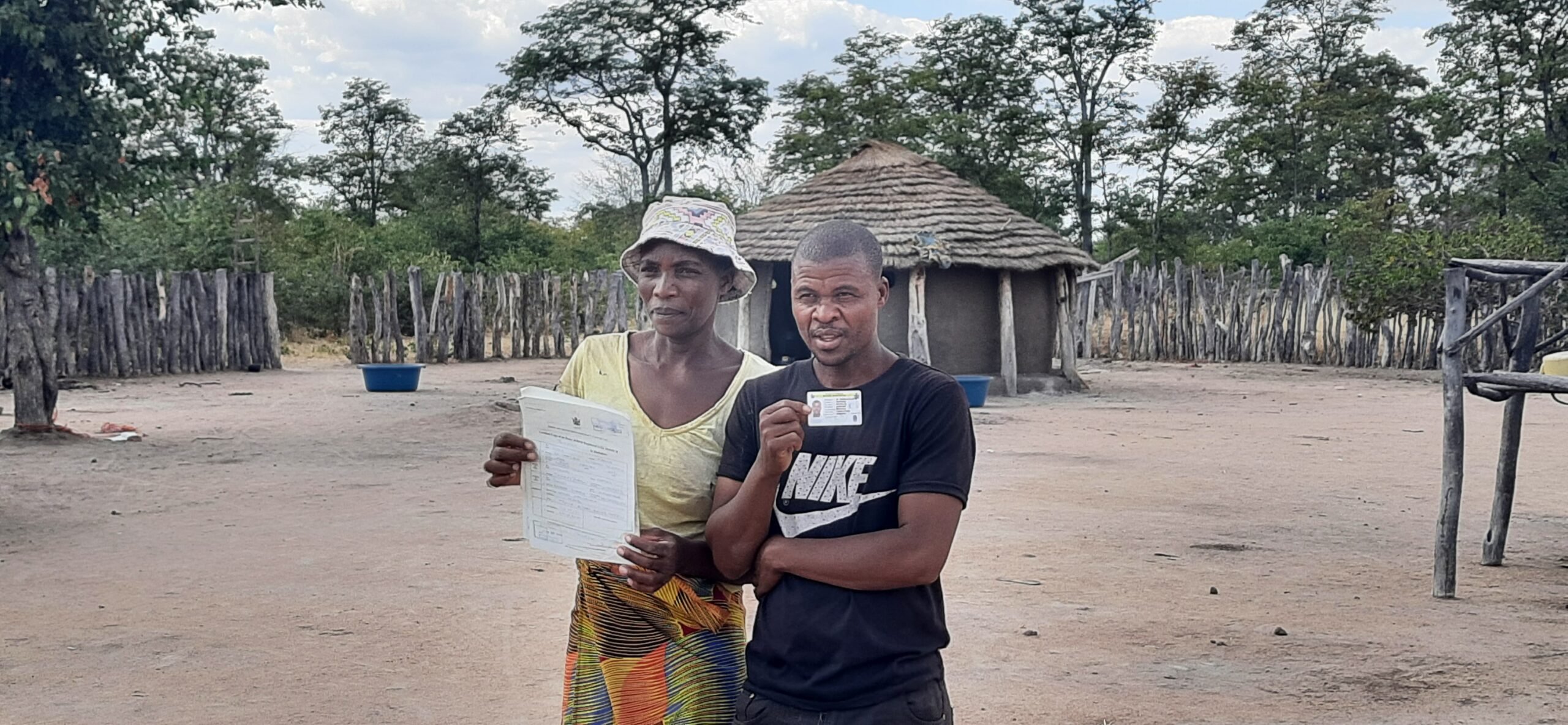
Debra Matabvu recently in TSHOLOTSHO
FOR decades, members of the San community in Tsholotsho felt they were denied their basic right of being bona fide Zimbabwean citizens.
Also known as the Tjawo community, these people — who live in Tsholotsho district, which is 180 kilometres north-west of Bulawayo — had the impression that they were a forgotten lot, as most of them did not have civic documents.
This was the case for 41-year-old Shylet Mangwayana of Mtshina Village and her five daughters.
Not being in the national database meant they were largely stateless.
Mangwayana’s failure to acquire a birth certificate meant her daughters would suffer the same fate.
She only realised the gravity of the matter when her eldest daughter could not sit her Grade 7 final examinations in 2021.
“She did not have a birth certificate when registration for Grade 7 examinations began, so she dropped out of school,” Mangwayana told The Sunday Mail.
“As a mother, it was difficult for me to watch my daughter fail to proceed with her education. I knew it exposed her to vices like early pregnancy or early marriage.
“However, I was powerless. I did not have any identity (ID) documents myself and it meant my children could not acquire the papers as well.”
Her story is shared by most members of the community, who do not have civic documents such as national identity cards, as well as birth and death certificates.
To acquire the documents, one was required to fork out US$7 to travel to the Tsholotsho district offices, an amount the villagers could not afford.
Without ID documents, it meant most individuals could not have formal education, food relief and formal employment.
The situation ended up stifling development in the area.
In Zimbabwe, a child without a birth certificate can be enrolled for primary education but will not be allowed to write Grade 7 exams or proceed to secondary school.
However, in 2021, the Registrar-General (RG)’s Office — with technical support from the United Nations Children’s Fund (UNICEF) and funding from the government of Sweden — assisted 6 645 children with birth registration in Bikita and Tsholotsho.
This saw Mangwayana’s daughters receiving birth certificates and proceeding with their education.
Last year, the San community got another shot in the arm, when Government rolled out a six-month nationwide blitz to issue civil documents, especially in marginalised areas.
The drive saw Government issuing two million ID cards, in addition to birth and death certificates, with 266 teams deployed to centres across the country within that period.
According to statistics from the Ministry of Public Service, Labour and Social Welfare, 3 542 people under the age of 16 received birth certificates for the first time in Tsholotsho.
At the same time, 600 individuals over the age of 16 got birth certificates for the first time.
In addition, 46 duplicate birth certificates for children under 16 years of age and 625 duplicate birth certificates for individuals over the age of 16 were issued, while 58 death certificates were dispensed.
Mtshina village headman Mr Madlela Maphosa (73) applauded the initiative and urged Government to continue with programmes of this nature.
“We had households that had no single member with a birth certificate, ID card or death certificate for the deceased members. This meant they were confined to the jaws of poverty, as they could not receive education, could not be employed and were prone to all sorts of abuse, especially the girls,” he said.
“We hope Government continues to roll out such programmes in the San community.”
Government has also started opening up opportunities that were closed to the community before the civic documents registration blitz.
Recently, Cabinet committed to do more to include the San community when recruiting civil servants, with special quotas being reserved for them during the Zimbabwe Republic Police and Zimbabwe Defence Forces recruitment cycles.
Mr Tawanda Zimhunga — the director of child protection services in the Ministry of Public Service, Labour and Social Welfare — applauded support from partners.
He said the partners were complementing Government efforts to protect children and marginalised communities.
“Some members of the communities are incapacitated to reach registration centres, hence Government — through the Department of Social Welfare and support from UNICEF — has provided an emergency fund to cater for such persons to ensure they are able to register their children’s births.
“Our aim is to create a Zimbabwe fit for children through strategic partnerships and to expand child protection financing through the child protection fund,” he said.
Recently, Sweden donated US$5,8 million to support child protection programmes to be implemented by UNICEF.
UNICEF’s representative to Zimbabwe Dr Tajudeen Oyewale commended Government for increasing the allocation for social welfare in the 2023 Budget.
Dr Oyewale said this showed commitment by Government to child protection.
“I am pleased to note that the Government of Zimbabwe has increased allocation in the budget towards social welfare,” he said.
◆ Twitter @dmmatabvu



 Online Reporter