admin
admin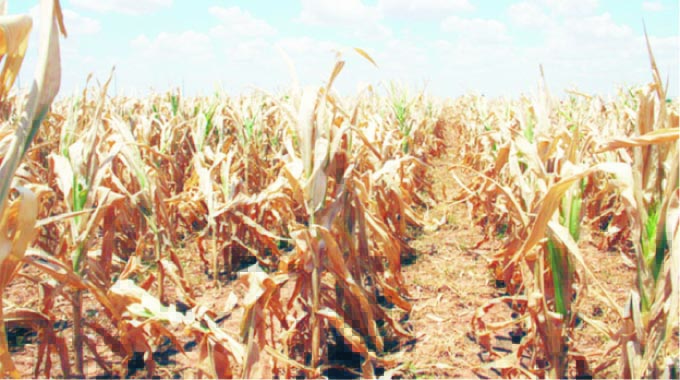
Sam Matema
Herald Correspondent
National independence is a human rights issue because it speaks to self-determination, sovereignty and territorial integrity and all attendant freedoms.
Independence gives both input legitimacy (ability of a state to give its citizens a voice on governance) and output legitimacy (ability of a state to meet the demands of its citizens on matters of resource allocation and their success) to the state.
This independence becomes an avenue through which other rights are enjoyed, the right to education, food, shelter, health, clean water, right to information, freedom of choice, association and all within the context of a sustainability triangle – the triple context of society, economy and ecology.
This independence is threatened in a big way, in a multi-faceted way by climate change. Climate change is conniving with the enemy.
This is because it is primarily a result of anthropogenic factors, and the Global North industrialised on the back of fossil fuels, which has disproportionately contributed to global warming and the related climate change and its shocks and the attendant knock-on effects on the right holders.
Threat multiplier
Climate change is a threat multiplier which increases vulnerability.
It amplifies and reinforces already existing threats and vulnerabilities. It is these vulnerabilities which have a bearing on human rights on account of its primary and secondary impacts that do have an effect on the different rights.
These rights are threatened by climate change, to the extent that they can be involuntarily withdrawn by it. Countries in the Sahel region have witnessed endless wars occasioned by climate change because their arable land is being consumed by the expanding desert. Food systems with respect to production, availability, accessibility and affordability have been affected on the back of serious food deficits that are climate-related to the extent that we have climate migrants.
When these climate migrants find shelter in other jurisdictions, their rights to self-determination, their right to chart their own path is taken away.
The migrants are at the mercy of their new hosts. With no food, no shelter, no water and no access to education they are exposed to the excesses of their hosts.
The hand of the non-state actor
It is at this point that we find the Global North coming in with food relief efforts to “avert” hunger and starvation. They present themselves as the messiahs to the affected, to the extent that they bring in food packs that are branded in their colours and names. As they interact and transact, their messages to do with democracy and human rights are propagated painting the host countries as failed states and dictatorships.
Zimbabwe, like any other countries has been affected by an El Nino-induced drought, and it is proving to rank among the worst droughts in the history of an independent Zimbabwe.
The frequency of droughts is increasing and therefore the exposure to climate change impacts.
It is unfortunate that deforestation through tobacco production has resulted in the loss of carbon and this exacerbate global warming.
The rate of deforestation is high than reforestation. This increases the vulnerability of both the people and the country. To manage that potential exposure, let us domesticate interventions and solutions to avoid, control, prepare for and anticipate future impacts.
The Sahel region and Syria
The disasters that continue to befall the Sahel region in terms of climate apartheid, climate migration and climate wars as a result of unsustainable pressure on natural resources are likely to visit many countries if negative shocks go unchecked.
Syrian war was birthed by climate change shocks and therefore is a climate war. There was a sudden surge in rural-urban migration occasioned by poor harvests in rural Syria, and these poor harvests pushed people to the cities primarily in search of new opportunities. People invaded Damascus in search of new opportunities and all. The capital city’s infrastructure could not cope with the sudden influx and pressure, and service delivery collapsed.
Demonstrations ensued as city residents demanded good service from the city fathers. The war mongers from the West seized that moment to come in under the guise of propping up human rights and social justice.
This case is a clear testimony of how climate change is a threat multiplier.
From the foregoing, Zimbabwe is not an island and no exception, and therefore is exposed to the machinations that visited Syria, and because of that we need to be on guard all the time to defend and protect our hard-fought and hard-won independence as a people and country.
Guarding our independence jealously
Our independence is a product of the selfless sacrifice of our gallant sons and daughters who gave their lives as the ultimate price, took up arms to liberate Zimbabwe from the shackles of our erstwhile colonisers.
We guard and protect that hard won independence by responding to the challenges and threats presented by climate change, and we need to be swift and agile in our response hinged on mitigation and adaptation.
There is need to be organised under the current circumstances as we are forward-looking.
This speaks to both planned mitigation and anticipatory mitigation. Research and development anchored on Artificial Intelligence (AI) is key to coming up with relevant and sustainable interventions that reduce impacts.
Because climate change is a threat multiplier, we need to guard against the potential of its outputs by way of food shortages and other related challenges being used to stoke resistance and subsequent intervention by foreign powers in extreme cases.
Otherwise their intervention is subtle via taking over critical factors of production.
This is why, there has been a lot of noise in some quarters by some regarding title to communal land.
The land belongs to the state, and is held in trust by the President.
If we accede to these machinations, we will wake up one day with all our land being in the hands of our former colonisers. They lease the land for a start, but ultimately cut deals, buy the land from the title holder.
Once they get to that stage, our independence is gone. They will begin to produce for us, make it unavailable, inaccessible and unaffordable for us on their terms. We are safe with the status quo.
In the age of surveillance capitalism, AI can be unleashed on us under the guise of climate change research while security is being breached and compromised. This is why our AI infrastructure, legislation and governance issues must be inward-looking.
There is need for the domestication of interventions and deployment of locally developed solutions so we remain independent and sovereign from outside prescriptions which can be configured in such a way that it relays all our critical data to foreign powers with ill intentions.
Buhera has been affected by climate change and the Second Republic gave us Marovanyati Dam with potential to irrigate 1 250 hectares, enough to feed the entire district as we mitigate and adapt to the climate change shocks which threaten to reverse the gains of our independence and reinforce the neo-colonialist agenda via the role and relief efforts of the Western countries and the non-state actors that they fund and support.
Sam Matema is the MP for Buhera Central constituency and writes here in his personal capacity.


 Online Reporter