

 admin
admin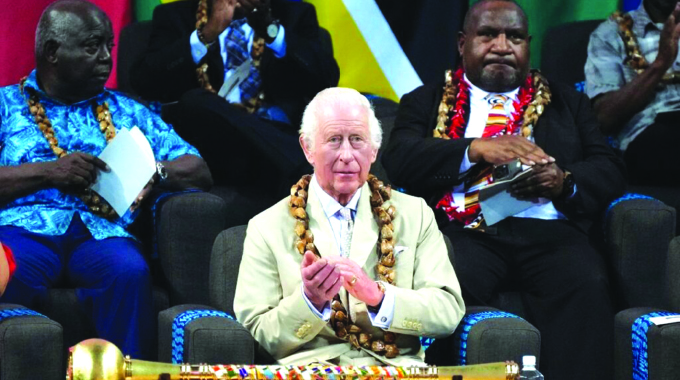
Gibson Nyikadzino, Zimpapers Politics Hub
ONE hundred and forty years ago, at the Berlin Colonial Conference, colonially minded European leaders resolved to use violence, war, genocide and extractivism to subjugate, dominate and annihilate some races through their colonial processes.
The colonial project was not a benevolent enterprise, but one that was motivated by selfishness, self-interest and economic exploitation of the colonised people.
Countries that were colonised, the majority in Africa, have neither recovered economically nor have their citizens become psychologically stable, because their survival has been so dependent on structures that were institutionalised by the coloniser.
In the case of Britain, the colonial empire in the name of spreading its civilisation committed evils that today its victims are calling for compensation and reparations as mechanisms that some today could say is a model of “truth and reconciliation that pave way for reparatory justice”.
British rule was exploitative. Consider what they did to India. It is no doubt that the expansionist British Empire’s exploitative system was based on three sins against humanity that are, colonisation, slave trade and indentured labour. Indentured labour was targeted against India more specifically.
For example, British colonialism in India exploited farmers while forcing them to grow cash crops instead of food crops so that raw materials could be supplied to England. Due to the decrease in food crops production, there used to be at least one famine in 20 years. The Bengal Famine of 1943 comes to mind where at least 3, 8 million people died under the watch of Britain when it controlled that territory.
This de-industrialised India, and due to the de-industrialisation, many years after independence India still lacks the platform for industrialisation to adequately take care and cater for its 1,4 billion people. In other cases, the majority of industries in India are also still dependent on the imported machinery from foreign countries.
The British even went to extremes of destroying the old books and classic literature on Ayurveda. In other instances, they criminalised any person who practiced Ayurveda. Ayurveda is a holistic system of medicine that originated in India and is based on the idea that health and balance in the body, mind, and consciousness can prevent and treat illness.
The same was for Zimbabwe. Recently, President Mnangagwa made a Zimbabwean demand on the need for Britain to apologise for its colonial atrocities. It appears the colonial powers are apologising selectively.
“We have observed and indeed quite recently as former colonial powers; the United Kingdom apologising to the Mau of Kenya and Germany also apologising to the Mbanderu, Herero and Nama people of Namibia. Therefore, we ask, when are the rest of us in the former colonies going to receive similar apologies? We wonder,” President Mnangagwa said.
It is no secret that colonial violence was brutal and systematic and those of us old enough to tell the tale, still bear scars and associated trauma from the violence. At last month’s Commonwealth Meeting in Samoa, King Charles and British Prime Minister Keir Starmer faced the wrath of nations who raised the voice on reparations for colonialism and slave trade.
Demands that the UK issue a formal apology and make monetary reparations for its involvement in the transatlantic slave trade and colonialism now have renewed vigour. At the Commonwealth Meeting the UK however opposed the summit’s final communiqué’s attempt to directly address reparations. The letter skirted the subject instead, mentioning only the potential for “future discussions” on “reparatory justice” only in relation to the transatlantic trade in African slaves.
Speaking in Samoa, King Charles sounded more conciliatory: “None of us can change the past. But we can commit, with all our hearts, to learning its lessons and to finding creative ways to right the inequalities that endure.”
Prime Minister Starmer rejected calls for an apology and reparations, telling delegates that it was futile to have “very long, endless discussions” about the past. The only notable exceptions are the Netherlands and Belgium, who have apologised for their roles in the slave trade and colonial atrocities, but have not offered monetary compensation.
A United Nations (UN) judge, Patrick Robinson, suggested last year that the United Kingdom would be in arrears of more than US$24 trillion for its involvement in the transatlantic slave trade. He claimed the figure as conservative, citing the extensive and enduring harm caused by the slave trade. Thirty-one former colonial countries, including Spain, the United States, and France, are required to pay reparations totalling US$107, 8 trillion, according to research by Judge Robinson.
When former colonies raise the issue of compensation, they are not doing this to instil a sense of guilt in former colonial powers, but are searching for historical justice and correct historical wrongs. Reparations are a duty, not an option.
The election of Ms Kemi Badenoch, a 44-year-old former software engineer, to the leadership of the United Kingdom’s Conservative Party, the first Black woman to do so and of Nigerian descent, signals how the Conservatives have no will to pay reparations.
In one of her campaigns, she said: “There are many countries now who want to use guilt to try and exploit the UK. They ask for reparations . . . These arguments are a scam, don’t fall for it. Well, there are many things that the British Empire got wrong, but there are many amazing things that the British Empire also did. And we need to be honest about that and stop pretending that it was all bad. The British Empire ended slavery, the Atlantic slave trade. We need to talk about that more.”
One certain thing is that states need to decolonise the very laws applicable to reparations for slavery and colonialism. In other words, they should reform the existing laws because in their current state, they will always benefit the former coloniser. While it is commonly accepted that former European colonising states ought to make reparations for the many harmful legacies of colonialism, the legislative reforms should also inform that.
The case for reparations for colonialism is stronger for states to make because as a conquest, it ended recently. The states that were colonial powers still exist, and many individuals who lived under colonialism are still alive. Many Africans who are alive suffered directly from the official acts by colonisers.
It is also reasonable to assume that many people born after independence, the born-free generation, would have had a better existence if the colonial administrations had acted more responsibly and reasonably in addressing the matter.


 Online Reporter