Online Reporter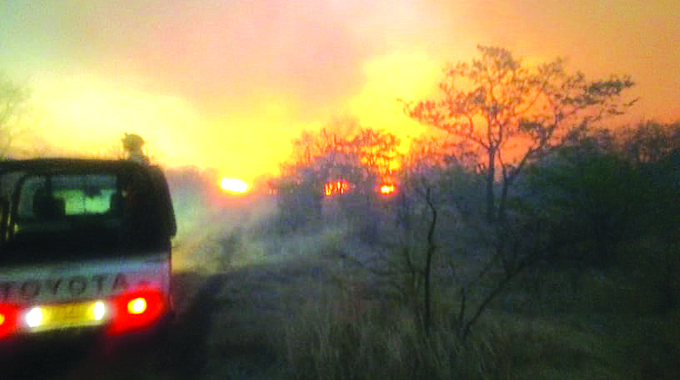
THE country is burning. Literally. From the leafy suburbs of Burnside to the trading stalls of Gweru and the once-iconic Elephant Lodge along Gwanda Road, the nation is counting the cost of flames sparked by recklessness, negligence and sometimes plain ignorance.
Last week alone, property worth over US$500 000 went up in smoke in Burnside after an “innocent” backyard fire to clear thickets spiralled out of control. In Gweru, more than 50 traders lost everything when the DST market was reduced to charcoal, their dreams and investments consumed in minutes.
Along Gwanda Road, Elephant Lodge — famed for once hosting UB40 – went down in flames for the second year running, suspected to have been sparked by a veld fire.
And this is only scratching the surface. According to the Environmental Management Agency (EMA), this fire season, which officially runs from July 31 to November 30, has already recorded 419 fire incidents, destroying more than 116 000 hectares of land.
Last year during the same period, 1 856 fires destroyed over 490 000 hectares — an area bigger than some provinces. Behind these dry statistics are shattered livelihoods, dead livestock, ruined grazing land and scarred forests that will take decades to recover.
The causes are almost always the same: illegal land-clearing burns, cigarette stubs flicked carelessly into dry grass, electrical faults in crowded informal markets, and sometimes arson. As EMA Matabeleland South spokesperson Simon Musasiwa warned this week:
“Recurring fires have destroyed biodiversity, wiping out beneficial grass and tree species. Invasive weeds have taken over, reducing grazing land and hurting livestock production. On top of that, plastic waste has killed stud animals after they swallowed it.”
The damage extends far beyond what the eye can see. Fires release choking smoke into the atmosphere, worsening air pollution and respiratory problems in communities. The economy bleeds as businesses, homes and farms are destroyed. Families lose breadwinners, children drop out of school, and entire communities are thrown into poverty overnight. Wildlife — from hares to elephants — is not spared, with veld blazes decimating habitats and driving animals into conflict with humans as they search for food and water.
Yet the tragedy is that most of these infernos are preventable. Zimbabwean law is clear: starting fires during the fire season is a criminal offence. But laws are meaningless if communities continue to treat fire like a toy. Bulawayo deputy police spokesperson Assistant Inspector Thandekile Ndlovu could not have put it better when she said:
“Community safety remains a shared responsibility and your cooperation in avoiding preventable hazards is vital in protecting lives and property.”
The solutions are within reach: construct fireguards, clear dry vegetation around homes and fields, never leave a fire unattended, and report reckless burners. In markets, compliance with fire safety by-laws — from electrical wiring to emergency exits — must be enforced without compromise. Above all, there must be a cultural shift where fire is treated with the respect it demands.
Zimbabwe cannot afford to keep burning year after year. Each flame that rises does not just consume grass, timber or property — it consumes our future. The time to act is not tomorrow. It is now.
Because when the fire season comes, one careless matchstick is all it takes to turn dreams into ashes.