FOR courts to work fully they have to be available to all on a practical basis, both to press and defend cases, and just as importantly there is need for people seeing justice being done, especially for cases arising in their neighbourhood or those that involve family and friends.
A lot of work was done in the first years of the Second Republic, opening new courtrooms for the High Court and posting High Court judges to several provincial capitals, with plans to continue that process.
The magistrates courts, which handle the overwhelming bulk of criminal and civil law, especially family orientated disputes, have also been spread into areas where there was sufficient demand for a full-time magistrate.
But that still left large gaps, meaning people have to take at least a day off work or away from home when summoned to appear in a court, or when they need to initiate an action to obtain what is their due.
Bus fares might be cheap, but a trip to an established court complex will often involve a pair of fares in each direction, plus the time taken to switch buses, often after another wait. And when money is tight finding that US$5 for transport on each day the court needs you might be a burden.
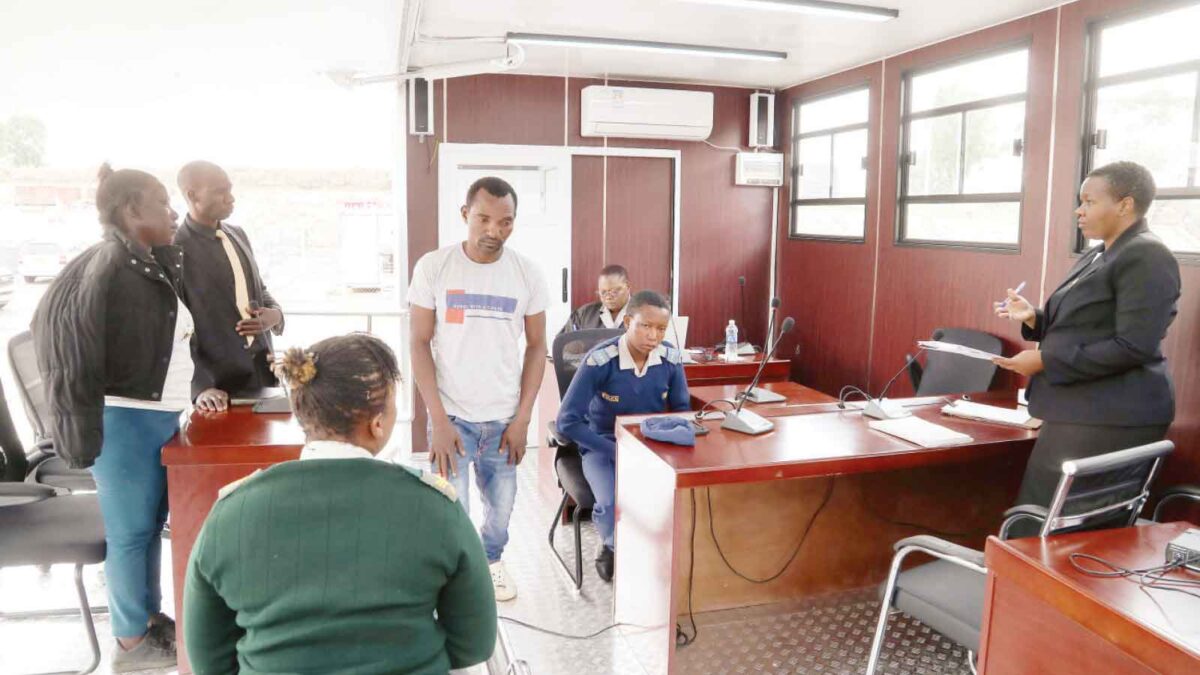
So the solution now being tested to fill gaps is the mobile court, a specially modified truck with sides that can be opened out to give a court room, records storage, and open access under shade to those wishing to follow proceedings. The testing phase is being done in Harare South, with the first truck visiting five police stations, one each day of the week.
The police station provides the secure and controlled environment for the court, plus the convenience of facilities from bathrooms upwards for the court staff and those summonsed to appear.
Court sessions need to be dignified without the least risk of mob hectoring, and a police station can provide this, as well as normal access to a court since the station handles a lot of public movement each day and is used to dealing with the public.
The first week was considered useful, with both criminal and civil cases being heard and several being settled in a single day. While the rights of everyone involved in both criminal and civil cases must be respected, regardless of where the court hearings take place, sometimes when everyone involved lives close to the police station where the mobile court is sitting, a lot of delays simply do not happen.
Everyone who needs to be at the hearing can be assembled quickly and excuses about lack of transport and the like, carry little weight.
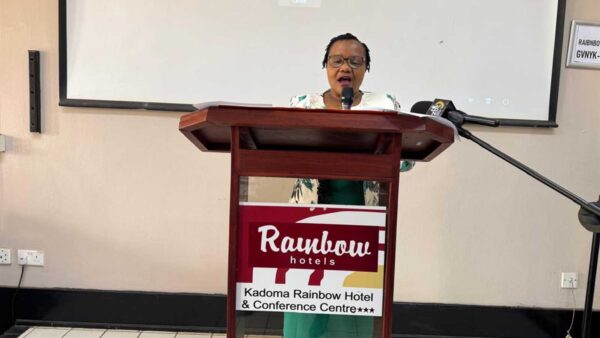
Commissioning the first mobile court truck a few days before a magistrate and support staff took it to its first working day at Southlea Park Police Station, Chief Justice Gwaunza stressed that bringing the courts to the people was a Constitutional obligation, not just an administrative convenience.
It was expected when she took office, considering her background before becoming a judge in making courts practically accessible to everyone, that she would be looking at innovative solutions to build on the solid work of her predecessor who had pushed hard for the extension of the court system and for the required new buildings and judicial postings. She has not disappointed.
At the moment, the mobile court is only needed at each suburban police station for one day a week for all those minor criminal and lower-value civil cases. This solves the problem that the workload in each suburb visited does not yet demand a permanent courtroom and assigned magistrate.
But we would expect that one result of the mobile court is that people who never bothered to seek legal assistance will now do so. We can probably expect that the number of cases involving child and family support, domestic violence and the like will increase as people see that something effective can be done, with minimal cost.
The police stations hosting the court will probably already be referring some of the social problems they have to deal with to the courts, making sure everyone understands they need to turn up on the appointed day at the appointed time.
This ease of getting justice may well see, as more people come forward, more permanent courts being set up, probably next to police stations in an expanded mini-Government complex for ease and convenience.
We would imagine that once a mobile court is needed more than twice a week then the more permanent arrangement should be seriously considered.
It has already been brought up that many people have never seen a court in action. When courts come to the people, then more people are going to realise that the court system is not some strange and distant proceeding, but something that involves them and their community.
Making the links stronger between ordinary people, ordinary communities and the courts will make justice not just more available practically, but also help to make it clear that we must follow justice in our daily lives.