Online Reporter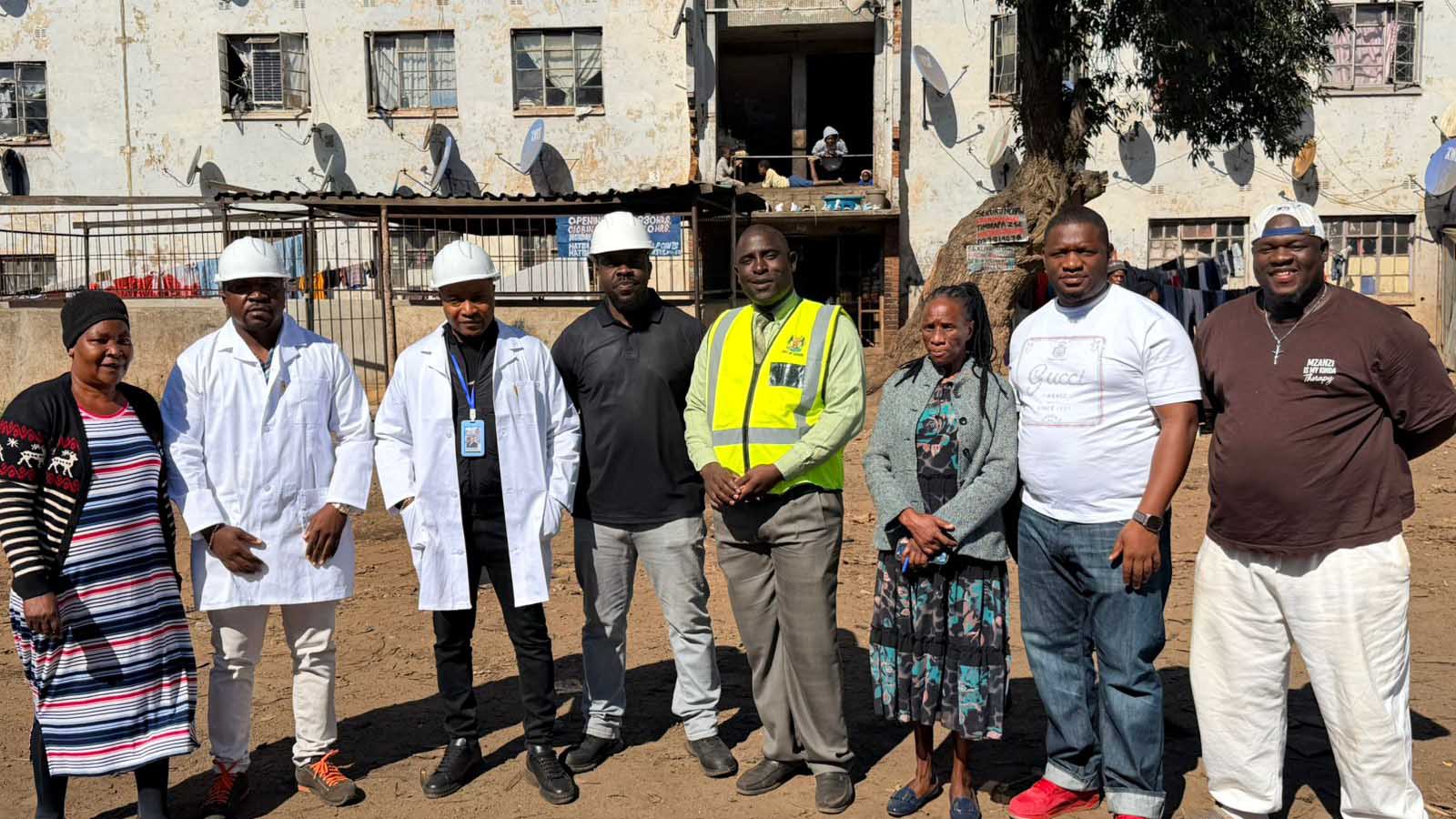
WE applaud the decision by Engineer Collins Mnangagwa to embark on a comprehensive renovation project at the dilapidated Matapi Flats in Mbare, Harare, which had gone into disrepair due to years of neglect.
The renewal programme will not only modernise the area but also improve the living conditions of thousands of people in the historic high density suburb.
The project, being implemented through ED AID 1, has seen Eng Mnangagwa dispatch a technical team which has already begun works at the 12-block complex, contracting local artisans to carry out plumbing repairs and repainting across the estate.
This is commendable and we urge the local community to work with the technical team to expedite the refurbishment process.
The Mbare hostel complexes have been a social disaster almost since they were built in the later colonial decades.
Despite occasional bursts of creative thought over how these structures could be modified for decent, if frugal housing, nothing has been done by Harare City Council.
The hostels were erected as single-men’s dormitory blocks by the settlers’ Salisbury City Council with its strong ideology that most black people working in the city were temporary “guest workers” who arrived as adults and would return to the communal lands reasonably soon.
Lodgers were banned in the city council’s high density suburbs, and home-ownership and family housing was frowned upon.
This contrasted with the far more enlightened Bulawayo City Council that carefully designed very-long leases of 99 years to get around the government refusal to grant freehold to urban black people.
That council encouraged lodgers for a wide variety of reasons, but largely to give homeowners a source of extra income so they could afford their houses, and in the rational expectation that your average family home-owner would insist on minimum standards of behaviour from lodgers without any need for council interference.
That is why Bulawayo had just three hostels, all built by the railways.
Even when the mildly reformist settler Government of the 1950s stepped in with family homes in suburbs such as Highfield, Salisbury City Council remained wedded to its hostels and built that vast complex across the north of Mbare, the site of the original “native location” chosen when it was on the edge of the town, rather than part of the inner city.
Each of the hostel blocks had an open ground floor for basic cooking and laundry, with three floors — each a huge open-plan barracks room of rows of narrow beds and lockers.
And that is what was inherited at independence by the newly and mass elected city council. The hostel residents rapidly partitioned their dormitories and families moved in, completing the transformation we see today without any input from the city council.
There was hand-wringing, warnings about the overloading of plumbing and other infrastructure, but zero action. Construction experts noted that the basic reinforced-concrete frames of the hostel blocks were surprisingly well made and that it would be possible to convert the hostels into modest family flats at far less cost than building such flat blocks from scratch.
That would probably allow fairly low rents, not as low as what lodgers in the informal partitioned spaces were paying, but still probably the lowest in the whole city.
Many thought then, and think now, that this was a great idea. But nothing was done.
For a start it would require lowering the number of people living in the complexes, and even in a phased approach, of emptying one block at a time while it was converted, families would have to be at least temporarily relocated.
And while cheaper than building flat blocks from scratch, some significant money would have to be found.
So the city council quietly retreated, put its head down and hoped the problem would simply go away.
And that has largely been the policy since, with almost zero maintenance and the continuing and gradual deterioration of plumbing, electrical wiring and other infrastructure.
Nothing has even been painted since the colonial era. Of course, the problem did not go away, and thousands still live in the hostel complexes, cannot be thrown into the street, but all deserve something better.
And that something better cannot be imposed. It needs the active participation of those who live in the complex and at least some external funds to help eke out what the residents and community might be ready to raise should good ideas be presented.
We are delighted that the technical group sent by Eng Mnangagwa has started work on one section of the 12 Matapi blocks, and that they have taken up the necessity of working with residents.
Plumbers that have been hired from the community to start work on the urgent necessity of fixing that critical part of the infrastructure will add value and derive income for their families, and no doubt other artisans who live there can be hired to do other work.
Safe electrical connections seem another urgent need. Paint can be found and hopefully residents will help to at least clean the walls.
We would hope that the opportunity can be taken to see how modern materials could be used to replace ad hoc partitioning, often with unsafe panels, and how flat design can be modernised and upgraded.
Successes will breed more success and more effort as residents see results.