AFRICA has immense potential and its challenges, but the potential will not be realised nor the problems solved by expecting outsiders to parachute in and telling us what to do.
We need to do the hard work, and the hard thinking and planning, ourselves.
Our own citizens and experts after all live on the continent, and so know only too well and in some detail just what we must do, and secondly we are the ones who have to live with our decisions, meaning we are likely to take some care to get them right.
Being on the spot we also adjust and upgrade as circumstances change or new knowledge becomes available.
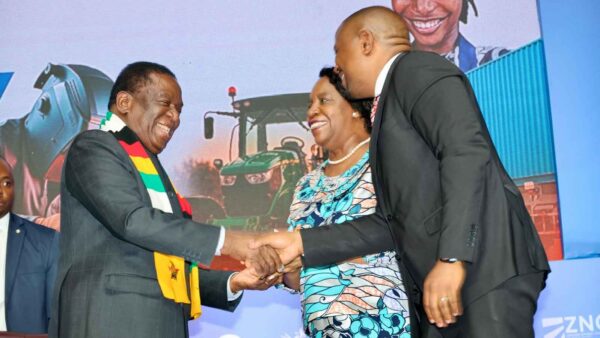
President Mnangagwa raised this issue of the need to have Africans directing the development of Africa this week when he opened the Third Africa Skills Week.
With his usual emphasis on practicality and practical results, he also wanted Africa to educate and train its expertise and general public so that they could do the necessary and useful hard work to realise potential and sort out problems.
That can quite often require upgrades and changes in education policies and systems, as Zimbabwe has now realised under the Second Republic and is implementing.
This self-reliance obviously does not include trade and investment, which after all have to be mutually beneficial relations between equals if they are to make any sense. Zimbabwe encourages both at ever-increasing rates.
But the African end of the relationship is controlled by Zimbabweans, who set the rules to ensure that trade and investment are mutually beneficial, and not a one-way street.
Sensible and practical rules, along with a great deal of local expertise creating the right conditions and ensuring that the rules are sensible, have after all seen both trade and investment with Zimbabwe expand at serious rates, hence our positive trade balances, growing reserves, growing tax receipts and growing formal employment. So the Zimbabwean experts got it largely right.
Even when we build up our relations with global financial institutions such as the International Monetary Fund and the World Bank, we are largely using them to provide the sort of detailed audit reports needed as we start negotiating a rescheduling of debts and a payment plan.
The economic reforms in Zimbabwe under the Second Republic were set and planned by Zimbabweans, because Zimbabweans wanted the benefits of high growth, stable currencies and low inflation. The fact that these also meet the targets of international finance institutions just shows that they wanted the same results as well, without telling us what to do to achieve those results.
The so-called outside experts who came up with all sorts of solutions have just been shown up to be wrong.
President Mnangagwa has always opened doors for Zimbabwean expertise. He brought in Zimbabwean technocrats to fix the economic fundamentals, and backed them through some difficult years.
He made sure the agricultural experts had a clear run, and budget, to implement some far-reaching and very innovative solutions that overturned many old practices to increase production, and again backed them until success made their expertise obvious to all.
He continually presses industry to move forward, switching from assembly and repackaging to processing Zimbabwean raw materials, and the smarter Zimbabwean businesses are doing just that, growing fast and showing that they too have that strong practical and innovative thrust the President so admires.
Self reliance does not mean Africans reject the common global heritage and banks of knowledge developed over millennia and centuries.
But we also need to recognise our contribution to that heritage, especially when it concerns Africa and African conditions, and we need to make sure we make our own respectable contributions to the global heritage.
Practical benefits do not come from ignoring theory.
They come from applying theory in specific circumstances and conditions, and generating upgrades and new paths in the theory from the results of those applications. Sooner than we think, we will probably be exporting solutions into that world of growing climate change and disruption that Africans have been mastering.
Self-confident Africans backed by self-confident societies can mobilise our potential and solve our problems, especially if we make sure that our innovative, smart and skilled citizens are used to the full.