Chronicle Editor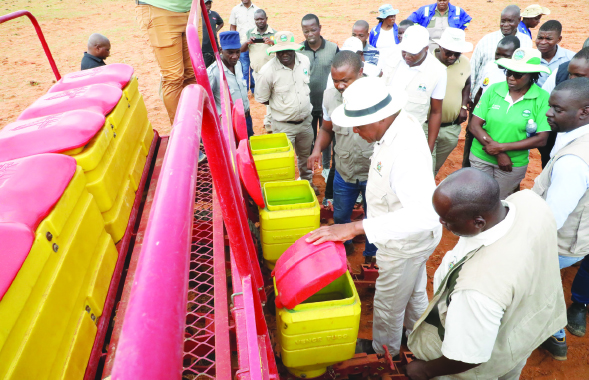
Nqobile Tshili, [email protected]
GOVERNMENT has said vulnerable households will not automatically receive food aid from both the State and donor agencies without committing to sustainable Pfumvudza/Intwasa farming, which has lifted many from poverty.
Zimbabwe is implementing the Pfumvudza/Intwasa climate-proofing farming method, which has been credited for boosting yields at household level, and is expected to help wean families from dependency on food handouts.
Under this programme, Government provides inputs to farmers depending on their ecological regions with those in Matabeleland, Masvingo, and parts of Midlands province being encouraged to plant traditional grains.
The Ministry of Lands, Agriculture, Fisheries, Water and Rural Development has joined hands with the Ministry of Public Service, Labour and Social Welfare to remodel the distribution of donor aid to vulnerable communities.
While it is inevitable that some families could be food insecure, Government has reiterated the need to address issues of donor dependency in communities where some families were deliberately becoming unproductive so that they receive aid.
Lands, Lands, Agriculture, Fisheries, Water and Rural Development Minister Dr Anxious Masuka has said all food-insecure households will be enrolled under the Pfumvudza/Intwasa master class to educate them on sustainable agriculture that can take them out of poverty.
He was speaking after visiting one of the model Pfumvudza/Intwasa farmers in Binga, Matabeleland North province last Thursday.
“What we are doing this year is unprecedented for any household that will require food assistance. They will not automatically get food assistance, we have communicated this to all the provincial ministers, and their permanent secretaries and we want the message cascaded to districts and villages,” he said.
“We want to wean off people from food insecurity at household level. This [Pfumvudza/Intwasa] way of farming is better and has guaranteed food security at household level.
“So, before someone accesses social welfare support starting this January, Agritex will assess those people and make the household sign a form that they will commit to this climate-proofing farming method.”
Minister Masuka said food-insecure households will commit to cropping three plots before food aid is donated to them. He said he was aware that some of the households were deliberately food-insecure so that they receive donor funds, a system that punished those who were more productive as they did not get anything from donors.
“Before you can access Government’s support or any social welfare support you must do three plots. Those working hard do not receive social welfare because they are working. But the other person is sitting next door.
“Where I come from some people say we don’t crop because we benefit from Caritas Care, among other donor agencies. We are putting that to an end,” said Dr Masuka.
He said the Government will further enrol the vulnerable households into a special Pfumvudza/Intwasa master class where they are taught agriculture to end poverty at family level.
Dr Masuka said the Government wants to uplift communities especially those with high poverty levels such as Binga District where food insecurity borders around 60 percent.
He said going forward, Agritex officers will be assessed based on their impact on communities.
“We have said now Agritex your officers will not be measured in the normal civil service performance matrix. But will be measured based on what they have done for each household,” said the minister.
“What production have you done to lift them to the next level? That is the only way to ensure that each household is on its way to Vision 2030.
“So, all households across the country will individually be tracked and we will measure the district extension officers by the number of people that have moved out of poverty,” he said.
Dr Masuka said the Government will no longer be conducting the Zimbabwe Vulnerability Assessment but the Livelihood Assessment as he believes the nation is closing the gap on vulnerability.
“We then come and do what they used to call Zimbabwe Vulnerability Assessment, but we have said Zimbabwe generally at a national level we are food self-sufficient,” he said.
“We might have villages and districts that are food insecure but at a national level, we have attained food security. What he must be measuring is not vulnerability but livelihood improvements towards Vision 2030.
“Their committee and their assessment from this year onward would be called Zimbabwe Livelihood Assessment, they can do that elsewhere but here we have made enough progress to become self-sufficient,” said Dr Masuka. — @nqotshili



 Online Reporter