Online Reporter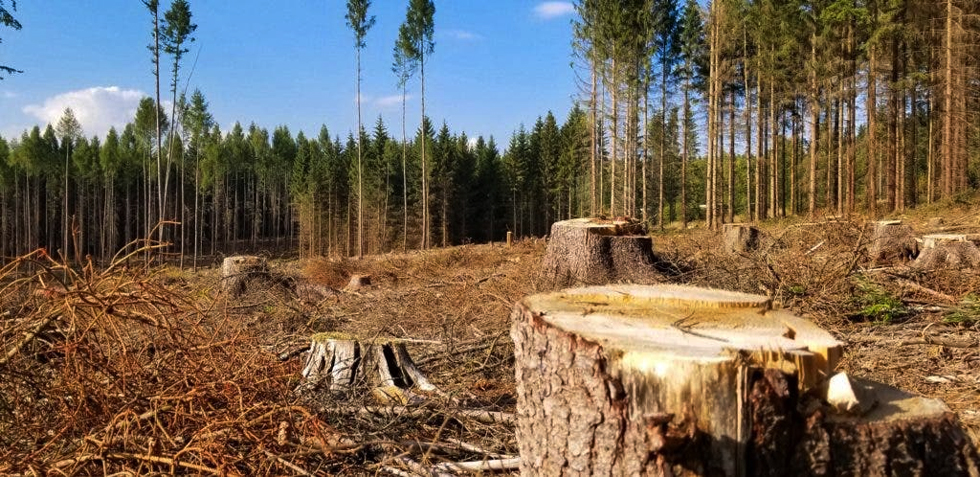
Ray Bande
Senior Reporter
ZIMBABWE is failing to maximise revenue from its timber products, with the country now importing from neighbouring countries due to local producers’ lack of replanting efforts and slow investment in value-added products, The Manica Post can reveal.
The country is experiencing a critical domestic supply shortage, caused by over-cutting, inadequate replanting, and destructive veld fires, leading to the depletion of timber reserves, primarily in the Eastern Highlands.
Companies are being forced to import timber to continue operations, and the situation is expected to worsen due to the lengthy time it takes for new plantations to mature.
In contrast, South Africa has a strong timber value addition industry, with robust downstream industries for pulp, paper, packaging, building materials, and furniture.
This sets it apart from other African nations that mainly export raw timber.
In an interview on the sidelines of a public lecture at Africa University, timber expert, Dr Joseph Kanyekanye, painted a gloomy picture of operations in the industry.
Dr Kanyekanye said approximately half of the area remains unplanted.
He expressed concerns about the decline of the timber industry, citing lack of investment and replanting efforts.
“After about 2015, there were no timber imports. The market was fully satisfied. It was well structured. The timber council, timber producers, manufacturers, and the value chain were intact.
“The value chain is broken now. What has happened is that there has been a reduction of the resources that are available, hence the imports that are coming from South Africa. That is one thing that has been happening.
“But there is also one untold thing, which is basically that a lot of these companies, about half of the planted area that is there now, exist as unplanted area, what we call Timber Utilisation Permits (TUPs) in forestry terminology. These areas are unplanted. So it is not about land, but it is about reinvesting and planting,” said Dr Kanyekanye.
He added that the timber industry is not about producing logs or poles.
“The other thing is inertia in the timber industry. There are companies such as SAFCO, who have moved up the manufacturing spectrum to go into value added products. One thing that people must understand about the timber industry is that the basics of the industry is not to produce logs or poles.
“The basic objective is to produce what we call lignocellulose material. If you look at what is happening now in terms of capacity utilisation, poles you are looking at about 30 percent, which is lost, sawn timber 60 percent of the timber is lost and burnt away. In other words, that is an opportunity we can harness. The trend now is to move away from sawn timber to value added products like medium density fibre board. Imagine the situation in Mutare, with the collapse of Mutare Board and Paper Mills, if we had a large MDA Fibre Plant, which can be sustained with 66 000 hectares?
“Everyone grows fibre and feed into the plant, the timber companies feed into it, akin to what is happening in the sugarcane industry. The value chain of sugarcane that we have in Hippo Valley and Triangle is working. That also allows itself to be used by farmers around. Instead of the invasions we can now have out-growers producing gum on a shooter rotation, for six to seven years, feed into the MDF plant, and we produce value added products,” he said.
The former Allied Timber chief executive officer, said the country is importing what it could be producing locally in the timber industry.
“The irony of what is happening now is that we are importing that stuff from South Africa, which people call Bison, when in fact it is called medium density fibre board. We can produce it here. We should also move the value chain from sawn timber which is cheap, because timber is inherently cheap material, to MDF which is of higher value. In my view, the timber industry has shown what we call perpetual infancy. Government, through the Minister of State for Manicaland Provincial Affairs and Devolution should move that agenda as an investment opportunity that investors should harness,” he said.
During a recent tour of Wattle Company executive director, Mrs Victoria Jakazi reported that the recent addition of plywood to their product range has increased their timber products extraction scale to around 70 percent.
Mrs Jakazi, however, acknowledged that local timber resources are dwindling.
“In terms of pine sawn timber, we actually sell locally only and no longer export, for two reasons. First, our prices are not competitive in the region. South Africa has large producers. Also, with the declining timber resource, we must prioritise the local market. We estimate our share is about 30 percent, as there are two other major producers and several smaller entities.
“We employ approximately 2 000 people across three divisions – Nyanga Pine Division, which produces pine sawn timber and plywood; Vumba Timbers, which produces treated poles; and Wattle Mimosa or Chipinge Chimanimani Division, which produces wattle extract. We are replanting with pine and gum trees.
“We began with pine sawn timber and have now expanded to plywood, taking us above 60 percent. We will utilise more waste to produce pulpwood, aiming to reach 70-80 percent capacity. Some waste is unavoidable, but we aim to minimise it,” she said.
Attempts to obtain a comment from Timber Producers Federation chief executive officer, Mr Darlington Duwa were unsuccessful, despite repeated efforts over a period of more than a month.
In contrast, South Africa’s forestry sector has experienced significant growth, driven by companies such as Sappi and Mondi, and benefits from a well-developed export economy.
Value addition is supported by investment, sustainable practices like FSC certification, and efforts to improve competitiveness. South Africa boasts the continent’s most sophisticated commercial forestry industry and an extensive value chain of processing industries that turn timber into finished products.
Former diplomat, Mr John Maré, who now works as a business consultant covering forestry and other sectors, highlighted key difference between forestry in South Africa and that in the rest of the continent.
“Most of Africa remains caught in a ‘colonial mode’ of simply exporting raw materials. South Africa has been a ‘shining star’ in developing value-added industries around timber. It has built a significant paper and pulp industry.
It also manufactures wooden products such as flooring and furniture, along with wood-based fibres that can be used in clothing. A handful of South African companies, notably Sappi and Mondi, have become recognised brands in the sector,” he said.
Key areas of value addition include pulp and paper, with South Africa having a large pulp and paper industry that supplies both domestic and international markets, board production, where the industry produces various types of boards, building and construction, where timber is used in construction and building materials, furniture, as well as wood-based fibres, which are processed into products such as wood-based fibres, and waste wood products, including initiatives to convert sawdust into briquettes and pellets.
Cursory internet research indicates that factors driving value addition include market demand, with rising global demand for wood products, particularly in the construction industry, due to their perceived sustainability.
Investment is also a factor, with the sector attracting significant investment, particularly in pulp and board production.
Other factors include sustainability certification, competitive strategies, economic growth, export performance, and intra-African trade.