Online Reporter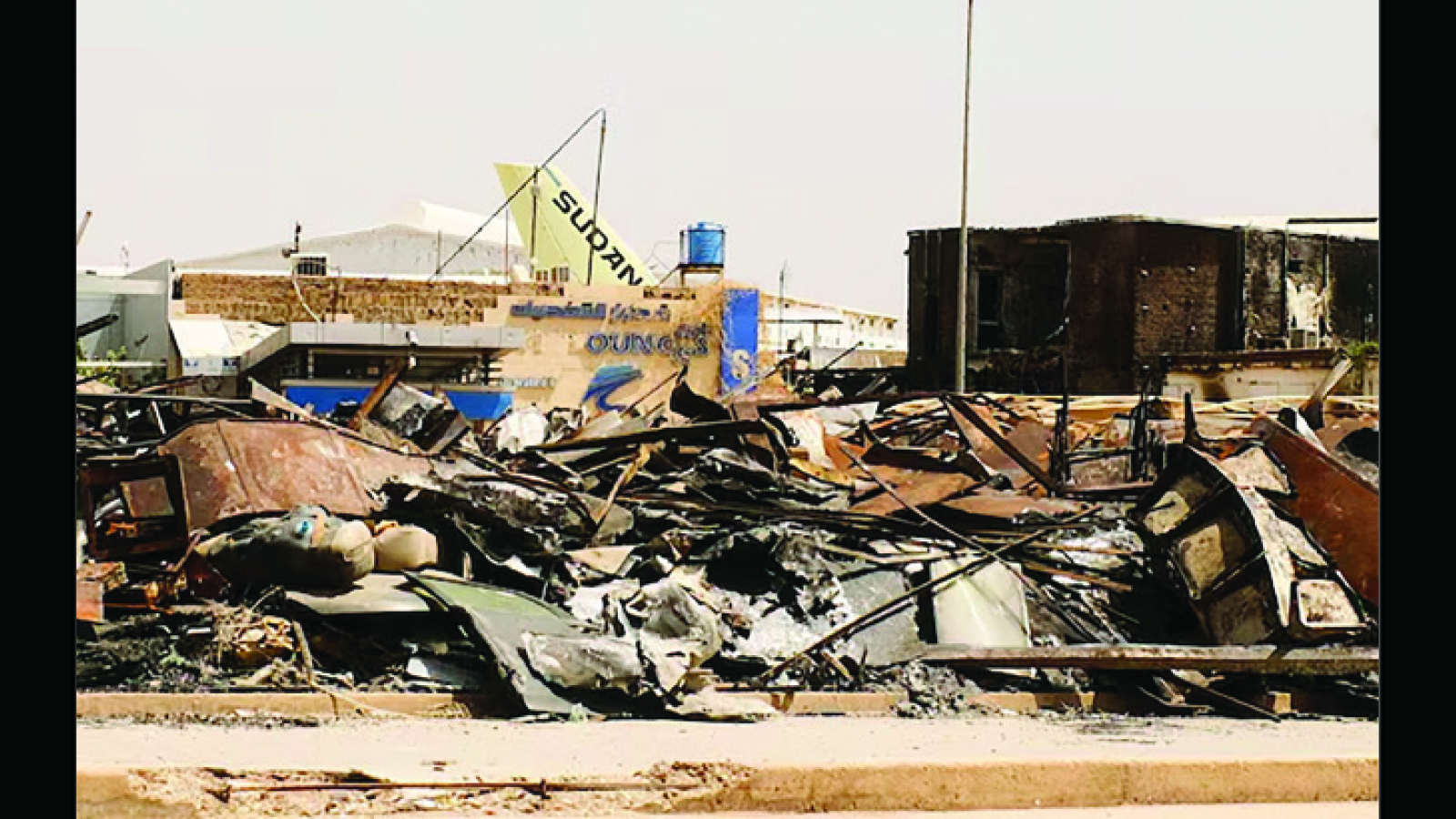
Stephanie Musabaeka and Mazvita Chimkoko
The crisis in Sudan has become a key feature that sheds light on the international system and how it has failed African people.
The war, which began in April 15, 2023 pitting the Sudanese Armed Forces and the paramilitary Rapid Support Forces, is still continuing.
The conflict has forcibly displaced nearly 12 million people, according to United Nations agencies, while between eight and nine million people have crossed into Chad, South Sudan, Egypt, Ethiopia and the Central African Republic.
It reflects the world’s moral hierarchy — a hierarchy where African lives are infinitely negotiable and African suffering is tolerated so long as it does not inconvenience global politics. Nearly 12 million Sudanese have been forced to flee their homes in less than two years. Entire cities have been reduced to rubble and famine now stalks a generation.
Yet the world’s collective response remains a mix of polite statements, delayed sanctions and dwindling aid pledges. Sudan’s crisis has evolved into the largest internal displacement emergency on the planet. Humanitarian needs for millions of Sudanese continue to grow by the day.In parts of Darfur, children are dying from malnutrition, hospitals have closed and liberal workers have been either killed or expelled.
The European Union says conflict, economic decline, high food prices, climate shocks, drought and floods have all combined to make it harder for people to feed themselves and keep working their land.
Aid to El Fasher has been cut off and some cities have been looted or become inaccessible.
Chad’s eastern reception areas are overcrowded, while water supplies and shelters have become inadequate.
When war broke out in Ukraine, the international response was immediate — massive airlifts, open borders and billions in aid. Conversely, when conflict erupts in Africa, the world pauses to calculate strategic interests.
Internal displacements in Sudan — the largest in the world — have not inspired the same moral outrage or political mobilisation. The contrast exposes the inherent bias in humanitarianism: suffering is triaged by geography and race.
The Sudanese do not need pity; they need proof that the international system also values their lives.
The international system, which has shown that it is more than ready to support countries such as Ukraine and Israel, has failed Sudan. While these countries face the same reality, there is a huge disparity in media coverage and narrative.
Despite being one of the worst humanitarian crises of the 21st century, the Sudan emergency garnered surprisingly little public attention when compared to the ongoing conflicts involving Russia and Ukraine, and Palestine and Israel.
The coverage of Ukraine and Israel by news channels such as CNN, BBC and Al Jazeera contrasts sharply with the near silence on Sudan.
According to The Economist (2024), a review of data from analytics firm Chartbeat showed that news coverage of Sudan peaked in April 2023 with about 7 000 new articles globally, but averaged only around 600 per month in 2024.
In contrast, coverage of the wars in Gaza and Ukraine stayed above 100 000 stories per month. The lack of sustained global media attention on Sudan is not accidental but symptomatic of an international order that values some lives more than others.
Disparities in humanitarian funding reveal how the international community has turned a blind eye on the Sudan conflict.
International aid remains grossly inadequate.
Sudan received only US$208 million from the Sudan Humanitarian Fund in 2024, and the United Nations High Commissioner for Refugee’s 2025 appeal was just 35 percent funded (US$389 million of US$ $1,1 billion).
In contrast, Ukraine’s humanitarian plan was 73 percent funded, totalling US$3,1 billion.
In his research titled “The Politics of Aid Effectiveness”, Mark Buntaine notes that donor priorities often follow media visibility and geopolitical interests rather than genuine humanitarian need, explaining why Sudan’s crisis remains underfunded and overlooked.
The Rapid Support Forces tactics in Darfur have included besieging towns and attacks on camps that were meant to terrorise, displace and render populations vulnerable to recruitment, extortion or land grabs.
The humanitarian sector has grown into an industry that is professionalised, branded and politically cautious.
Field workers risk their lives daily, but the leadership in Geneva and New York often measures success by visibility, not impact.
The obsession with “neutrality” has turned many agencies into silent witnesses to atrocity.
When the world accepts that millions of Africans can live indefinitely in limbo, it signals that stability is a privilege, not a right.
It tells the displaced that they are a humanitarian category, not human beings.
Where is the outrage when aid is blocked by warring factions?
Where is the courage to call out the governments that fund wars, and then fund aid to manage the consequences?
Instead, humanitarian discourse has been sanitised using phrases like “limited access” and “challenging environments”, as if starvation were a logistical inconvenience rather than a deliberate weapon of war.
Sudan exposes an uncomfortable truth: the humanitarian system no longer knows how to confront injustice.
It manages crises; it does not challenge them. The uncomfortable truth is that the international community has learned to manage African suffering, not to end it.
Humanitarian agencies are left to patch open wounds with half-funded appeals, while diplomats talk about “African-led processes” that have neither leverage nor teeth. Western or external actors cannot impose solutions. Support must be routed through local organisations, women’s groups and regional mediators that understand the dynamics.
The Sudan crisis is not an outlier; it is a warning. Across the continent, from the Sahel to the Great Lakes, wars are metastasising while the world looks elsewhere.
Every camp, every mass grave, every child born in exile is an indictment of a system that still calculates compassion in racial and geopolitical terms.
If Sudan were in Europe, the world would have called it a genocide, months ago, and acted accordingly.
Until that double standard is addressed, Africa’s displaced will remain proof that humanity still has borders.
Stephanie Musabaeka and Mazvita Chimkoko are students in the Department of International Relations and Diplomacy at Africa University.