Online Reporter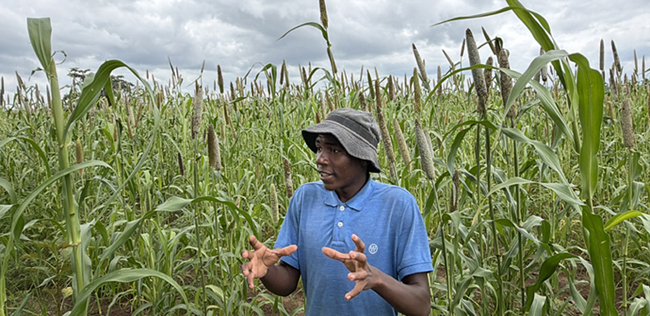
Lovemore Kadzura
Post Reporter
FARMERS in Manicaland are facing mixed fortunes as relentless rains bring both promise and peril to the province’s crops.
While incessant downpours have caused nutrient leaching and waterlogging in late-planted fields, early-planted maize and tobacco remain in excellent condition. The province has already surpassed its cereal planting target by three percent, raising hopes of a bumper harvest. Yet, those prospects are now under threat as heavy rains continue to pound the region for a second week.
Farmers warn that if the wet conditions persist, late-planted maize and tobacco could suffer severely, leading to poor yields. Manicaland Provincial Agricultural and Rural Development Advisory Services (ARDS) director, Mr Nhamo Mudada, confirmed that crops are generally in good condition, but his office has begun receiving formal reports of waterlogging damage.
He urged farmers to take proactive measures, including draining excess water from tobacco fields—particularly vulnerable to saturation—and splitting top-dressing applications for maize to minimise losses.
“The province has been receiving good rainfall since December last year, which is very welcome for our crops and livestock. However, excessive rainfall being received in some parts of the province may cause damage to some crops. As of January 19, 2026, there were only reports of 2,2 hectares of maize having been damaged by waterlogging in Chisumbanje.
“We are pleased to announce that we have surpassed our maize planting target by over three percent. All our crops are looking good. At times like this, we encourage farmers to counter leaching by applying foliar fertilisers. We also encourage split top dressing application, and the use of urea is encouraged for top dressing, given these high rainfall conditions. In waterlogged fields, farmers should drain out the excess water by ridging, especially in tobacco.
“Farmers are encouraged to continue planting root and tuber crops such as sweet potato and cassava because we have abundant rains. With this good season, we are looking forward to a good harvest.
“Let us fight weeds by using any means, including hand pulling and herbicide application. Let us get advice from Agricultural Business Advisory officers, otherwise improper herbicide application can be disastrous,” said Mr Mudada.
Tobacco Farmers union Trust president, Mr Edward Dune said late-planted tobacco is under threat from leaching, adding that the crop is sensitive to excessive water.
However, farmers who planted early are harvesting without major challenges.
“The late-planted tobacco has been severely affected by the rains, which are now excessive. Tobacco thrives well where there is controlled water and abundant sunlight. The current situation is just water and no sun. Some crops will not recover, and some will recover very slowly. The fields are waterlogged, and a lot of leaching is happening. Small-scale farmers are the most affected.
“For those who planted early, they are already harvesting and have a few leaves left. Their crop is in perfect condition. Their challenge is an inadequate labour force to expedite harvesting before the crop is affected. We encourage farmers to embrace irrigated tobacco, as relying on rainfall is unpredictable,” said Mr Dune.
Optimism is running very high among farmers in Buhera District as traditional grains – millets, sorghum and rapoko – thrive under favourable rainfall conditions in Manicaland.
After two successive years of battling drought and poor yields, farmers in the district are now eyeing a bumper harvest of traditional grains, crops well suited to the district’s semi-arid climate.
Due to increased awareness, Government support of agro-ecological tailored inputs and training from agricultural extension officers, many farmers have shifted from traditional maize to more resilient and sustainable traditional grains. They have, not totally abandoned maize, but reduced planted size. The paradigm shift is now bearing fruit as the compliant communal farmers are guaranteed a bumper harvest, which will ensure they have enough for family consumption and surplus to sale.
Agronomists say traditional grains are better adapted to Buhera’s dry conditions and have higher chances of reaching maturity even in seasons with erratic rainfall.
The crops are also highly nutritious and offer food security at the household level.
Mr Trymore Kutadzaushe, of Chimombe Village, under Chief Chimombe in Ward 10, Buhera North, who planted three hectares together with his two wives, said he is expecting over three tonnes due to reliable rainfall this year.
“Last year I planted 2,5 hectares and managed to get a decent harvest despite the little rains that was received here. We managed to harvest two and half tonnes. We sold some and got over US$3 200 cash. This year, we have increased to three hectares and we anticipate to harvest over 3,5 tonnes.
“The rains are very good this season and everything is going on smoothly. We use manure as we cannot afford fertilisers, but our crop is performing very well. If possible, Government should provide fertilisers for us so that our yield increases. We are still using manual harvesting and shelling methods. Shelling machines are now available, but we cannot afford them. We need time to purchase them.
“We are realising good returns from rapoko as there is ready market for the produce which we sale at US$18 to US$20 per 20 kilogrammes. I have seven cows and 50 goats which I bought using rapoko proceeds. I am living a decent life with my family and sending my children to school with some of them now working around the country,” he said.
Mr Felix Dzveta, a 20-year-old first-year student at the National University of Science and Technology (NUST), pursuing Agricultural Genetics and Cell Technology (plant breeding), said Buhera is experiencing a positive paradigm shift, with traditional grains in high demand, enabling farmers to transition from subsistence to commercial production. “We have planted one and a half hectares of sorghum and some maize. I help my grandmother with farming, which is our source of income. We anticipate a better yield this year compared to last year, which was affected by a prolonged dry spell and heatwave,” said Mr Dzveta.
He said sorghum is in high demand, with ready buyers in Murambinda and Rusape, generating an average of US$200 from surplus sales.
They also grow groundnuts and round nuts on a small scale, which thrive in the area.
Mr Dzveta advised farmers to work closely with Government extension officers for proper agronomy advice, noting that the area suits traditional grains and short-season maize varieties.
He encouraged youths to engage in agriculture, emphasising their role in family and national development.