Chronicle Editor
That religion has to be decolonised arises from a fundamental fact that at some point it got colonised.
Decolonialisation cannot be proposed where coloniality has not been diagnosed. Today I write with the Christian religion as a specific sample but in general reference to religious faith at large. When Christianity lost its character as a kingdom that was not of this world and accommodated itself to kingdoms of this world and became one of the kingdoms of this world; it was effectively colonised by political power and capitalism. God was captured and religion held hostage.
The religion fell from being Christianity to being Christiandom as Enrique Dussel says. That is the reason why today there is a lot of Christianity that has no Christ in it, and a lot of us that perform and dramatise being Christian but do not enact Christianity.
The Christian religion got appropriated and usurped by the colonial and imperial enterprise. To read David Stoll’s book: “Fishers of Men or Founders of Empire?, is to witness how Christian missionaries were diverted from building, in Latin America and Africa, the Christian kingdom to expanding the colonial Empire.
Christianity’s loss of innocence to Empire and its subsequent fraternizing with powerful forces of darkness on earth is not the only way the religion was colonised. A multiple other ideologies and passions of the earth managed to infect Christianity, steal its name and use it for all sorts of purposes including the very evil that Christianity came down to fight and defeat.
The entire world has in the past two decades suffered a crisis of religion where huge populations seem to turn to religion but the quality of life on earth does not even get near to being religious life. Today big thieves steal big money privately and then publicly thank God for the blessings and the prosperity. Proceeds of crime are thanked on God as blessings and criminals purposively mistake themselves for the sons of God.
Cornel West was right when he made the distinction between moralistic acts of religious pretenders from the moral acts of righteous men and women. The crisis of religion arrives at its zenith when religious thought and practice lose commitment to truth and social justice and become sold and bought to certain dramas and performances of empty religiosity.
The Theology of Liberation
Simply put Theology is the philosophy of religion. Some deep reflection on God and the related matters of faith, hope and love. But Theology is more than that simplification because it is the thought and knowledge about the unknown and the unthinkable. Gustavo Gutierrez is considered the founder of the Theology of Liberation but he is not. He is only the philosopher who explained the Theology and its Liberation role on earth more compellingly and convincingly, otherwise there are many theologians out there that do not even know that they are theologians; they just wake up and do Theology and not talk or teach about it.
Theology, says Gutierrez, is the “logos of the theos” which means that it ponders the logic, science, theory and method of God. So theologians are not only the students of the bible. When a biological and chemical scientist sees the hand of God in his scientific discovery of a vaccine or another medicine he or she is being theological in understanding.
When an engineer credits God for a novel bridge that he has designed, and does not just thank the engineering teachers and textbooks, he or she is being ‘logical’ and reasonable about the ‘theos.’ So the idea is false that being truly spiritual and theological involves gatherings, singing and talking loud about God. So many souls out there are quietly spiritual without necessarily being religious.
The meeting point between Faith and philosophical or scientific reason is in itself a paradox because faith, especially religious faith is always blind faith that believes fully in the unseen and the unknown. Whereas philosophical and scientific reason demand empirical evidence. Being scientific and reasonable about religious faith and belief which Theology does is dramatically ironic and spectacularly paradoxical.
In the Western world such figures as Albert the Great and Thomas Aquinas are the canonical theologians. Both men where Catholic scholars and were later canonised as Saints. Thomas Aquinas in particular believed that the existence and power of God could be proven through science and philosophy, empirically. Aquinas gave five, ‘compelling proofs’ of the existence of God.
First is that the life and movement of things in the world is godly. Second, the cause and effect of things is by God.
Third there is no way in philosophy or in science how things could owe their existence to themselves, there must be a maker of things. Fourth, all things on earth have qualities, good or bad, and there must be a giver to quality. Finally, Aquinas thought the world was just too grand and elegant for there to be no great artist and designer behind it. In short, Aquinas mixed faith and reason, science and philosophy, in attempting to prove beyond doubt the existence and power of God.
Decolonising religion through the philosophy of liberation
Yes, religion can be saved from its captivity to Empire. It can be recovered from its hostage status to political power and big money. Its theft by tyranny too. The way the prophet Amos made the suggestion that the great God was not in the majestic temples but in the desert and other low and hard places was an article of the theology of liberation. As much as it is not true that all power and big wealth is a sign of God’s blessings; it can be evidence of criminality and evil itself. Not all power and prosperity are godly.
Recovering God and religion from the captivity and hostage of slavish, colonial, imperial and tyrannical empires of the world and other forms and shapes of earthly darkness is to decolonise and liberate them. Restoring God to the victims, the poor and the oppressed is to decolonise and liberate divinity. To be faithful to God as a God of truth and justice is to be decolonial and fearless against much falsehood in the world where God has been captured by power and capital.
As Cornel West says, “faith is stepping out on nothing and landing on something.” The nothingness of oppression, domination and exploitation is the very foundation of liberation, after all. The conquered, enslaved, colonised and oppressed are the children of God that Felipe Guaman Poma De Ayala called “those that knew Jesus before they heard about him because they lived like him, and followed his word before it was preached to them.”
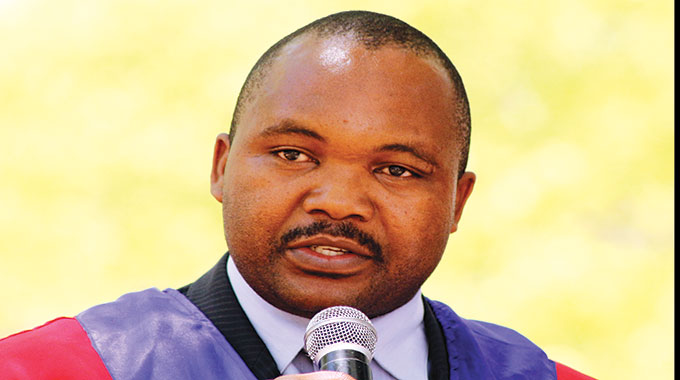
Cetshwayo Zindabazezwe Mabhena writes from the University of Zululand, Empangeni, KwaZulu Natal, in South Africa. Contacts: [email protected].


 Online Reporter