Online Reporter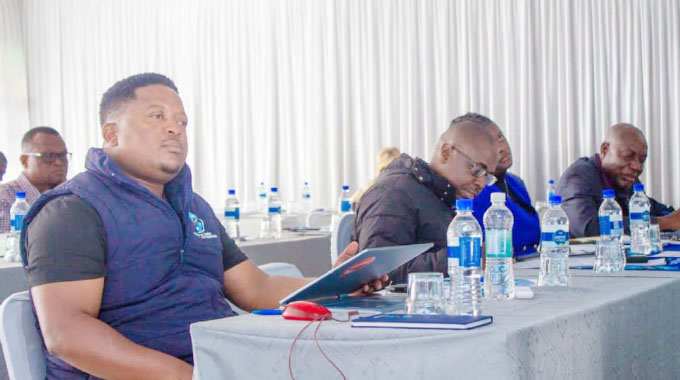
Patrick Chitumba, [email protected]
ZIMBABWE must ensure that communities affected by major development projects are adequately consulted, protected and empowered so that no one is left behind as the country pursues economic growth, Midlands
Provincial Affairs and Devolution Secretary Dr Edgar Seenza has said.
Speaking at a recent workshop in Gweru to validate the Draft Development-Induced Displacement (DID) Best Practice Handbook, Dr Seenza said development should improve lives and create opportunities for communities rather than disrupt livelihoods and deepen inequalities.
The handbook was developed by the Centre for Conflict Management Transformation (CCMT), a local non-governmental organisation, to guide Zimbabwe’s response to displacement caused by development projects.
In a speech read on his behalf by the director in the Office of the Midlands Provincial Affairs and Devolution Minister, Mr Masimba Mukondo, Dr Seenza said Zimbabwe was undergoing rapid transformation under the National Development Strategy 2 (NDS2).
“Across the country, we are witnessing investments in infrastructure, agriculture, mining, housing, energy and other sectors that are critical to economic growth and national development,” he said.
Dr Seemza said such investments create jobs, improve service delivery, strengthen local economies and contribute to citizens’ well-being.
“They are essential if we are to achieve our national aspirations enshrined in the NDS2 and ensure that future generations inherit an even stronger and more prosperous Zimbabwe,” he said.
However, Dr Seenza acknowledged that major projects often require changes in land use that may force people to relocate or alter their livelihoods.
“New mines, irrigation schemes, dams, transport infrastructure, industrial developments and urban expansion may require people to relocate or adapt their livelihoods,” he said.
“This reality is not unique to Zimbabwe. It is a challenge encountered by countries across the world as they pursue development and modernisation.”
Dr Seenza said poorly planned displacement processes risk excluding affected communities from the benefits of development.
“When displacement processes are not adequately planned, there is a risk that some individuals, households or communities may struggle to fully participate in and benefit from the opportunities that development is intended to create,” he said.
Dr Seenza said carefully designed relocation processes, supported by meaningful consultation, can transform development into a catalyst for broader social and economic progress.
“Communities can be empowered to participate in development and benefit from its outcomes. This is why responsible development-induced displacement processes matter,” he said.
Dr Seenza said the Government’s commitment to orderly and inclusive development is reflected in policies such as the Zimbabwe Human Settlement Policy, the Zimbabwe Urban State Land Policy, the moratorium on land allocation and the inclusion of development-induced displacement issues in the National Development Strategy 2.
He said Midlands Province had already made progress in institutionalising development-induced displacement planning and improving coordination among Government departments, local authorities, traditional leaders, technical experts and communities.
“The collaborative processes that have brought us together, including dialogue platforms facilitated through this initiative, have already contributed to addressing practical challenges and strengthening cooperation among Government institutions, local authorities, traditional leadership, technical experts and communities,” he said.
“The handbook that we are validating today should therefore be seen as building upon this solid foundation.”
Addressing the same workshop, CCMT executive director Mr Xavier Mudangwe said the handbook seeks to establish best practices that ensure development benefits all Zimbabweans.
“Our shared goal was to co-develop best practices to support Government in the ongoing implementation of the NDS2 and to ensure that when we are economically progressing as a nation, no one is left behind,” he said.
“Today, we take an important step forward by convening to validate the first draft of our Development-Induced Displacement Best Practice Handbook.”
The two-day workshop is expected to consolidate stakeholders’ views before the handbook is finalised and adopted to guide future development projects across the country.