Online Reporter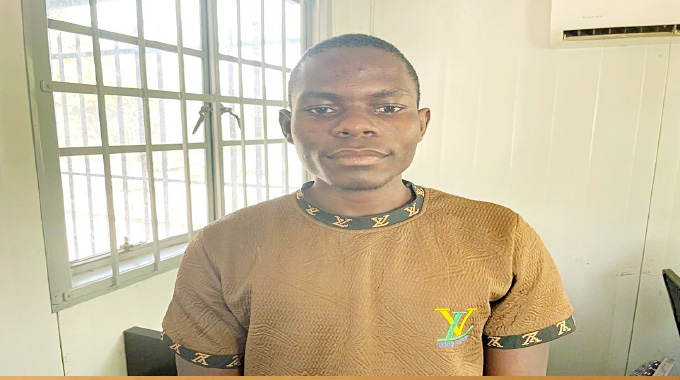
Mthabisi Tshuma, Features Correspondent
HIS eyes beamed in awe as a bunch of computers were switched on at a Community Information Centre (CIC) in Binga, Matabeleland North Province recently.
For 17-year-old Benami Munsaka, a Lower Six learner at Binga High School, this was something to behold.
He confessed that it was his first time to see or touch a computer.
He had never stepped out of Siansundu Village, his home and pursuing Advanced Level studies was the exposure he needed.
Growing up, young Benami aspired to become a police officer. He also admired the teaching profession and veterinarians.
These aspirations forged at a tender age came about as a result of the occasional sight of these professionals while doing their work in the villages.
He just wanted to be like them.
Benami was not exposed to other careers but the coming in of the Binga Community Information Centre, which is now being turned into a digital centre, has been a game changer for him, his best friend Motivator Ngwenya and many others.
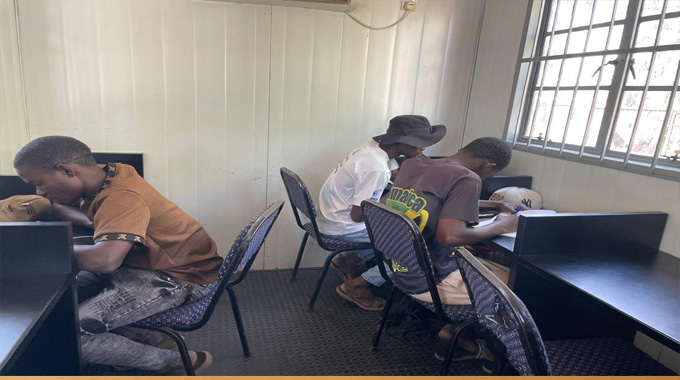
The digital centres are a Government initiative aimed at empowering communities by providing appropriate and relevant Information Communication Technologies (ICTs).
The aim being to bridge the digital divide between urbanites and rural folks as well as align with the Second Republic’s philosophy of leaving no one and no place behind.
Before enrolling at Binga High School, Benami and Motivator wanted to further their studies in the arts. But, when the digital centre at the heart of Binga was opened to the public, it became a market place of ideas as young people shared information and were exposed to different career options.
They became accustomed to research and that was the turning point for them.
They learned more about advanced technologies and Artificial Intelligence (AI) tools.
Now they have new ambitions. They aspire to be tech scientists.

Motivator has been writing his Upper Six examinations this November and he says the digital centre has been useful for his revision and research.
“I’m able to study here at the Community Information Centre. I do my studies easily and I’m confident I will pass. The centre is ideal for students and anyone who wants to learn about technology and all the other vital aspects of life.
“The coming in of the CIC has been instrumental in shaping my future as I could choose to study sciences. This has had a great impact on me as I want to be one of the first scientists to come out of Binga. I want to be a software engineer. When I’m done, I will come back to Binga and inspire others,” said Motivator.
Benami jumped in: “You won’t believe it if I tell you that I had never seen that kind of technology before. I only read about computers and what they do. At my previous schools, there were no machines like that. I will admit that before we had the CIC, my marks were low and some didn’t believe I would pass my O-levels but I used this platform to research more and be at par with my urban counterparts.
“When I came to Binga Centre and saw the computers, I was in awe. The experience changed my life. My father had wanted me to do my A-levels in Hwange, but I convinced him that I could learn science while here in Binga and pass, all thanks to the tools availed at the Community Information Centre. Thanks to our leaders and President Mnangagwa for this exposure. We’re grateful as the young people of Binga.”
Technology has become an indispensable part of communities, revolutionising the way people communicate, work, learn, entertain and care for themselves. Its impact is evident in every aspect of their routines, enhancing efficiency, productivity and connectivity.
Technology has also revolutionised the field of education, providing new opportunities for learning and knowledge acquisition. Traditional classrooms are no longer the sole source of education. Online courses, educational websites and e-learning platforms have made education accessible to a global audience.
Postal and Telecommunications Regulatory Authority of Zimbabwe (Potraz) Director-General Dr Gift Machengete said the CICs are being turned into viable projects across sectors, and the overall view is to encourage people to use technologies to better their lives.
“These are no longer just CIC’s but digital centres. It’s not about just going on the internet or to send emails, but real progress is happening there. Young people are able to research on their academics and businesses are able to connect with others from around the world.
“With the coming in of Starlink in terms of improved connectivity, these are centres for development, which then means that they will really reduce the pressure for people out there in the rural areas to come into towns either to look for jobs or just to be in town. Some are just in town, but they don’t have jobs. Now, at these digital centres, employment will be created because of the activities that will be happening there,” said Dr Machengete.
Binga Community Information Centre agent Mr Destiny Makulumo said the digital centre is a place where technology takes centre stage in enriching the lives of villagers.
“At the CIC, we offer services including basic computer skills and training for various computer related programmes.
“I’m pleased with the response from the community with the youths being the majority of the people that come to acquire these free services. Adults are also doing good as they are the ones who come with their children and wait for them as they do their homework and research,” said Mr Makulumo.
The impact of the digital centres is being felt across the country.
Ronica Sibanda, a Plumtree High School student said the facility in the border town had brought convenience and reduced congestion experienced at internet cafes.
“We have a computer laboratory at school but as per the school regulations, we can only use it during school hours which affects some of us who stay outside school when we want to study during weekends.
“The CIC is helping us a lot as we’re able to spend the whole weekend studying for free,” said Ronica.
Mr Saul Nyathi from Plumtree said more CICs should be unveiled to the public.
“For areas like Plumtree, Bulawayo, Gweru and Harare, I believe there should be more CICs to cater for more people,” said Mr Nyathi.
Kamativi Ward 11 Councillor Brilliant Ndlovu said the construction of a digital centre in their area would benefit the whole community and ease the burden of travelling to Hwange for services such as banking and communication.
“We understand the digital centre will also house Zimpost which is a great breakthrough for the pensioners as they will now be able to process their money right at their doorsteps.
“For a while now, they have had to be travelling either 90 kilometres to Hwange or 190 kilometres to Victoria Falls to access services,” said Clr Ndlovu.
A resident from Kamativi, Mr Joshua Tshuma, said as a lithium mining community, they hope to benefit more from the digital centre.
“We’re confident that the digital centre will help boost even the production of lithium within Kamativi as we’re able to research on more ways of enhancing our operations,” said Mr Tshuma.