Online Reporter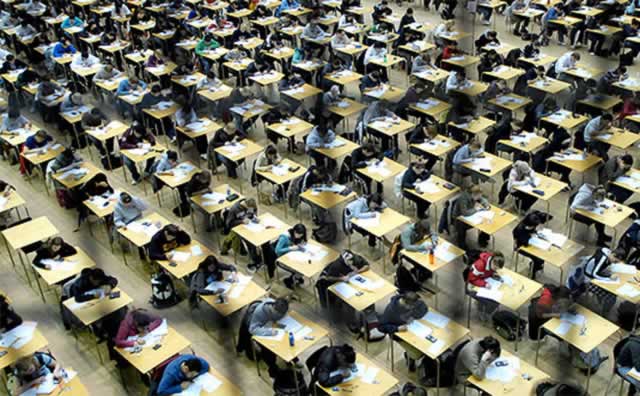
Gabriel Manyeruke
AS the public examination season approaches, thousands of candidates carry more than pens into the examination room.
Some shoulder the weight of parents who have sacrificed everything to keep them in school.
Others bear the reputation of schools determined to preserve impeccable pass rates.
Many carry both. Their greatest challenge is not always the examination paper before them, but the invisible burdens they have carried long before they enter the hall.
Two invisible backpacks
Education has always demanded commitment, discipline and hard work.
Pressure, in itself, is not the enemy.
Like fire, it can provide warmth and motivation. Yet when pressure becomes excessive, it ceases to strengthen and instead begins to consume.
Many learners today walk into examination rooms wearing two invisible backpacks.
The first is packed by parents. The second is loaded by schools.
Individually, each may seem manageable.
Together, they can become an exhausting weight that overshadows learning itself.
Consider a learner whose widowed mother has sold cattle to pay school fees and meet examination registration costs.
Every revision session is accompanied by a painful reminder: “Do not waste our sacrifice.”
Another learner is constantly reminded that one failed subject could deny the school its coveted 100 percent pass rate.
Neither enters the examination room carrying only knowledge.
Both carry expectations that no calculator can measure.
When love becomes pressure
Parents naturally desire the very best for their children.
Their sacrifices deserve appreciation rather than criticism.
However, good intentions can sometimes produce unintended consequences.
Some parents repeatedly remind their children how much has been invested in their education, unintentionally making examinations feel like debts that must be repaid.
Others prescribe careers long before their children have discovered their own strengths, insisting on medicine, engineering or law while dismissing equally fulfilling alternatives.
Gradually, education shifts from a journey of personal growth to a mission of satisfying other people’s ambitions. A learner begins to fear disappointing family more than failing an examination itself.
Schools under their own weight
Schools, too, operate under immense pressure.
Parents increasingly judge institutions by pass rates, education authorities demand accountability and competition for enrolment has become intense.
Outstanding results have become powerful marketing tools.
Yet there is danger when institutional reputation becomes inseparable from learner performance.
Teachers may unintentionally communicate that every candidate carries the honour of the school on their shoulders.
Curiosity gives way to relentless drilling. Learning becomes less about understanding and more about protecting a brand.
Ironically, the learner who should be at the centre of education risks becoming merely the means through which schools pursue prestige.
The hidden cost of expectation
Psychologists have long recognised that excessive anxiety interferes with memory retrieval, concentration and sound judgement.
Ironically, the very pressure intended to produce excellence often undermines it.
Many candidates quietly confess that they fear disappointing others more than failing themselves. Some become convinced that their worth will be measured entirely by a results slip.
Others experience sleepless nights, panic attacks or complete mental blocks during examinations despite thorough preparation.
Today’s learners also carry a third, quieter burden.
Social media constantly displays revision timetables, predicted distinctions and celebratory success stories.
What should inspire often becomes another yardstick for comparison, convincing learners that everyone else is coping better than they are.
Redefining success
The solution is not to eliminate expectations but to redefine them.
Parents should celebrate effort, improvement and integrity as enthusiastically as distinctions.
Schools should pursue excellence without reducing learners to statistics.
Career conversations ought to discover talents rather than dictate destinies, while examination preparation should include emotional resilience alongside academic revision.
Ultimately, the finest examination result is not one earned at the cost of a child’s confidence.
Public examinations should open doors, not imprison dreams.
When families, schools and society recognise that character, resilience and curiosity matter as much as grades, learners are finally freed to perform at their best.
Education succeeds not when young people leave school carrying perfect report books or result slips alone, but when they leave carrying knowledge, values, confidence and hope — instead of invisible burdens no child was ever meant to bear.
Gabriel Manyeruke is an author and educator at Wise Owl High School in Marondera. Feedback: [email protected]