tawandamusarurwa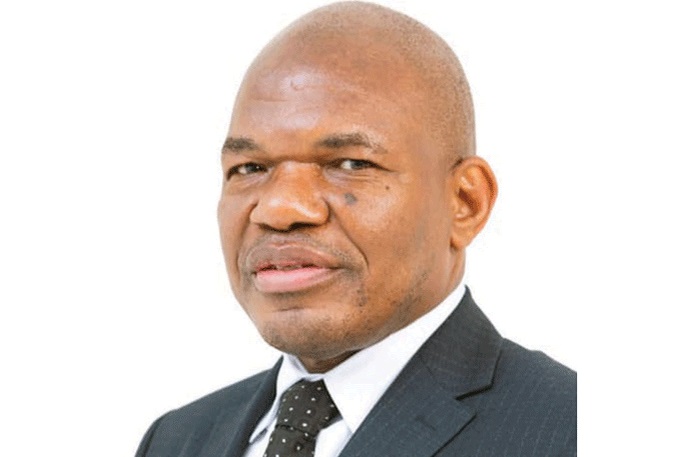
Business Reporter
The Deposit Protection Corporation (DPC) says it is seeking additional funds to compensate depositors whose investments were lost during the re-introduction of the Zimbabwe dollar in 2019.
Four years ago, the Government, through Kuvimba Mining House, provided US$400 000 to DPC to compensate small depositors.
DPC acting chief executive Mr Gift Chirozva said the available funds have since been exhausted, hence the organisation was now seeking an additional tranche.
“As part of the Zimbabwe financial safety net, the corporation will continue to engage and collaborate with fellow financial safety net players and all stakeholders towards the attainment of our national priorities.
“In view of the foregoing, the corporation is in liaison with the Government for an additional tranche,” he said in the corporation’s 2022 financials.
Mr Chirozva said when the funds were available, the initial tranche was allocated to eligible depositors in deposit-taking microfinance institutions (DTMFIs).
He said due to slow uptake, the window for submission of DTMFI claims was closed on July 10, 2022, as per the guidance of the Ministry of Finance and Economic Development.
“As of July 20, 2022, all eligible depositors who submitted their claims were duly compensated by their respective DTMFIs.
“On aggregate, the DPC processed 917 DTMFI claims worth US$83 359, leaving a balance of about US$316,641,” said Mr Chirozva.
He noted that the balance was channelled to POSB under Phase 2 of the loss of value compensation exercise, and the scheme was well-received.
“As of December 31, 2022, about 9 771 claims worth US$1 404 945 had been received against the US$316 641.
“About US$25 million is required to compensate POSB depositors for the loss of value in full.
“In view of the foregoing, the corporation is in liaison with the Government for an additional tranche,” said Mr Chirozva.
The main source of funding for the DPC is premium income levied on contributory institutions at a rate of 0,3 percent and 0,20 percent per annum on average eligible deposits for Zimbabwe dollar and foreign currency account (FCA) deposits, respectively.
According to Mr Chirozva, investment income and rentals provide additional sources of funding.
“Total assessed premium income for the year was $1,2 billion, up 123,5 percent from $537,5 million assessed in 2021 and US$2.5 million,” he said.
Current membership in the deposit protection scheme remained at 27 during 2022, consisting of 20 contributory banking institutions (CBIs) and seven deposit-taking microfinance institutions (DTMFIs).
Ndoro Microfinance Bank became a member of the scheme in May, while CBZ Building Society merged with CBZ Bank at the end of September 2022.
During the 2022 financial year, DPC recorded a surplus of $1,64 billion in 2022, up from a surplus of $1,32 billion
in 2021, mainly driven by premium income.
On a historical cost basis, the corporation achieved a surplus of $2,79 billion in 2022, up from $514 million in 2021.
According to the financials, total income increased by 354 percent from $691,3 million in 2021 to $3,13 billion in 2022.
“The increase, which was driven mainly by premium income, is attributable to a significant increase in the total deposit base,” said Mr Chirozva.
He said the foreign currency premium rate was adjusted to 0,2 percent in the last quarter of the year, up from 0,15 percent.
Other funding sources included rental income and returns from investments. Mr Chirozva said due to the positive financial performance, the corporation was able to execute its mandate successfully.
Mr Chirozva said deposit protection cover levels for contributory banking institutions were pegged at $120 000 and US$1 000 per depositor per deposit class per bank.
“At these cover levels, 97,4 percent (Zimbabwe dollar) and 96,3 percent (USD) of the depositors’ accounts were covered in full.”
Deposit-taking microfinance institutions’ deposit protection cover levels were $5 000 and US$500 per depositor per deposit class.



 Online Reporter