Online Reporter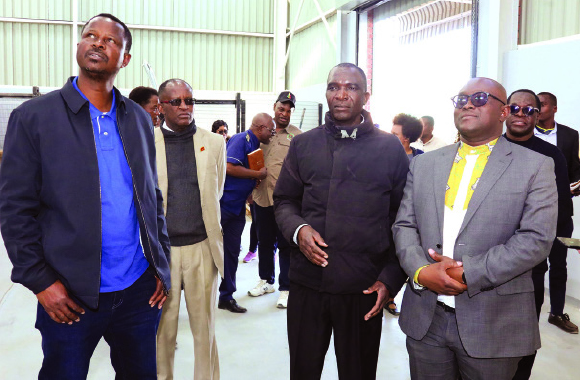
Bulawayo was for decades the centre of Zimbabwe’s manufacturing sector and while industry also grew and expanded in other cities and towns, the breadth of industry in Bulawayo kept the city sitting large on the industrial map.
So the general problems that became obvious in the 1990s as Zimbabwean industry and commerce was forced to modernise and transition from the long period of the closed economy hit Bulawayo harder than most.
The detailed official rationing of foreign exchange and captive local markets had allowed industry to grow quite spectacularly, but declining replacement investment and lack of modernisation eventually meant some very tough times and these were tougher in Bulawayo.
The Second Republic took Bulawayo far more seriously as part of the policy that no person and no place should be left behind with President Mnangagwa leading the push for first re-industrialisation and then for the expansion of industry past its former maximum levels with modern processes and factories creating a far more competitive and sustainable sector.
Bulawayo had many advantages as this new thrust was pushed forward. For a start, the second State university, the National University of Science and Technology had been established in Bulawayo with an engineering and technology stress.
The Second Republic saw this as a centre for innovation and helping the modernisation drive, that in turn would lead to build up the industrial sector.
The building up of the skilled labour force was helped by the past industrial stress, which meant that there were a lot of experienced industrial workers in the city, who might well need retraining in the newer technologies, but who were capable of such retraining along with the new flow of youngsters who had decided on industrial and engineering careers.
This sort of pool of skills also meant there would be people in the city capable of starting their own businesses and being in an industrial centre would be able to draw on suppliers and customers.
This has seen the establishment of new small and medium businesses of a productive nature as well as the resuscitation of larger companies and the opening of new factories.
Last week, the Government thought the progress in Bulawayo needed to be shown off to the rest of the country and Information, Publicity and Broadcasting Services Minister Dr Jenfan Muswere led a tour of some companies.
The tour was far more than just showing what the Second Republic’s industrial policy was achieving.
It was also to show that Bulawayo was not a dying city living in the past, but had industrialists who were able to modernise and grow and put Bulawayo back on the map as a centre of manufacturing excellence where modern technologies were the drivers of expansion.
This is important and the successes of Bulawayo industrialists and factory owners needed to be publicised.
This is one reason why the tour concentrated on older businesses that had successfully modernised as well as the newer and expanding manufacturers.
Government policies, and a listening President making sure the right policies were chosen, had allowed the talent in the city to put in the hard work of rebuilding older industries better as well as building up and expanding newer industries.
One manufacturer is now once again supplying much of the stock of a major clothing retail chain, having obtained a power deal for stable electricity supplies and access to funding for retooling, and plans on more than doubling production in the near future.
When we look at local production on shop shelves we need to go beyond the revolution in supermarkets and start looking at the full range of Zimbabwean commerce, which had become very reliant on imports.
We now have a competitive local market, so the manufacturers that can supply this are building the base for export-orientated industries that can take advantage of the African Continental Free Trade Area to move into other markets.
If they can flourish in the competitive local market they should do well as export markets open up.
Bulawayo has always had a strong private sector, and this needed, as the Second Republic saw, to be unleashed through the sort of backing that Governments can give, such as a modest range of policies that encourage economic growth and the right sort of State university that take a lead in industrial innovation and higher-end training.
What the overview of the city showed was that this was working, relying on the private sector to push the economic development, but making sure it was properly backed and that deficiencies were addressed.
Other aspects of Bulawayo’s modernisation were demonstrated. The two major hospitals, Mpilo Central Hospital and the United Bulawayo Hospital, are benefiting from the Government’s own modernisation and social investment policies.
This included rebuilding better doctor and nurses accommodation at Mpilo following a severely damaging fire four years ago.
While both hospitals have their solar back-up power, United Bulawayo Hospital now has a solar farm powering not just the hospital, but the Cowdray Park Health Centre, Vulindlela Primary School and ZBC Montrose Studios.
Concentrating the solar installation will have made the capital investment go further and will keep maintenance costs lower.