

 admin
admin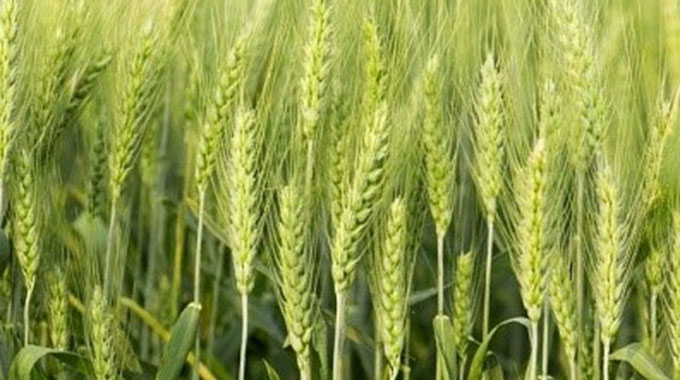
WITH the wheat harvest now in, it has been confirmed that Zimbabwe for the first time ever is totally self-sufficient in all grains, there being enough in stock of both summer and winter grain to carry us through to the next harvests without any need for imports.
That is a major achievement by our farmers, and by our Government which ensured that these farmers had the finance and inputs to produce that yield.
The marketing and storage were also of high quality, so ensuring that farmers were paid for everything they produced over and above their family needs, and that this grain was still fit to eat when eventually it was processed by the millers.
We need to note that achievement by the Government and the Grain Marketing Board in building and storing stocks.
In the 2020-21 season, we harvested a record 2,9 million tonnes of maize, quite a lot more than we can eat in a year.
Everything farmers sold was bought. That was needed when the erratic rainfall and that long mid-season dry-spell in the 2021-22 season cut the harvest to 1,5 million tonnes. Obviously the GMB follows the standard practice of all in the food industry of using up older stocks first, but we have recently finished eating some maize harvested in mid 2021 and kept in store for almost 18 months, and the fact that we did not notice means that the storage was of high quality.
That ability to keep a harvest in good condition over seasons will become increasingly important.
We have seen drought years, and even back-to-back droughts are now becoming more common. So even with climate proofing and building up our irrigation, we are going to have to create and maintain stocks so surpluses from the best years can fill the gaps in the worst years.
This is something that does need Government money and a public buyer, since no private sector outfit can work that far in advance.
According to the Minister of Lands, Agriculture, Fisheries, Water and Rural Development Anxious Masuka, the wheat harvest that finally went over self-sufficiency has a bit extra.
He is talking about an almost 13-month supply. This sort of surplus is going to be coming in useful as Zimbabwe moves towards being an upper middle-income nation.
While wheat is the most expensive of our home-grown grains, and while most families prefer food from traditional grains and maize for sit-down cooked meals, bread has the advantage of being more portable and keeping fresh for more than a day after being baked.
So bread consumption rises faster than population growth as people earn more.
In addition buns, cakes, pies and other pastries, while not essential to staying alive, tend to be among the early semi-luxuries that a family treats itself to as standards of living rise. So we probably have to keep growing more wheat.
The calculations, when it comes to allocating funds for farm inputs, will grow more complex as our farmers get better and can produce higher yields.
Up to now we have been pushing everything with special emphasis on essential foods, simply to create or recreate self-sufficiency with adequate carryover stocks to cope with the erratic climate.
As we start reaching these targets we may have to be thinking more widely. We pay our farmers well. They get roughly the price that imported substitutes cost once they are in Zimbabwe, with all the transport costs added in.
This is fair enough as there is no need to cheat those who grow our food. We have abolished subsidies, rather giving a bit of money directly to those who really needed it, so the opportunities for arbitrage and black markets drop to zero, and the whole farming business becomes viable in the long term.
But it possibly means that exports of some of our essential foods might be harder to organise in future. When we have good seasons most of Southern Africa, our neighbourhood, has good rains and most of our neighbours are, like us, pushing farm production.
We are still building the necessary reserves of essential food, so we have some space to start thinking about how our input and financing schemes will need to be adapted and broadened once we have, say, close to a year’s supply of summer grains in long term storage, grain that must be kept from season to season. Wheat, being grown under irrigation, needs a smaller reserve.
Our farmers will obviously continue to want to expand output, since they too want to earn more money, and will be able to as more irrigation and more mechanisation is available.
At some stage we are going to need to broaden the range of crops we grow.
Already we are adding a lot more oil seed to our funding totals, to get self-sufficiency there, and we are one of the top global tobacco growers.
Horticulture is an obvious growth sector and already explains why wheat tends to be grown by the mid-scale and larger scale farmers with irrigation, since the small scale farmers with irrigation plots can normally make more money with higher-value, and higher labour, crops such as horticulture.
Here we will be needing to create more links between our manufacturers and agro-industrial processors and our farmers, as well as building capacity in farming communities to grow and process within those communities some of the higher value specialised foods that do have global markets, especially if we can tap some of the luxury trade where high margins are the norm.
We need to think just how successful as a country and as a large group of farmers we have been.
The present leaps in farm output largely date from the Agriculture and Food Systems Transformation Strategy of August 2020.
This was when the mid-scale finance systems were made more formal and, based on the initial successful pilot scheme for Pfumvudza/Intwasa, the decision was made to go national and make it the foundation of the small-scale farming support programmes.
Other things, now mainly in the whole range of livestock from poultry to dairy, have been put in place and this diversification will be become ever more important.
This cannot replace what we have, since we need that, but as further sources of income for farmers as they start winning from better use of their labour with simple mechanisation and having water at a village borehole instead of carrying it long distances.



 Online Reporter