admin
admin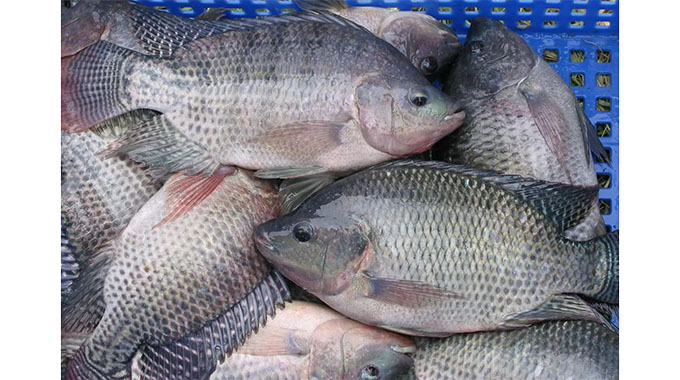
The major effort to stock dams and fish ponds to bring fish farming and fisheries to the majority of rural households has started, and it appears it will be a major effort with probably tens of millions of fingerlings needed to create the required populations.
That in turn will create a whole new industry with millions of fish caught each year, and with large scale processing and sales of excess catches by the rural fishing communities.
So far a little over 11,5 million fingerlings of tilapia, bream to the old fashioned, have been introduced into the three Mashonaland provinces and Manicaland.
President Mnangagwa has been very keen on seeing fisheries, large and small, introduced, allowing the new dams his Government has been building, become multi-purpose infrastructure, storing water for irrigation and urban development and then providing the lakes that the more commercial fishing will require.
At the same time the village borehole programme, another huge Government effort that will eventually see every one of the nation’s 35 000 villages with a borehole, plus every school and every clinic, has been designed from the beginning to be multi-functional.
Of course the starting point is the provision of clean and safe household water for every family, with the water in the boreholes being pumped out with solar powered pumps so there is minimal effort for families to collect the decent water.
But that is just the start. Each village borehole is being the centre of a village business unit, with some of the water allocated to a reasonably-sized village garden, and some to fish ponds.
Fairly obviously the fish ponds may well be the stored water for the gardens. Solar pumps will pump during the day, but not at night, so water needs to be stored, and why not use the storage.
The village gardens and fish ponds will first of all ensure a decent diet for the residents of the village, fresh vegetables and fruit and fresh fish, an extra source of healthy protein.
But there will be some commercial sales, especially in the area, providing another flow of income for the villagers.
Those small “farm dams”, and these are common, provide another community multiple resource, water for small-scale irrigation and livestock, and a small lake for fish. These are now being stocked.
Rural development and farming are being pushed very hard to have many facets and income flows, rather than rely on just one grain crop, cattle and goats.
President Mnangagwa, with the Presidential poultry and fishery programmes, along with the more traditional livestock and cropping programmes, realises the need to have a swathe of income sources, and as a highly successfully modest-scale farmer with a lot of irons in the fire, he has the practical experience of making maximum use of his land and all the resources.
Zimbabwe has some large dams, but except for Lake Kariba the major commercial fishing potential has not really been exploited.
This was a bit odd, as Lake Kariba is the water source for a pair of very large power stations, primarily, but the large quantity of fish that come out of the lake are on the shelves and in the freezers of every supermarket. Kapenta was even introduced from the East African great lakes.
Lake levels rise and fall as water is released for irrigation and cities, and has rains fall in the drainage area of each dam and feed the streams that feed the rivers that fill the lakes.
So the experts and the ecologists need to keep an eye on stocking levels, breeding seasons and the like. But this should be routine.
A lot of the commercial fishing can be done by local communities, some of whom will need advice on just how to fish a large lake since this is a new opportunity and not something they will have picked up from watching others.
But modest investment in boats, nets and the other equipment, plus the licensing and legal limits that need to be in place to ensure that there is a sustainable resource, and we can start seeing a new set of rural entrepreneurs.
Fisheries should also be able to take care of the local environment, as pollution is likely to poison the fish and will almost certainly make them unsafe to eat and impossible to sell.
We doubt that anyone will, for example, eat fish caught in Lake Chivero which has become almost a cesspit for Harare.
Among the new skills that many will need from the village to the commercial fisheries, is how to preserve fish safely, both for their own use and especially for sale.
Local restaurants and others will buy fresh fish caught the same day as the sale, but fresh fish do not keep unless frozen or kept on ice, spoiling very quickly.
For thousands of years fishers have dried their catch, and sometimes if they access to salt have salted it. Fish have also been smoked.
These techniques are not difficult to implement, but do have to be done properly to avoid contamination and spoiling and create a product that can be safely stored and transported.
We would like to think that as commercial fishing moves forward on the larger dams, that some investors will look at commercial processing and freezing of each day’s catch, and in any case will want to buy stocks of preserved fish. Business partnerships will need to be developed.
When we look at the early days of the fingerling stocking we are talking about many millions of fish being caught each year, which means fish will start assuming a far higher profile in the Zimbabwean diet, and that will also mean that a lot more people will need to learn the various ways of cooking fish and processors will need to learn of just how many products they can make and sell from fish. It will be a whole new industry.



 Online Reporter