Online Reporter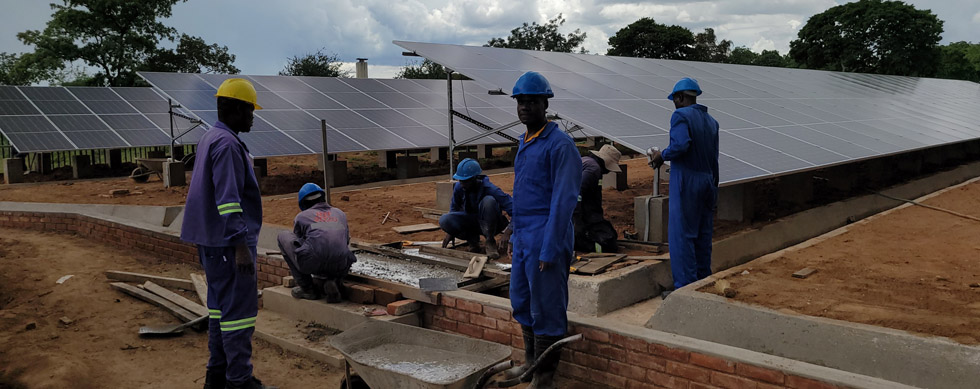
MANICALAND Province is undergoing a profound transformation that speaks to the future of Zimbabwe’s development trajectory.
Once regarded as a peripheral region in terms of industrialisation and energy access, Manicaland has now emerged as a renewable energy powerhouse, spearheading the solarisation drive that is reshaping rural communities and redefining the province’s economic landscape.
This shift is, not only about electricity generation, it is about unlocking new opportunities for production, enterprise, and inclusive growth in line with Vision 2030 and the National Development Strategy (NDS2).
The story of Manicaland’s rise is best illustrated by the growing network of solar power plants and mini-grids that now span the province, from Nyanga to Chipinge and Mutare to Makoni.
These installations are more than technical infrastructure; they are catalysts of rural industrialisation.
Communities that had endured decades without reliable electricity are now experiencing the transformative power of renewable energy. Villages that once relied on subsistence farming and informal trade are being reimagined as vibrant economic hubs, capable of sustaining small industries, irrigation schemes, and value-addition enterprises.
The recent commissioning of the 153-kilowatt Nzvimbe Solar Power Plant in Makoni South is emblematic of this new chapter.
When Energy and Power Development Minister, Honourable July Moyo toured the facility, accompanied by senior government officials and representatives from the Rural Electrification Agency (REA), the visit underscored the seriousness of Government’s commitment to expanding energy access.
The Nzvimbe Project is not an isolated achievement; it is part of a broader provincial energy revolution that positions Manicaland as a leader in Zimbabwe’s renewable energy rollout.
Minister Moyo’s remarks during the tour captured the essence of this transformation. He emphasised that solarisation is, not merely about lighting homes, but about stimulating production, creating jobs, and integrating rural communities into the national economy.
This perspective is critical.
Energy access must be understood as a foundation for development, not an end in itself. With reliable power, farmers can irrigate their fields, process their produce locally, and reduce post-harvest losses.
Entrepreneurs can establish small-scale industries, from milling and packaging to cold storage and agro-processing.
Schools and clinics can operate more effectively, improving education and healthcare outcomes. In short, energy becomes the enabler of holistic development. What makes Manicaland’s experience particularly significant is the way renewable energy is bridging the gap between rural and urban economies.
By decentralising energy production through mini-grids and institutional installations, Manicaland is demonstrating that development does not have to be concentrated in urban centres. Instead, growth can be distributed, inclusive, and locally driven. This is precisely the kind of transformation envisioned under Vision 2030, which seeks to build a prosperous and empowered upper middle-income society.
The broader implications of Manicaland’s renewable energy surge are profound.
First, it signals a shift in Zimbabwe’s energy policy towards sustainability and resilience.
By investing in solar power, the country is reducing its dependence on fossil fuels and mitigating the risks associated with climate change. Second, it highlights the role of provincial leadership in driving national development.
Manicaland’s success provides a model that can be replicated across other provinces, ensuring that the benefits of renewable energy are shared widely. Third, it demonstrates the potential of public-private partnerships and community involvement in delivering infrastructure that directly impacts livelihoods.
Of course, challenges remain. Energy projects must be accompanied by capacity-building initiatives to ensure that communities can fully utilise the power they receive.
Access to finance, markets, and technical skills will be essential if rural entrepreneurs are to translate energy access into sustainable businesses.
Moreover, maintenance and expansion of solar infrastructure must be prioritised to avoid the pitfalls of underutilisation or neglect.
Yet these challenges are surmountable, and the momentum already generated in Manicaland provides a strong foundation for continued progress.
In many ways, Manicaland’s emergence as a renewable energy hub is rewriting the narrative of rural development in Zimbabwe. It is a story of resilience, innovation, and vision.
It is a reminder that development is not confined to the corridors of Harare or the industrial zones of Bulawayo, but can flourish in the villages of Makoni, the hills of Nyanga, and the plains of Chipinge. By harnessing the sun, Manicaland is illuminating a path towards inclusive growth, rural industrialisation, and national prosperity.