Online Reporter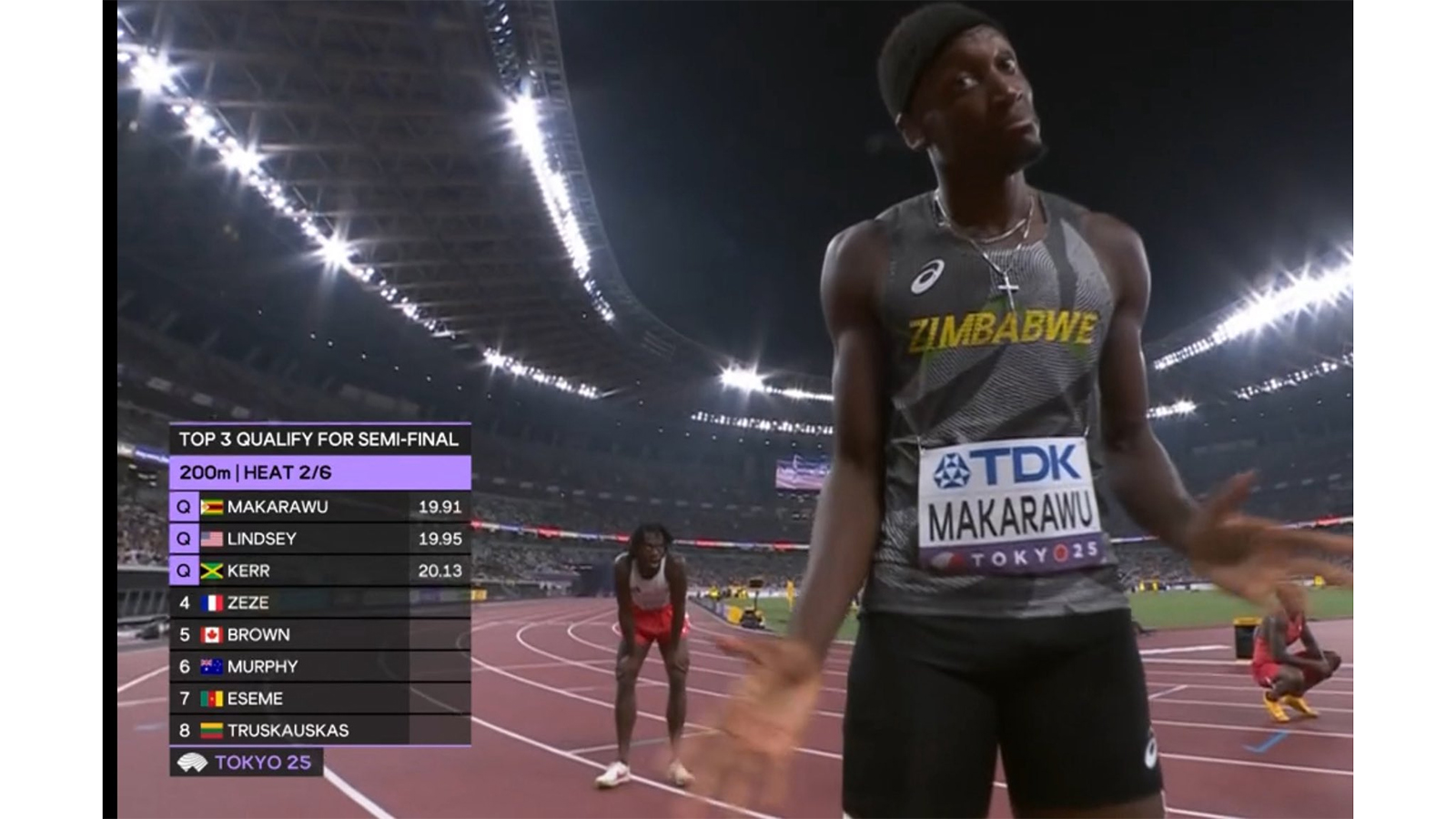
THE 20th edition of the World Athletics Championships may have come and gone in Tokyo, Japan, but Zimbabweans will have every reason to walk with pride when reflecting on the competition.
This is because Zimbabwe’s athletes were among those who made waves in Tokyo and left their mark.
It was a historic occasion for the National Athletics Association of Zimbabwe (NAAZ) who dispatched their largest team of athletes in over 20 years of competing at this grand stage.
The biennial international meet is to athletics their equivalent of the FIFA World Cup, where the biggest stars from around the globe converge for a period of intense competition in different events that include, high jump, triple jump, javelin, hurdles, sprints, decathlon, relays and marathons.
For the Tokyo Championships NAAZ sent eight athletes, doubling on the four who represented the country in Budapest, Hungary, in 2023.
While this may seem like a small number to some, it is a testimony to development systems quietly being built and to the potential that lies dormant until it is given room to blossom.
For a nation that has often struggled to make its presence felt consistently on the global sporting stage, this achievement is both a breakthrough and a call to action.
NAAZ president Tendai Tagara, his management team, that includes secretary-general Cynthia Phiri and the technical crew headed by director of coaching and talent identification Phakamile Lisimati, deserve some credit for this outcome.
Against the odds, and with limited resources, NAAZ have worked to put in place structures that nurture athletes from grassroots level through schools and varying development programmes.
Many of the eight athletes who flew the country’s flag on the global arena, including the World’s seventh fastest man in the 200-metre event — Tapiwanashe Makarawu— emerged from these pathways.
They are products not of chance, but of systems — however fragile — that have been slowly, steadily taking shape.
When NAAZ rebranded and brought on board a new look, there was excitement in the media and people waited to see if the new logo translated into a changed organisation.
Stakeholders waited on the wings to see if NAAZ would build systems.
When you build systems, results, especially in sport, follow.
Individual brilliance may flash once in a while but sustainable success in sport — and indeed in any sector — is born out of consistent structures, planning, and pathways that allow talent to grow.
Zimbabwe’s sporting history offers a mix of glorious moments and long dry spells. Too often, success has been accidental, dependent on the heroic effort of an individual athlete, their family, coach, or administrator.
But we believe that luck is not a strategy. Systems are.
In athletics, the seeds of success are sown in the schools’ competitions, youth championships and junior coaching clinics where athletes are identified and supported.
And in NAAZ’s case, these programmes, though underfunded, created a conveyor belt of talent.
Five of the eight athletes who represented Zimbabwe in Tokyo including the World’s seventh fastest man in the 200-metre event — Tapiwanashe Makarawu — are evidence that even in a resource-constrained environment, deliberate planning can pay off.
They were identified in schools, and travelled for college in the United States.
One can only imagine what more could be achieved if those systems were strengthened with proper funding, infrastructure and consistent corporate backing.
It is tempting to view global championships purely in terms of medals. How many did we win? How many finals did we reach?
We however, believe that in the modern sports economy, the value of participating on the world stage goes far beyond podium finishes.
Sport is about visibility. It is about storytelling. It is about aligning brands with excellence, determination and aspiration.
This is why global companies invest heavily in sports sponsorships — not out of charity but because sport is a proven platform for building brands, engaging audiences, and creating emotional connections with consumers.
A case in point is that of Mondo Duplantis, the Swedish pole vault phenomenon.
His national team kit is supplied by Adidas, yet PUMA made a strategic decision to sign him as an individual athlete because they saw the value of associating their brand with a once-in-a-generation talent, whose reach and appeal extend far beyond Sweden.
Today, every time Duplantis soars over a new world record, he carries PUMA with him into headlines, highlight reels, and social media feeds across the globe.
This underlines the business of sport — spotting potential, investing early, and reaping visibility and brand equity when the athlete shines.
For Zimbabwean companies, the message is clear: our athletes are not just competitors, they are brand ambassadors in waiting.
The eight athletes who were at the World Championships stepped onto a global stage watched by millions. Their performances, their stories, their images circulated far beyond our borders, providing a marketing opportunity.
Supporting athletes is not a donation. It is an investment in brand positioning.
It is also an investment into the future because athletes who succeed inspire the next generation — expanding the pool of talent, deepening fan engagement, and building a sporting culture that feeds back into the national psyche.
Zimbabwean companies routinely spend millions on advertising campaigns that come and go with little long-term impact.
We can only wonder at the huge rewards, if even a fraction of that investment were directed towards backing our athletes — Makanakaishe Charamba, Isaac Mpofu, Tendai Zimuto, Chengetayi Mapaya, Fortunate Chidzivo, Ashley Miller, Vimbayi Maisvorewa and Makarawu.
The return would not only be in brand exposure, but also in goodwill, loyalty, and national recognition.
In an era when nations compete not just in politics and economics but also in soft power and branding, sport is one of the most effective tools for shaping how a country is seen.
When Kenya produce long-distance champions, it reinforces their image as the home of endurance.
When Jamaica dominate sprinting, the world associates the island with speed and flair. Zimbabwe, too, can carve out our sporting identity.
These eight athletes are the vanguard of a story that could reshape our national narrative — from a country that once occasionally produced stars, to one that systematically develops champions.
The answer lies in building stronger systems and forging deeper partnerships. NAAZ have demonstrated what is possible with limited resources.