Online Reporter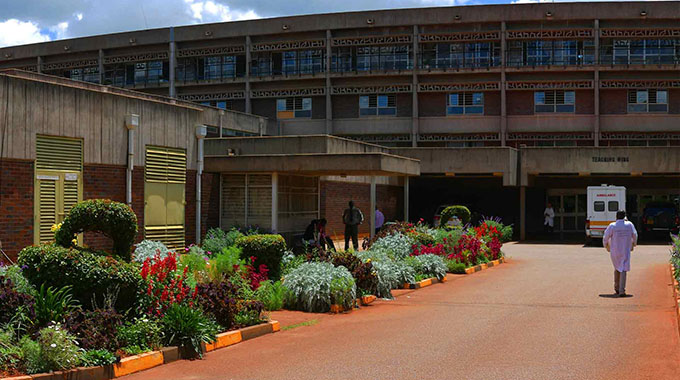
The advent of the Second Republic seven years ago saw the start of a determined effort to first fix the public health system that was there, which included fully servicing a lot of infrastructure developed since independence, and then move towards upgrades.
These upgrades would then continue and put in place a top layer of excellence that could compete anywhere.
Initial reforms quickly sorted out the shortages of medicines and consumables and started fixing the conditions of service of professional staff.
The general fiscal and budgetary reforms also started providing better Government financing along with tighter accounting and more efficient administration, and that in turn started attracting the attention of development partners, who were willing to reinforce Government efforts now they knew that this would be worthwhile.
Early in the reform and upgrade, Covid-19 struck, but what could have been a disaster instead saw the acceleration of the upgrade of the public sector health services.
The pandemic concentrated efforts within Government and brought in support from private companies that were noticing that the public hospitals and clinics were now functioning properly and moving forward and simply needed help to speed up that process.
Success started breeding success, as is often the case, and with the public health sector on an upward path more backing starting coming through and more professionals were willing to push forward.
The resumption of high-level surgery tends to grab the headlines.
Parirenyatwa’s top team has now performed 62 open-heart operations; a team has separated conjoined twins; Chitungwiza and Gweru provincial hospitals have joined the top level of referral hospitals with knee and hip replacements, turning this sort of top end complex surgery into routine operations, albeit one requiring skilled specialist professionals and good surgical teams for both the operations and the aftercare.
But the fact that top-end surgery is now starting to move into the routine level, defined as “something we do all the time”, should not hide the advance, both for the suffering patients and for ensuring that the new generation of Zimbabwean professionals can get the training and experience they need to not just continue what is now being done, but to push it further as they get into their stride.
Some of the expansion in the clinic network, especially the intermediate level between the basic clinic and a full hospital, is being done directly by central Government.
The basic clinic network is being expanded largely through the devolution programme. That programme was premised on the belief that local communities through their local authority usually had a very good idea of their priorities when it came to the capital development programme.
And it has been obvious that having health and education facilities nearby and within communities is seen as a major need.
When we see figures like 10km or even 5km for these sort of services, we probably do not see a sick person on a long dusty road. But that person’s family does see this, and hence the pressure to fill in the gaps.
One challenge that has existed at the more remote clinics, and this would be almost all the rural clinics plus some in smaller towns, was the lack of back-up.
In theory, the clinic staff should simply refer the patient to hospital, but that was not always possible and in any case the procedure required might be fairly simply, just needing advice and direction.
The advent of the public-sector air ambulance has helped, but not everyone needs to be moved.
Modern technology is now weaving all clinics into the information age, linking them into a central system.
Already the majority of medical records are in a database, making it easier for a professional at one medical centre to check up what happened the last time. The recent licensing of satellite-based broadband internet means remote rural clinics can be woven into the full system.
Gokwe North, basically as remote as you can get in Zimbabwe and a district without a town, was imaginatively chosen as the pilot project for moving further forward and linking the clinic professionals with back-up. Anything that works there will work easier everywhere else so it was a good choice.
The Government is also active in continuing to build up the health budget, now essential with cutbacks in aid.
Critical medical supplies are seen as essential, as they have since the advent of the Second Republic.
Progress made over the last seven years is being guaranteed, so there will be no slippage, and at the same time the advances will be continuing.