admin
admin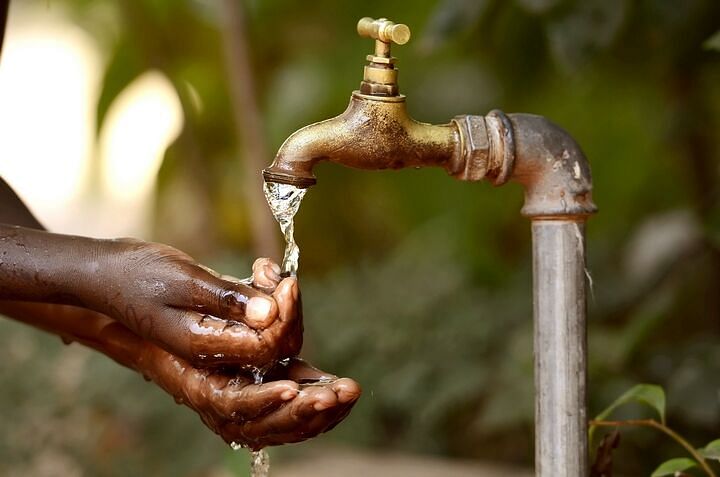
WATER is at the centre of economic and social development.
It is vital to maintain health, grow food, manage the environment, and create jobs.
But despite its importance, many people lack access to clean water.
In fact, the scale of the challenge is large and becoming more complex.
Climate change, population growth and economic development are pushing the limits of the world’s water resources.
For that reason, Government, through the Presidential Rural Development Scheme, has set its sights on drilling one borehole in each of the country’s 35 000 villages by 2025.
The programme is already in motion and so far, at least 400 boreholes have been drilled in Manicaland.
Each of the villages is also getting a nutrition garden with a wide range of fruit trees.
The solar-powered boreholes have seen farmers establishing drip irrigation for high-value horticultural crops, fisheries, as well as cattle troughs.
The ability to irrigate with borehole water supports food security, enhances rural livelihoods, and fosters agricultural sustainability.
This Presidential Rural Development Scheme will accelerate the attainment of Vision 2030 by addressing food security, import substitution, poverty alleviation and the creation of employment opportunities in numerous key sectors across the rural economy.
Until now, some people in Manicaland’s rural areas were getting water from riverbed water points they dug up using hands.
Others would walk long distances to fetch a few litres of water at any given time, with women and girls spending considerable time fetching the precious liquid for the entire family.
Another section of the population, including those in Mahalape, Mutare, was relying on unprotected wells whose water is not suitable for drinking.
As a result, the local population has been at risk of diseases such as cholera and typhoid fever, among other water-borne illnesses.
This year alone since the first cholera case was recorded in Zimbabwe on 12 February, 2023, Manicaland had recorded 526 confirmed cases and 12 deaths as at July 26, 2023.
These lives could have been saved through proper water, sanitation and hygiene (WASH) facilities.
However, increasing access to water is not enough.
Sustainable Development Goal 6, which talks about water and sanitation, proposes that by 2030, we should have universal and equitable access to safe and affordable drinking water for all.
By then, we should also have access to adequate sanitation and hygiene for all and end open defecation, especially as we pay special attention to the needs of women and girls and those in vulnerable situations.
This goal reflects the growing importance of water and sanitation as a human right.
Additional targets that go beyond access are also being considered, such as improving water quality by reducing pollution.
The presence of certain contaminants in our water can lead to health issues, including gastrointestinal illness, reproductive problems, and neurological disorders.
Therefore, the quality of the water we have access to is of paramount importance.


 Online Reporter