Online Reporter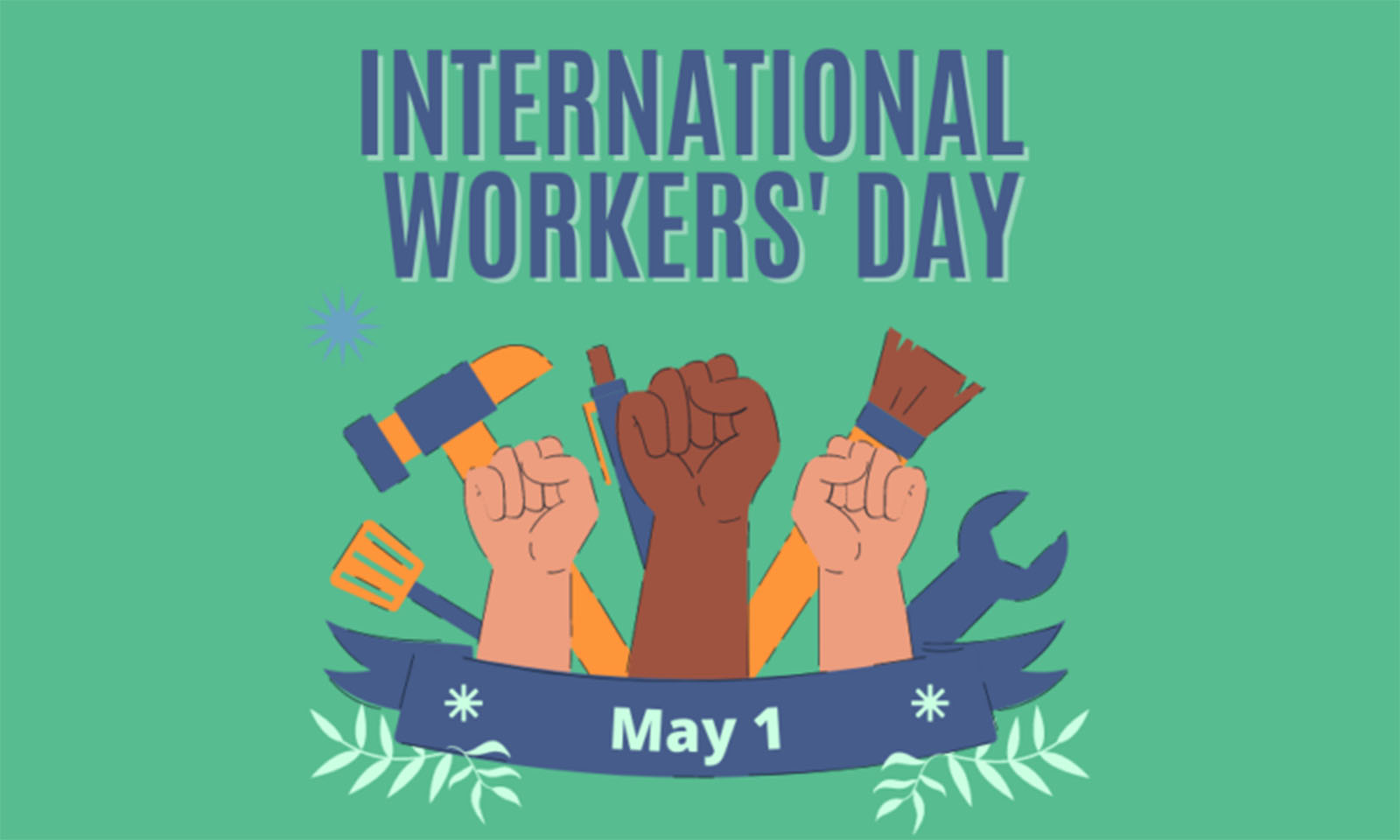
WORKERS’ Day, celebrated in the vast majority of countries around the world, is the special day stressing the contribution workers make to national development and the need for decent working conditions in all places of employment.
The International Workers’ Day was established in 1889 at the International Workers Congress, which also established the Second International of labour, socialist and Marxist parties. The first day was to mark the campaign for an eight-hour working day, a very practical aim and a sign that improvement in workplace culture was to be built around practical progress.
At times in the modern world, we tend to forget that adding value, making profits and the like is a joint effort at every entity, and so the rewards of successes need to be spread to mark the input from so many, not just those in control and those holding shares in a company. And today is not a bad day for everyone to remember this.
The teamwork required to advance means both that workers need to be involved and be willing to give of their best, but that this effort needs to be recognised when the rewards of success are shared.
Value has to be created before it can be shared, and that involves everyone, but the sharing afterward has to be just.
So, just as it is impossible to create money out of thin air to pay people, so it is morally unjust not to properly pay those who do the work that creates real money. Employers have every right to demand a decent day’s work for a fair day’s pay, but those they employ have the equal right to demand the fairness of the day’s pay.
Since the heyday of laissez-faire capitalism at the time of the first International Workers’ Day, Governments have been brought into the field of labour relations and have been writing laws to ensure first the health and safety of workers, and in more recent times the fairness of employment contracts.
Both are necessary.
The better employers have always led from the front, but there have always been some who trail and some who want to exploit those they hire. In Zimbabwe, much of our detailed labour regulations are created by representatives of both employers and employees in national employment councils for every industry.
This system was introduced in colonial times, but for the white workers or at least for those in “white jobs”.
A lot of people at this time were under a very Victorian law, the Masters and Servants Act, the sort of law dumped in most countries but still kept going in colonial Southern Africa. Independence saw the modern councils expanded to include everyone.
The Government backs successful labour negotiations in the councils by making the results compulsory for all in each sector, not just those willing to negotiate properly, and independently has a Labour Act that applies to all and deals with health and safety and the need for fairness.
This law does need periodic amendment, both to close loopholes that a judge might suddenly find as well as to cover changing conditions and to streamline procedures so that the Act remains the active guide but does not restrict hiring, investment, and economic expansion. In many ways, the Government is ensuring that the best practice becomes the universal practice.
In his address yesterday to mark today, President Mnangagwa stressed core policies of his Government: to have and enforce fair labour standards, to have social protection and see that built up, and to make sure that employment was expanded and new jobs created.
The job creation is largely a result of the economic and investment policies of the Government, and those in turn have to make sure that the labour policies are fair and effective, so everything does fit together.
The President stressed a prime Government function of ensuring that the health and safety standards laid down, and Zimbabwe has some very sound regulations on occupational safety are enforced. That does require inspections, and this does need to be expanded.
The dramatic expansion of small and medium businesses does mean that a lot of workers have fallen beneath the radar of the regulations and the inspectors, and while some new small businesses might well be respectable, there are some which treat workers badly and expose them to unacceptable risks.
Part of the regularisation of the informal sector must include bringing these businesses under the occupational safety regulations and making sure that those who work in them are treated properly and that they can work safely.
A lot of the stress so far on the formalisation process has been on tax registration and business licensing.
But the President made a strong case for adding to these two essential requirements an assurance that the new businesses are treating their staff and their customers properly and following the safety rules.
At the same time, he wants to see the National Social Security Authority expanding its schemes into what is now the informal sector.
There are complaints that businesses face too many licensing agencies, but the reforms here need to concentrate on combining regulations into single licences, not allowing employers to harm their employees and customers.
Streamlining a regulatory environment should be making it easier to make sensible rules and regulations and then enforce these.
The fair and sensible rules need input from employers and employees, and then in the end the Government guaranteeing enforcement, and so we are back to the desirability of continual sharing of ideas.
This also produces the sort of environment where we are all working together and comes back to the need for everyone in every entity to put in the work and then be treated fairly when the rewards are divided.