admin
admin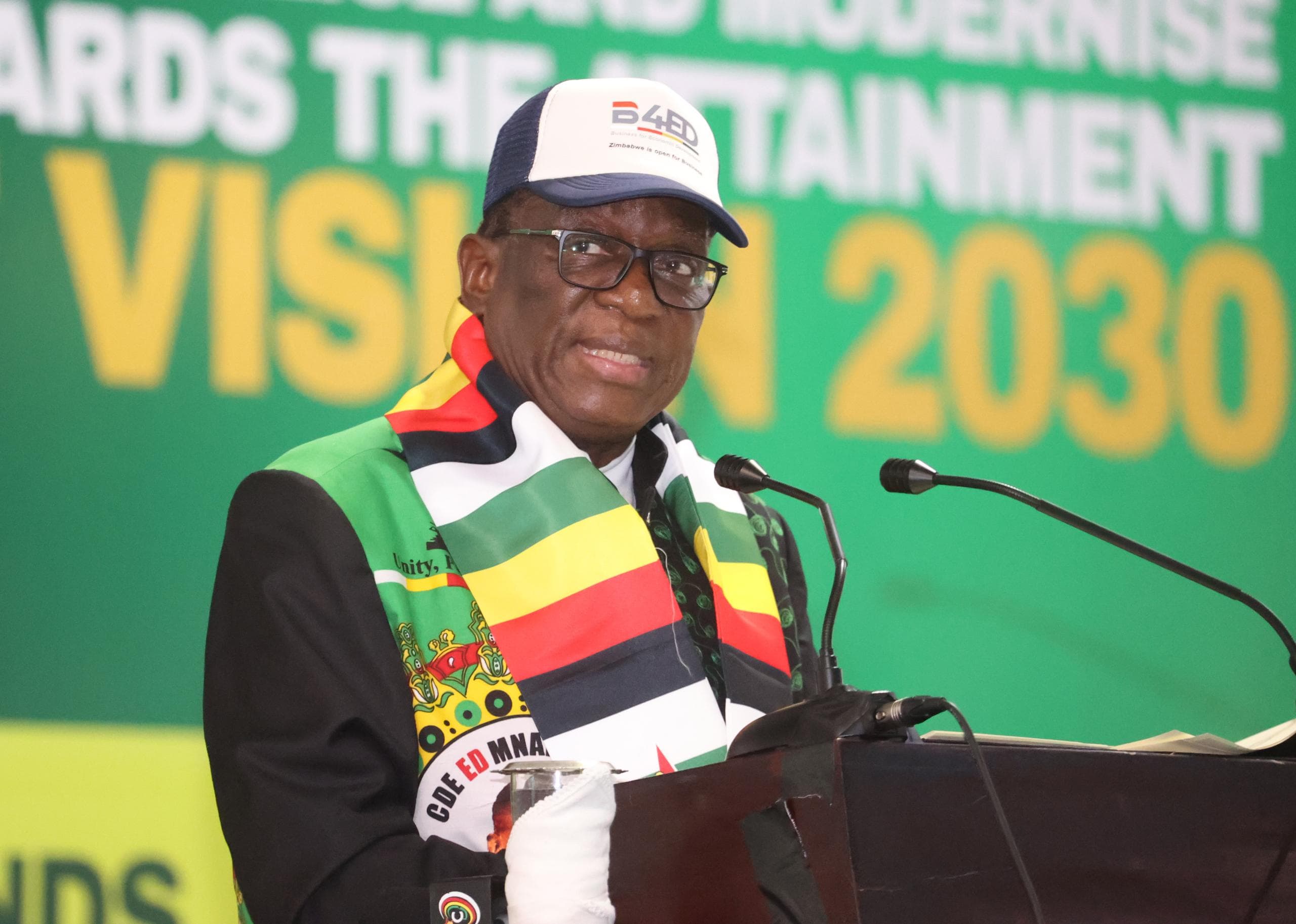
THE 21st Zanu PF Annual National People’s Conference put a great deal of emphasis on the Government and local communities accelerating the country’s development as it moves towards Vision 2030 of becoming an upper middle-income country.
The conference passed a belt of resolutions pressing the Government, which is formed out of the party, to speed up the commissioning of its infrastructure programmes, the dams, the roads and other areas which form such a major part of Government action and spending once the routine services have been paid for.
Under the Second Republic, the Government was, by fiscal discipline and solid budgeting, able to resume capital expenditure from its own resources, that is reserving a block of the tax income each year for building up the country, as well as meeting all its bills for the normal running costs.
This was important, especially considering that Zimbabwe was cut off from the global financial markets through the illegal sanctions.
The major investment drive by the Government, Zimbabweans getting stuck in rather than just waiting for something to happen, has been producing results and a great deal of economic growth.
Even with the severe drought this year, we are still going to see two percent growth, not spectacular by the standards of the previous few years, but showing the effects of all this capital investment.
Capital investment is not just spending to make lives better, although it does that.
By growing the economy, it also grows the tax income, since the Government in its direct and consumption taxes, and even the user fees like road tolls and vehicle licences, accounts for roughly the same percentage of the Gross Domestic Product each year, so when there is more GDP, the Government has more resources to invest.
While this year the Government has had to budget more for drought relief and social needs, the conference still wants the investment drive to be pushed very hard and given maximum priority, at least once basic needs have been met.
This is the sort of pressure that comes from the grass roots, which a national party conference is ideally positioned to capture.
Zanu PF is a mass party, with a huge formal membership as well as having the support of a majority of the population, and its party structures are designed to make sure that even the most remote cell has influence on the party.
Looking at the list of projects and programmes where the conference wants acceleration, it is clear what that membership considers important.
They want the new currency, the ZiG, to work properly; they want the programme to offer secure tenure on resettled land to genuine farmers to be converted from a policy to actual bankable documentation so the best farmers can move forward even faster.
Possibly because the conference was held in Bulawayo, and so the needs of that metropolitan area were more obvious, the completing of the Gwayi-Shangani dam and associated pipeline to Bulawayo made it into the top list.
Bulawayo is a major industrial centre and can start with what is in place and with the skilled workforce in the city, expand that industrial output efficiently.
But the industrialists need assured water supplies.
President Mnangagwa himself brought up some very important points, that the communities need to be able to use Government programmes and work out what they need and how they can work together.
The Second Republic has made devolution a major part of the capital spending programme, on the basis that the people in each area have a better idea of their own needs and priorities than a bureaucrat in central Government or even in their own district.
But as the President noted, this does require the community to be able to work out that priority list and how to build up its own area, and that requires a degree of unity and agreement.
A lot of community development is built up on shared needs and solutions, and on people willing to work together and get stuck in.
We read about a new school starting with the community action, and the community providing some of the raw materials and labour and so allowing the devolution funds to go a lot further and get the school up and running and open.
Since the party wins so many elections from the grass roots to the presidency, the local party leadership is often also the holder of the formal posts in the local councils and are the local representatives to Parliament.
So they have the backing of the party structures and can use these to help in the mobilisation, as well as to find out very precisely exactly what the people they represent actually want.
The President realises that Zimbabwe is very largely a collection of communities, rather than some product of orders from above, and his Government needs to be able to respond to the communities, and the communities equally need to be able to use their Government programmes to help themselves.
Here the dominant political party can help to oil the workings, both at the local level and because its candidates tend to win the elections and so can most easily link communities with the governing structures.
That stress on a people-driven agenda is one of the highlights of this year’s conference and shows the value of a party that can respond to people.


 Online Reporter