Online Reporter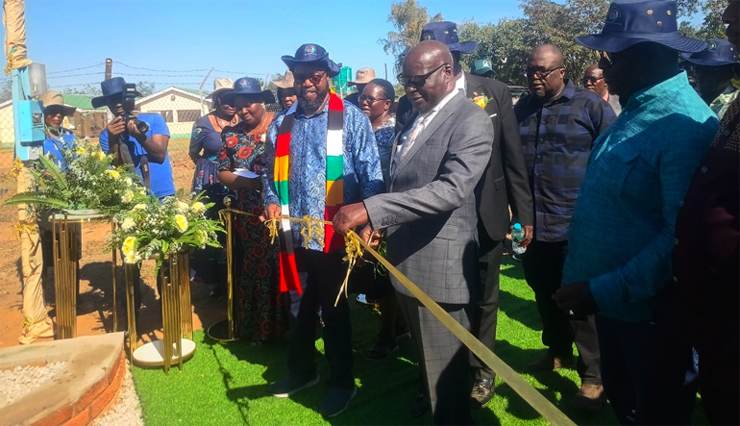
Lovemore Kadzura
Post Reporter
IN a landmark intervention that is rewriting the story of rural Manicaland, the Government yesterday (Thursday) switched on a state-of-the-art solar mini-grid in the once-forgotten Nzvimbe community of Makoni South, delivering light, opportunity and hope to thousands of locals long consigned to the margins.
The Nzvimbe project is a significant milestone, which is part of a broader provincial energy revolution that positions Manicaland as a national hub for renewable energy.
Manicaland has emerged as a renewable energy leader, with solar power plants, mini-grids, and institutional installations reshaping the province’s development landscape.
These projects are driving rural industrialisation, economic growth, and inclusive development, in line with Vision 2030 and the National Development Strategy (NDS2).
The 153KW project, constructed by the Rural Electrification Agency at a cost of more than ZiG11 million, now powers two schools, a clinic, bustling business centre, churches, police base, two community boreholes and 63 village homesteads – ending decades of darkness and isolation.
For Nzvimbe, the impact is immediate and transformative – learners can now study after dusk, clinics can refrigerate medicines and operate equipment safely, while small businesses are springing to life at the centre, creating jobs and expanding the local rural economy.
Boreholes equipped with solar-powered pumps guarantee clean water, and the presence of a powered police base strengthens security and order in the area.
As the hum of the solar array replaces the silence of the night, Nzvimbe stands as proof that Vision 2030 is, not rhetoric, but reality being switched on, one community at a time.
Commissioning the facility, Energy and Power Development Minister, Honourable July Moyo, said the rural electrification drive is advancing relentlessly across the country, in direct fulfilment of President Emmerson Mnangagwa’s Vision 2030 pledge to ensure that no one and no place is left behind regardless of geography.
“Today, we celebrate, not just the installation of solar panels and infrastructure development, but the empowerment of our rural communities, who for years have been forced to live under unbearable conditions due to the absence of modern energy services. This solar mini-grid plant brings clean, reliable and affordable energy solutions to key institutions and village homesteads that serve as the backbone of social development in this formerly marginalised community. We understand that electricity, and energy in general, is a critical resource which drives the economic prosperity of our country and positively transforms the lives of rural businesses, as well as the working conditions of civil servants such as teachers, nurses and agricultural extension staff,” he said.
Minister Moyo, while urging communities across Manicaland to align local development plans with NDS2 priorities, particularly in agriculture, education and youth empowerment.
“Our children at both Nzvimbe Primary and Nzvimbe Secondary schools will now learn under better conditions, with access to digital tools and lighting that extends learning beyond daylight hours.
“The clinic, the community’s source of health and disease control, will now be able to store vaccines, operate medical equipment requiring electricity and provide emergency services to our people without interruption, as was often the case before. As for the business community, electricity shifts them from operating merely in survival mode to growth mode. Over the years, rural businesspeople ran refrigerators on paraffin and diesel generators, incurring high operational costs that kept profits subdued. Today, the same businesspeople are enjoying clean energy from solar or the grid to power refrigerators, grinding mills, welding machines and other enterprises that were not possible before the Rural Electrification Agency came to their rescue. The Nzvimbe solar mini-grid project is a demonstration of the Government’s unwavering commitment to achieving universal access to clean, affordable and reliable energy for all Zimbabweans, towards Vision 2030, which envisions a prosperous and empowered upper-middle-income society. It aligns with our national renewable energy policy,” said Minister Moyo.
Minister of State for Manicaland Provincial Affairs and Devolution, Advocate Misheck Mugadza said the electrification has renewed hope in the community, which has been accorded a new lease of life with the introduction of electricity to the area.
“Energy is the backbone of economic growth and national transformation. Without adequate power generation, industries cannot operate efficiently, hospitals and schools cannot function optimally, and communities cannot realise their full productive potential. This solar mini-grid project therefore represents more than infrastructure development; it signifies hope, progress, employment creation, investment attraction and enhanced service delivery for our people. We applaud the Second Republic, under the able and visionary leadership of President Mnangagwa, for mandating REA to provide energy infrastructure to rural communities. The community of Nzvimbe is better off because of this new investment. May this be clearly demonstrable in enhanced business ventures and better opportunities for our people, women, youth, persons with disabilities, the elderly and our schoolchildren,” said Minister Mugadza.
Member of House of Assembly for Makoni South, Honourable Albert Nyakuedzwa hailed the development as a turning point for Nzvimbe, praising President Mnangagwa for rescuing rural areas and restoring dignity to marginalised communities.
“For years our people lived in darkness while the rest of the country moved forward. Today, that story has changed because of the President’s commitment to rural transformation. We applaud President Mnangagwa for remembering us and for ensuring that development reaches even the most remote corners of the country. The impact is already evident, with pupils able to study at night, the clinic able to refrigerate medicines and operate equipment safely, and small businesses expanding operations under reliable power,” said Honourable Nyakuedzwa.
At local level, the impact of solar power in Nzvimbe is already being felt.
Nzvimbe High School head, Mr Wonderful Maenzanise said electricity has opened new possibilities for education in the area.
“Power gives us the chance to modernise teaching and prepare our learners for a digital economy, even in a remote area like Nzvimbe,” he said.
Chief Chiduku thanked the Government for electrifying Nzvimbe, which had been lagging behind in terms of tangible development.