Online Reporter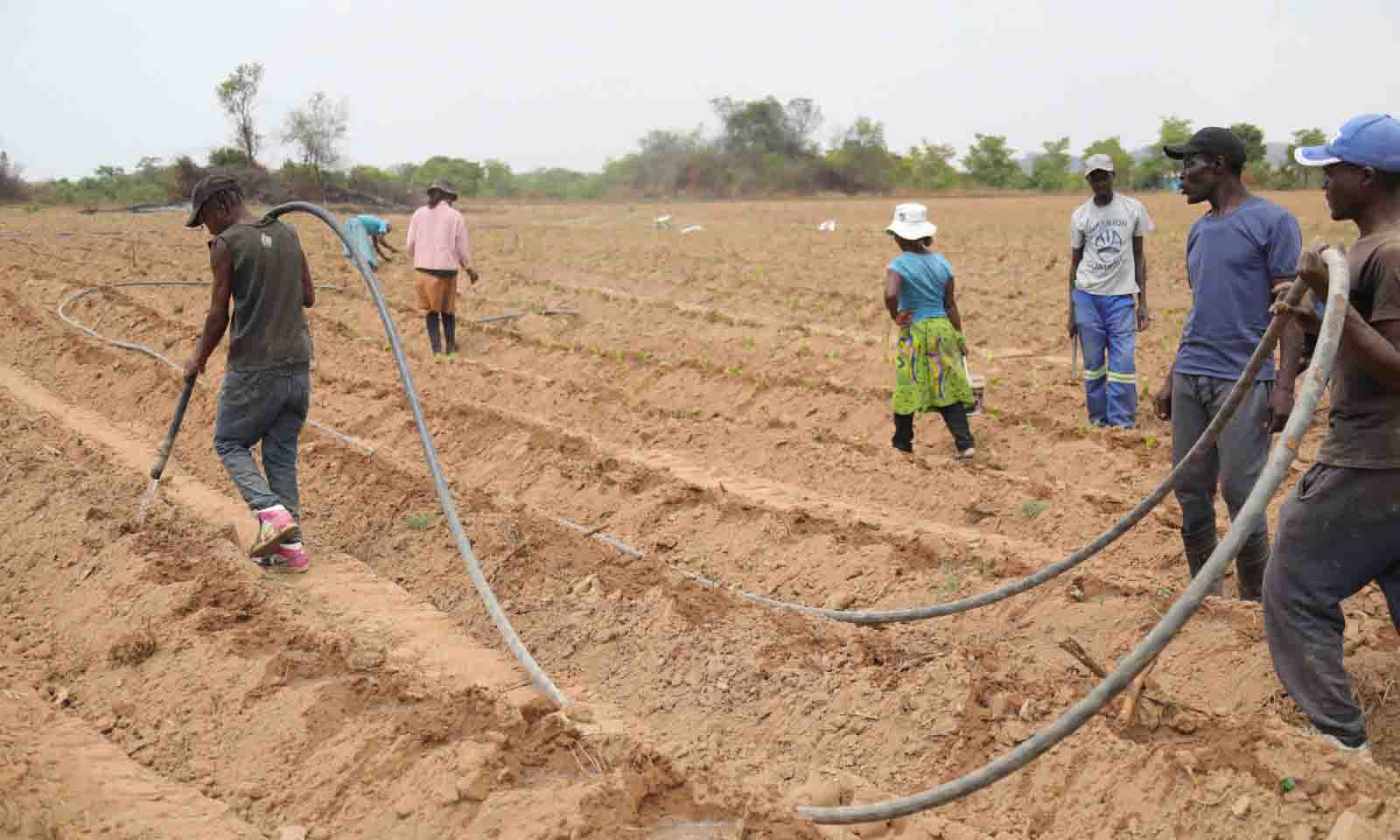
Lovemore Kadzura
Post Reporter
ZIMBABWE is confronting a deepening agricultural and water security crisis as erratic rainfall and climate change tighten their grip on the country’s farming heartlands.
Farmers and experts are urging urgent action to harness idle dams and expand irrigation infrastructure to safeguard food production.
Climate scientists warn that rain-fed agriculture is increasingly vulnerable to shifting rainfall patterns and prolonged dry spells, making irrigation not a luxury but a necessity for resilience.
This farming season has been a stark reminder. It began with normal to above-normal rainfall, only for the rains to vanish within weeks, replaced by a prolonged dry spell and heatwave that eroded harvest prospects in many regions.
What is particularly concerning is that communities in Manicaland Province — situated near perennial water bodies such as Osborne, Muchekeranwa, Ruti and Marovanyati dams—remain unable to draw water for irrigation.
Despite these reservoirs being full, limited infrastructure and capacity prevent communities from irrigating crops or practicing year-round farming.
Agricultural analysts emphasise that better utilisation of existing dams, combined with strategic expansion of irrigation schemes, will help shield Zimbabwe’s agricultural sector from climate shocks and reduce reliance on rain-dependent farming.
Agricultural expert, Mr Miller Chiposa stressed that irrigation development around major dams should be prioritised to minimise climate impacts.
“Irrigation is the cornerstone of agriculture. Rainfall is no longer reliable, and relying solely on it is suicidal. Even if forecasts are positive, irrigation must be on standby. Climate change is not sparing anyone, so irrigation is no longer a preserve for large commercial farmers—it is for everyone, including subsistence farmers,” he said.
Mr Chiposa acknowledged that irrigation infrastructure is capital-intensive, but insisted it guarantees higher yields and profitability, making it a worthwhile investment.
Manicaland Provincial Irrigation Engineer in the Ministry of Agriculture, Lands, Water Fisheries and Rural Development, Engineer Tendai Chimunhu confirmed that Government is rolling out irrigation schemes on major dams in Manicaland.
He revealed that this year alone, 4 200 hectares will be put under irrigation at Osborne, Marovanyati and Muchekeranwa dams.
“The province is currently irrigating 38 000 hectares across communal, A1, A2, large-scale commercial, and institutional farms, of which 7 000 hectares are communal. A total of 4 200 hectares is earmarked for development this year, targeting Marovanyati, Muchekeranwa, and Osborne dams. Additional projects are planned along the Odzani River Irrigation Company Canal and small farm dams in Makoni District, financed by Government, private sector, and development partners,” he said.
“The performance of irrigation schemes has improved significantly, particularly for strategic crops such as maize and wheat. A rapid increase in output was recorded in 2022 after the Agriculture and Rural Development Authority schemes were revived,” said Engineer Chimunhu.
As droughts and erratic rainfall intensify under climate change, solar-powered irrigation is emerging as a vital lifeline for thousands of smallholder farmers. Smallholder agriculture, which produces the bulk of Zimbabwe’s food, has traditionally relied on rain-fed cultivation—leaving crops highly vulnerable to prolonged dry spells that are now more frequent and severe.
Solar irrigation technology, which uses photovoltaic panels to pump water from boreholes, wells, rivers, or dams without dependence on diesel or unreliable grid electricity, is increasingly recognised as a climate-resilient alternative.
In drought-prone regions, farmers equipped with solar pumps report more crop cycles per year compared to rain-dependent counterparts, alongside higher yields that strengthen both food security and household incomes.
Government and its partners have also made strides in rehabilitating long-idle irrigation schemes.
Last year, major projects were completed at Romsely in Makoni, Cashel Valley in Chimanimani, and Chibuwe and Musikavanhu in Chipinge.
These revitalised schemes are now enabling hundreds of smallholder farmers to grow diverse food crops year-round, demonstrating the transformative potential of sustained irrigation investment.