Online Reporter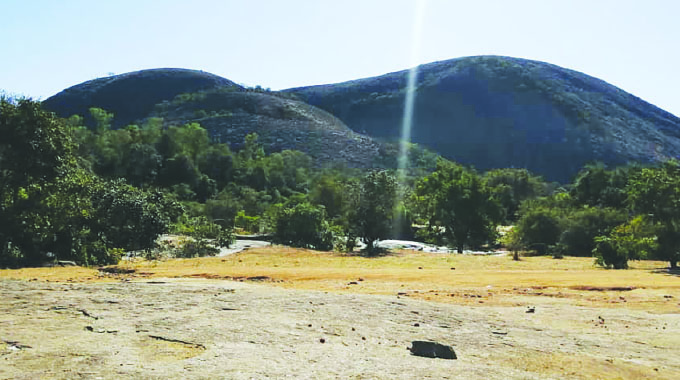
Edmore Maziofa, Correspondent
THE hot summer air strikes his face like the blade of a shredding knife. He is a frail man, his hair unkempt, his eyes vague and watery. With a weak, fragile frame, he resembles more a comic character from a children’s book than a soldier. Thirty tall Rhodesian troops surround him, preparing him for execution. Chauya Chauya (CC), his liberation name, a Zanla comrade, has been captured.
His hands are bound behind his back, his legs tied but loosened slightly to allow restricted movement. Occasionally, he is shoved violently by a rifle butt, staggering to regain his balance.
Nightfall descends, and darkness hangs over the group of soldiers and their “prisoner”. From the hills, the terrain flattens into a sandy expanse dotted with trees. The planet’s yellow beam of light falls across the rolling waves of grass, stirred by the hot summer wind, sending a ghostly whisper through the field. The sound of this gentle breeze could be his last.
Beneath a large Marula tree in the open field sits a crowd of villagers, their heads silhouetted against the fading sunset. The unease is palpable. Women, children strapped to their backs, lean forward for balance. The dim light from the fire casts a warm, flickering glow, creating dancing shadows. Normally, such a scene would evoke comfort and tranquillity, but not today. The terrified villagers have been summoned to witness the execution of a “terrorist”.
Among the Rhodesian soldiers stand two Security Force Auxiliaries (SFAs), rifles in hand, bayonets fixed. Though handcuffed, the comrade has a chain passed through his cuffs and fastened to his belt.
The soldiers handle him with a cautious, almost tender grip, as if afraid he might slip away — like men holding a fish still alive and ready to leap back into water. Yet the comrade remains passive, compliant, his arms limp, seemingly indifferent to his fate — displaying nothing but courage.
From the still, starry night and the mysterious sounds of the savanna, cattle cough dryly in their pens. Occasionally, an owl hoots in search of its evening prey. Crickets chirp metallically from deep underground. Shrubs in the open field resemble a troop of ostriches under the moon’s dazzling rays.
It is 1979, in a Zanla operation zone in Musikavanhu, within the Mwenezi Tribal Trust Land, Chief Mawarire’s area of Pazimani Village.
From the trembling crowd, one figure sits with visible unease as events unfold.
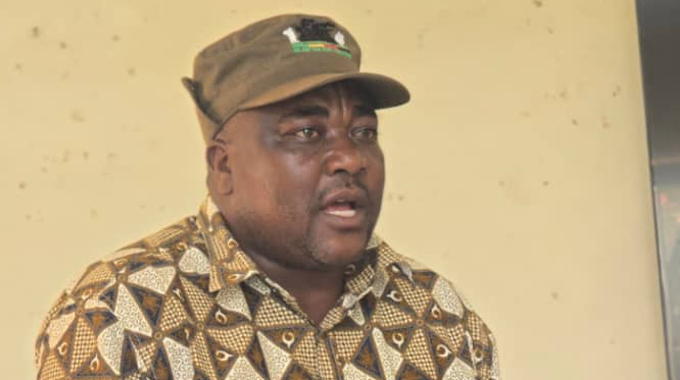
Cde Enock Pfekeche, a mujibha, feels compelled to act. A wave of worry, discomfort and anxiety washes over him. He slips away into the night to alert the section commander about the comrade’s fate.
A sluggish stream winds between banks of rich alluvial soil, carrying only inches of water despite the dry season. It is churned into thick mud by wild animals and cattle, with sand-hills lining its edges. Cde Pfekeche and other comrades, coming to rescue their fellow fighter, cautiously crawl up the soft bank and gaze out over the open field, which in the moonlight resembles a frozen lake. Villagers remain gathered around the fire, encircled by Rhodesian soldiers.
“During the liberation struggle, there was a strong bond between us mujibhas and the comrades. We worked as a team, especially on intelligence matters. It was our duty to ensure the comrades received accurate information. When we heard a comrade had been captured, we couldn’t bear it. We had to act, which is why I decided to escape and inform the others,” said Cde Pfekeche.
A single gunshot into the air was enough to scatter the crowd, allowing CC to escape and rejoin his comrades. They travelled through the serene summer night to their base in Pazimani Mountain, some seven kilometres away.
“It was a very difficult situation. A comrade had been captured and was surrounded by armed Rhodesian troops. We decided that firing a shot into the air would disperse the crowd — both civilians and soldiers — giving the comrade a chance to escape. That’s exactly what happened,” said Cde Pfekeche.
The morning sun cast a rosy hue across the sky above the Pazimani Tribal Trust Lands, only to be shattered by the thunder of 82mm artillery shells exploding around the mountain. Rhodesian forces were attacking the freedom fighters who had rescued their comrade. From a distance of about three kilometres, trails of bombs could be seen erupting on the ground.
The bombardment lasted for hours, shells bursting into plumes of smoke and dust, saturating a wide radius with chunks of hot metal slicing through the air, splitting trees in half. The firebase comprised four baseplate positions of varying calibres, some shells fused for ground bursts, others for airbursts.
The whistling and cracking of missiles became the day’s soundtrack. Across the mountain, explosions disrupted the ecosystem. Massive trees snapped and shredded, their bark stripped to reveal raw wood. Thick trunks were torn apart.
Bodies ducked and crawled for cover, rifles discharged bullets with a hissing sound that added to the chaos. Bullets
struck the ground, kicking up dust and forming visible plumes.
The comrades were trapped between the enemy and the mountain’s edge, their only shelter now destroyed. Shockwaves from the blasts ignited dry vegetation, and fire spread rapidly, consuming grass and producing intense heat and flames.
The rising smoke offered some cover, but the heat was unbearable. In the midst of battle, a sudden pause stunned the trapped comrades. Bullets striking rocks altered their trajectory, producing a distinct zing as the fight raged on.
“Our home is not far from the battle zone; we were like spectators at a theatre. We could smell death from that short distance.
Pazimani Mountain battle area, the open foreground where Rhodesian troops were dropped by the Dakota and advanced towards the foothill. In the background is the open hilltop where helicopters landed.
The noise was so overwhelming that even today, the echoes remain in my mind. We must cherish our freedom, knowing that some gave everything for it,” said Mr Jacob Macheza, a villager.
Four aircraft were involved in the attack: an Agusta Bell helicopter known as “Cheetahs” from Thornhill Air Force Base in Gwelo (now Gweru), a Lynx, an Alouette III, and a C-47 Skytrain which dropped paratroopers as reinforcements in the guerrilla base assault.
The loud, powerful, and throaty rumble of a Douglas C-47 Skytrain was unmistakable. More than 60 paratroopers tumbled out, landing in the open fields less than a hundred metres from the combat zone. Gunfire intensified as the two forces continued to engage.
Due to poor cover, the Rhodesian troops dropped like flies. As the airborne assault soldiers neared the ground, machine guns mounted on helicopters unleashed a barrage into the thick forest lining the mountain edges.
The combined roar of engines, rotor blades, and gunfire from both sides — amplified by the mountain echoes — created a deafening blanket of sound, unlike anything the surrounding wildlife had ever experienced. The Rhodesians’ only shelter came from gullies and makeshift nets used by bush pigs.
A high-pitched whine and the rhythmic slap of helicopter rotors sliced through the air, their thumping clearly distinct. Helicopters approached the hilltop, landing on the rocky surface of Dwala Mountain. A giant whirlwind of hot air swirled around the flat, stony landmark.
Soldiers abseiled from the helicopters, one after another. The reverberating gunfire intensified, echoing across the foothills. During a vertical ascent, one of the helicopters was struck by a Kalashnikov RGD-5 launcher. A sputtering, erratic whirring and whooshing sound followed as the rotor blades lost control, thrashing the air wildly before tilting in a desperate attempt to stabilise. Visible fragments of the blades flew off in all directions, followed by a violent crash and a ball of flame, prompting the Lynx aircraft to perform a rapid zoom climb to safety.
As the sun dipped below the mountain, the gunfire gradually faded with it. By the following morning, a dozen Rhodesian troops lay dead. Where the comrades had gone, and how they had vanished, only the nation’s spirit medium could know.