admin
admin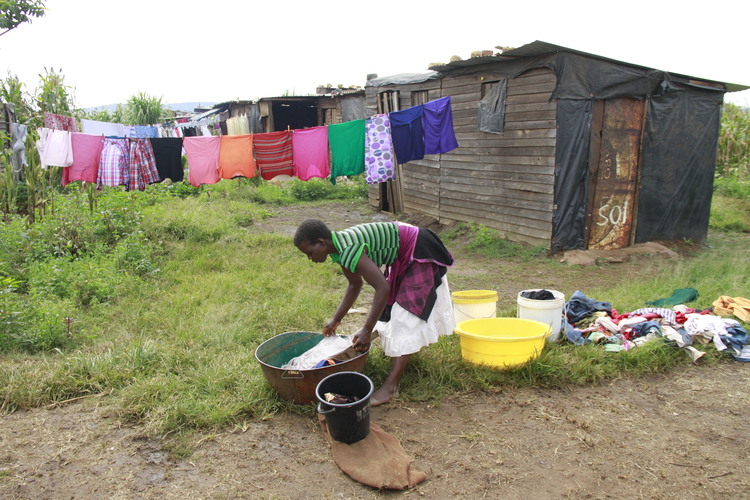

Edwin Mwase and Debra Matabvu
If those in the high and middle income brackets are finding the going tough when it comes to acquiring residential properties, what then becomes to those who are in the lowest brackets, or worse still, those who pocket nothing at the end of the month?
Disaster! Owning a house in a city has always been a herculean task.
They can only dream of owning a house. As a result, quite a large number of homeless people have resorted to constructing their own “fantasy cities”, the so-called slum cities on unsanctioned open spaces in Harare.
And in doing so, the slum dwellers or squatters, as they are commonly referred to as, have provoked unending battles with the city fathers.
Currently, Harare City has identified 63 slum settlements around the city.
For the city fathers, it becomes a double-edged sword as they alternate between the need to provide all residents with decent accommodation and restoring sanity in the housing sector.
The provision of accommodation to residents has proven to be an uphill task for the current and previous council authorities over the years.
Currently, Harare City Council has an estimated half a million people on its housing waiting list, while the national housing backlog stands at around 1,25 million people.
As part of their Vision 2025 strategy, the City Council says it plans to construct about 105 000 housing units by 2018.

However, on a sudden shift of events, slum dwelling might prove to be the gateway to owning a house in the capital after all, if recent developments are anything to go by.
Most slum dwellers might soon found themselves proud home owners!
Already, 480 former squatters now possess home ownership cards.
This follows the construction of more than 480 low-cost housing units by the City Council in partnership with the Bill and Melinda Gates Foundation and other developmental partners in the Dzivarasekwa slum area.
The initiative, dubbed the slum-upgrading programme, will also see 120 similar slum dwellers from the Gunhill-Highlands area being relocated to a new settlement in Mabvuku soon.
This initiative has been lauded by most stakeholders in the city, who view it as a way out of the perennial accommodation problem which has haunted the city authorities for a very long time.
Harare Council said this programme will eventually see the upgrading of all the documented 63 Harare slum settlements into organised settlements.
The main financiers of the Dzivarasekwa project, The Bill and Melinda Gates Foundation, said they injected $US5 million – 50 percent of this amount went to the council authorities, whilst the other half went to community development groups in the city.
“In Harare, it was a special project organised by the City Council and other community development groups that seek to provide shelter to the homeless,” said Dr Melanie Walker, outgoing Bill and Melinda Gates Foundation deputy director for special initiatives.
However, she said close to 500 new houses were already ready for occupation in the Dzivarasekwa slum upgrade initiative, she could not be drawn to say how many families will eventually benefit at the end of the initiative.
“The project might actually benefit a lot of people over time, because of the way it is being rolled out,” said Dr Walker. She said their partners were making the programme sustainable by creating micro-finance clubs, which will see other communities borrowing money from the revolving fund to construct houses and later repay amounts borrowed over a period of time. She said this model can also be rolled out to develop other cities in the country, but however, ruled out her organisation’s immediate participation in other cities in the country.
“Specifically for this grant, the money was intended for the city of Harare and its residents, but the model can be used in other cities. However, at the moment the Gates Foundation does not plan to fund a similar project in other cities,” she said.
Harare City Council principal communications officer, Mr Michael Chideme, confirmed that so far 480 squatters from Dzivarasekwa Extension have benefited from the slum upgrading programme and are now legal owners of the houses they occupy.
“This initiative targets members of society, mostly those with a monthly income of US$200 and below,” he said.
“The initial seed money for the Dzivarasekwa project was sourced from the Bill and Melinda Gates Foundation, but a micro-finance corporation to bankroll the upgrading of slums has been set up and already US$200 000 is in the coffers.”
He said affordable units will also be constructed in Mabvuku for the squatters in the Gunhill-Highlands area using the funds from the revolving fund, while commercial stands will also be created.
“This has been necessitated by our drive to provide decent accommodation, health services and other amenities to the residents,” he said.
Mr Chideme said currently 600 people have benefited from the combined Dzivarasekwa and Gunhill initiatives, which will be moving to other slum settlements soon.
Harare Mayor, His Worship Ben Manyenyeni, recently said that the council was looking for investors and partners that would help upgrade most of the slum settlements spread across the city.
He said even though the city wanted to formalise slums, it did not have a budget to finance the initiative.
He said in 2012, council noted that the demolition of such structures was not the solution to ending housing problems and adopted a strategy to develop the existing slums.
Harare Residents Trust (HRT) Chairperson, Mr Precious Shumba, said his organisation applauds the initiative.
“As HRT we are excited by the development and we hope more investors will follow in the footsteps of the Bill and Melinda Gates Foundation,” he said.
“We would like to commend the Government for formulating policies that seek to provide basic humane necessities such as shelter, the council for providing the land and the Foundation for providing financial resources for the project to take place.”
The slum upgrade initiative funded by the Bill and Melinda Gates Foundation has been successfully implemented in four other cities in Africa; namely Monrovia in Liberia, Luanda in Angola, Cairo in Egypt and Lilongwe in Malawi.



 Online Reporter