Online Reporter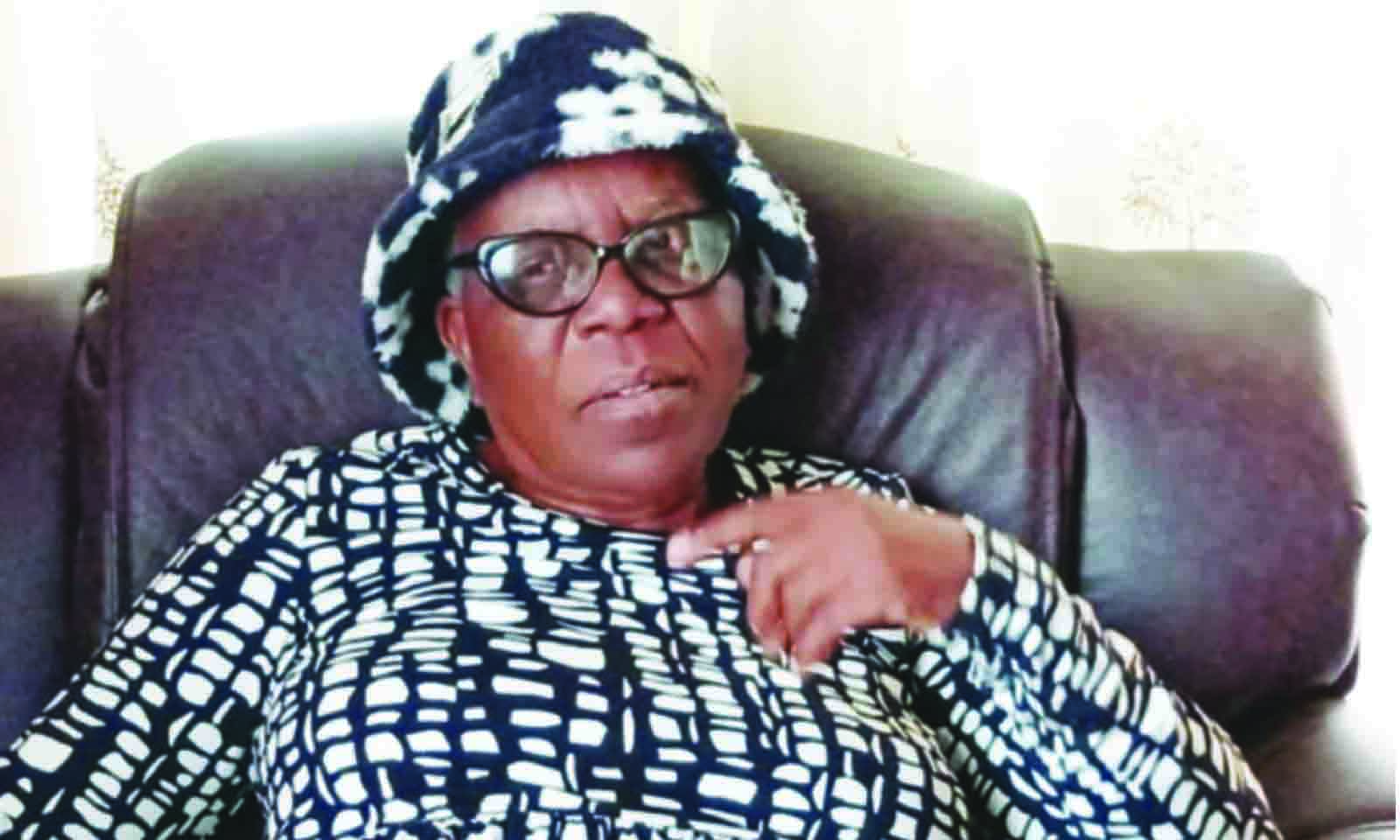
Gibson Mhaka
Zimpapers Politics Hub
AS she sits on a sofa at her house in Bulawayo’s Nketa 8 suburb, there appears to be nothing particularly remarkable about this “elderly” woman or her surroundings.
However, as soon as she opens her mouth and begins to recount a heart-stopping tale of her past life as a freedom fighter who helped bring about Zimbabwe’s cherished independence, it becomes clear that this is no ordinary woman.
This is Cde Barbra Ndlovu (65), whose Chimurenga name was Florence Ncube.
She is also the devoted spouse of another revered former guerrilla, Cde Joel Mhlanga, who passed away on 10 October 1999 and is buried at Nkulumane Provincial Heroes Acre in Bulawayo.
Cde Ndlovu, a retired Warrant Officer Class One from the Zimbabwe National Army (ZNA) retired in 2012 after serving for about 30 years.
It is not often that one has the opportunity to hear about the life of an ex-combatant from women.
Yet, what was not realised at the time was that Cde Ndlovu would one day share with an independent Zimbabwe her incontrovertible and first-hand encounter with the valiant defenders who took up arms to throw off long years of oppressive Rhodesian rule and achieve the ultimate goal of independence.
Like many young people from her area in Plumtree in Matabeleland South province, she heeded the call to join freedom fighters in Zambia, crossing to Botswana’s Selibe-Phikwe-Transit Camp in 1976.
As Zimbabwe prepares to commemorate Heroes Day on August 11, a powerful voice is emerging from the ranks of the country’s liberation struggle veterans.
Cde Ndlovu emphasised the importance of women telling their own stories, separate from the often male-dominated narrative.
She firmly believes there should be equality in narrating the liberation war history.
The years have softened her features, but the fire of a freedom fighter still burns in her eyes.
Her voice, gentle at first, becomes a powerful instrument as she begins to tell her story — a story that, for decades, remained largely untold.
Cde Ndlovu, is a woman who chose a different path at a young age, answering the call for freedom that echoed across her land.
“I went to war in 1976 when I was 16 years old,” she said, her words painting a picture of a journey into the unknown.
“We crossed into Botswana, where we stayed for about three days before proceeding to Zambia.
“In Zambia, we briefly stayed at Nampundwe before moving to Mwembeshi Training Camp, where both women and men trained together.”
Her training was relentless and gender-blind, a crucible that forged her into a soldier.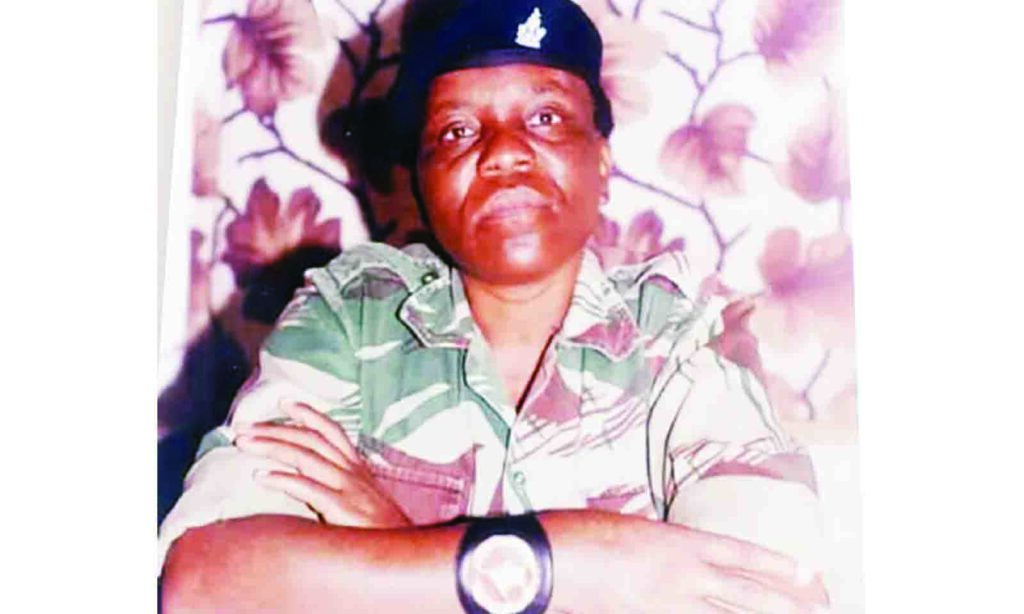
“Our training began there in January 1977,” she recalls.
“In the afternoons, platoons consisted of 33 members, with women often being the 33rd member, meaning you would be the only female in that platoon.”
Yet, gender was no barrier to duty.
“We were deployed in defence pits or trenches; there was no selection based on gender, meaning women were not excluded from any duties.” The training was so strenuous, she says, that “when you finally got to rest, all you could think about was sleeping.”
After her training, she was deployed to Victory Camp (VC), a refugee camp that had become a sanctuary for students (including those from Manama Mission School in Gwanda), recruits and those with children. Here, her role shifted to security.
“I was part of the security team deployed around the camp. As women who had also been trained, we were obligated to provide security in the areas where the women were staying.”
Armed with an AK-47 rifle, she stood guard, unwavering in her duty.
“I was armed with an AK-47 rifle and would not tolerate anyone attempting to tamper with the camp’s security systems,” she said.
She stayed there from 1977 to 1978, before a final journey through Botswana led her back home in 1980.
“I went to Botswana, staying in refugee camps in Francistown before returning to Zimbabwe in 1980,” she recounted.
“Later, we moved to Sierra Assembly Point at Insukamini near Gweru. During demobilisation, I then went to Harare.”
After independence, Cde Ndlovu was attested into the Zimbabwe National Army’s Engineering Military Equipment Directorate in 1981 and served for three decades.
It was during this time that she met her husband, Cde Mhlanga, a fellow soldier and freedom fighter.
“It was good that both of us were ex-combatants; it meant we could understand each other.”
This shared past, she believes, was crucial in navigating the stereotypes that often followed female fighters.
“There are persistent stereotypes that women who participated in the liberation struggle are overly masculine or unfeminine,” she says, a hint of sadness in her voice.
“My husband was very loving and cherished his family. He was also a strict disciplinarian.”
The couple was blessed with two children, a son and a daughter.
Despite her late husband’s hero status, Cde Ndlovu’s life is not without hardship. She spoke of the struggles of being a hero’s widow, noting that the recognition and benefits often fall short of the sacrifices made during the liberation war.
Her narrative is also a lament for the many unacknowledged and forgotten heroes, particularly women, whose contributions have been overlooked.
“What affected most ex-combatants, particularly women, is their lack of education and the absence of documentation of their stories, which have remained untold until now.”
She explains how women who continued to serve in the Government found it difficult to share their stories, as it was “often perceived as being political.” This left many with a sense of being forgotten.
“As you can see, my history is decorated, yet even those who came after me… seem to be recognised at the expense of some of us who joined earlier.”
Her message is clear and passionate.
“Female ex-combatants should be allowed to tell their stories, just like their male counterparts.”
For her, and many like her, this is not just about personal recognition, but about ensuring that the full, rich tapestry of Zimbabwe’s liberation history is finally woven together, honouring every thread, every voice, every woman who fought for freedom.