Online Reporter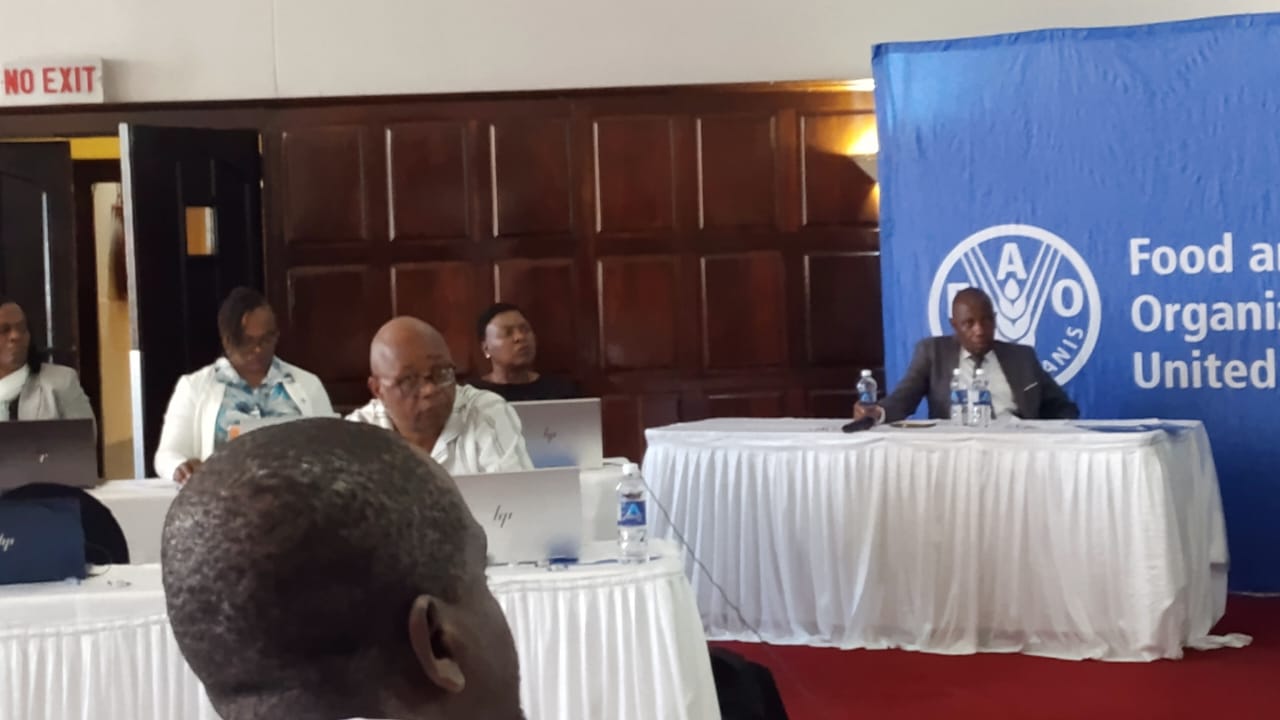
Sikhumbuzo Moyo [email protected]
A US$19,4 million sustainable urban resilience project targeting the cities of Bulawayo and Harare is expected to directly benefit about 2.1 million residents while restoring degraded ecosystems and strengthening climate resilience.
The details emerged during the first day of the Urban and Peri-Urban Resilience through Investment for Sustainable Ecosystems in Zimbabwe (U-RISE) inception workshop at a Bulawayo hotel Wednesday where Food and Agriculture Organization Zimbabwe focal person Ms Constance Sekete outlined the project’s objectives, scope and expected outcomes.
Ms Sekete said the project was designed as an integrated programme aimed at contributing to global targets on resilient communities and ecosystem restoration through multiple environmental benefits.
“This project is expected to contribute to global targets in building resilient communities and also in the ecosystem-based approach. It is an integrated programme aligned to six key pathways focusing on the integration of focal areas and approaches,” she said.
She explained that the Zimbabwe initiative is one of the child projects under the broader Sustainable Cities Programme targeting 20 countries globally.
Ms Sekete said the inception workshop sought to create a shared understanding among partners on the project scope and expected results, while also validating the work plan, budget, governance arrangements and implementation roles.
The workshop will also establish operational structures such as the Project Steering Committee and coordination mechanisms for the first year of implementation.
She said the funding package combines grant allocation and co-financing, with the bulk of resources expected from co-financing partners.
“This is catalytic or seed funding meant to attract additional financing. When we combine the allocation and co-financing, the total comes to about US$19,4 million,” she said.
The project will run for 60 months from August 2025 to August 2030.
She said the programme aims to restore about 5769,5 hectares of ecosystems, including forests, wetlands and grasslands.
Another 227,5 hectares will be placed under improved land-use management systems such as agroforestry and climate-resilient practices.
The project is also targeting mitigation of about 125 233 metric tonnes of carbon dioxide equivalent emissions by the end of its lifespan.
Ms Sekete said Zimbabwean cities were facing increasing pressure from rapid and unplanned urbanisation, climate change and poor waste management systems.
She noted that Harare’s built-up area had increased by 230 percent between 1984 and 2018, while almost half of the vegetation cover in Harare and Bulawayo had been lost over the past three decades.
“Wetlands continue to face encroachment, with about 30 wetlands in Harare reportedly under threat from formal and unregulated developments,” she said.
On climate change, Ms Sekete said Zimbabwe remains highly vulnerable, with drought frequency increasing significantly over the years.
“Droughts used to occur once every 10 years between 1902 and 1979, but between 1980 and 2019 they increased to once every four years.
Temperatures are projected to rise by between 1,5 and 3 degrees Celsius by 2060 to 2080, while rainfall could decline by 10 percent by 2080,” said Ms Sekete.