Online Reporter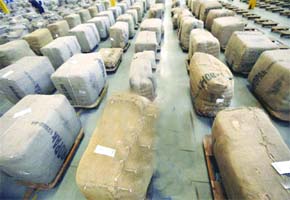
Theseus Shambare
TOBACCO farmers have called for improved prices as the 2026 marketing season opened with mixed fortunes on the auction floors on Wednesday.
The first bale of tobacco went under the hammer at US$4,60 per kilogramme, slightly lower than the US$4,65 recorded on the opening day last year.
Some bales fetched as little as US$0.35 per kilogramme, raising concern among farmers who say such prices may not cover the rising cost of production.
The calls for better prices come at a time when tobacco remains one of Zimbabwe’s most strategic agricultural commodities.
The golden leaf is the country’s second-largest foreign currency earner after gold, generating over US$1 billion annually and sustaining the livelihoods of hundreds of thousands of farmers and workers along the value chain.
The opening of the marketing season also comes after the Tobacco Industry and Marketing Board (TIMB) reduced official tobacco classification grades from 1 320 to 669, a move meant to improve pricing transparency and align Zimbabwe’s tobacco grading system with international buyer standards.
Farmers had expected the reduction in grades to result in better prices by limiting the number of classifications buyers could use to downgrade tobacco.
However, some growers say early prices have not yet reflected those expectations.
Zimbabwe National Farmers union president, Monica Chinamasa, said farmers were encouraged by the presence of buyers on the floors but expressed concern over some of the prices being offered.
She said particularly worrying were lower prices being offered for lemon-coloured tobacco, which is popular on the Chinese market.
“Farmers expected that with the reduction in tobacco grades, the problem of excessive downgrading would be reduced and prices would improve,” she said.
“But we are seeing some lemon cures, which are favoured by the Chinese market, attracting lower prices and that is worrying for farmers.”
Commercial Farmers union treasurer, Brighton Bvukumbwe, said growers remain optimistic but are also concerned about the sustainability of tobacco production if prices remain subdued.
He said farmers continue to face rising production costs, including inputs, curing fuel and transport.
“Farmers invest heavily in producing tobacco and they expect fair value for their crop.
“We are hopeful that as more buyers participate on the floors, prices will improve,” said Bvukumbwe.
For many farmers, tobacco remains the backbone of household income.
Taizivei Chatadza, a farmer from Kazangarare, said growers in his area are hoping that prices will strengthen in the coming weeks.
“Tobacco production requires a lot of resources and effort. If prices are too low, farmers struggle to recover their costs,” he said.
In Hurungwe, widow Pedzisai Mazise said tobacco farming has sustained her family since the death of her husband.
She said the income from the crop helps her support her children and pay school fees.
“We depend on tobacco for our livelihoods. We are hoping that buyers will offer better prices as the season progresses,” she said.
The Government has meanwhile expressed optimism about the outlook for the season, citing favourable growing conditions and strong demand for Zimbabwe’s high-quality tobacco.
Lands, Agriculture, Fisheries, Water and Rural Development Deputy Minister Vangelis Haritatos said the marketing season is expected to attract significant activity on the floors.
“We expect thousands of farmers to be in and out of these floors around the clock,” he said, noting that this year’s crop promises both quantity and quality.
“We expect that the pricing will be based on the quality that farmers bring to the floors. The better the quality, the better the price.”
Deputy Minister Haritatos said tobacco has also proved resilient under varying climatic conditions.
“Tobacco is a drought-resistant crop in the field and this season has been better for tobacco farmers,” he said.
Zimbabwe remains Africa’s largest producer of tobacco, with production continuing to grow on the back of strong smallholder participation and Government support programmes aimed at strengthening agricultural productivity.
Auction floors now account for about five percent of the total tobacco crop, with the bulk of the produce sold through contract farming arrangements.
Contract floors opened yesterday, marking the beginning of sales for the majority of growers under contract.
Despite handling smaller volumes, auction floors remain a critical price-discovery mechanism, helping determine market trends for the rest of the marketing season as deliveries increase and competition among buyers intensifies.