admin
admin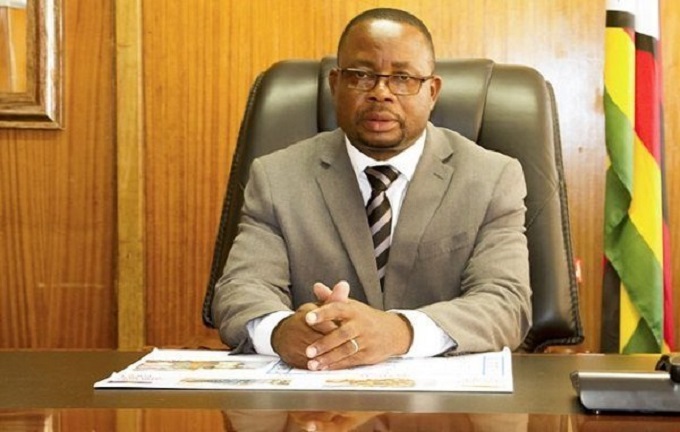
Leonard Ncube in Hwange
THE Government yesterday commissioned St Mary’s Primary School in Hwange as the first ever model eco-school in the country.
The Roman Catholic institution, built in 1935, will now become a champion school locally and in the Southern African region where other schools will tap from its Information Communication Technology and digitised learning system.
Eco-School is a total e-learning solution focused on teacher and learners from Early Childhood Development to Form Four.
It offers digital learning and is available on cloud service called e-cloud, meaning it can be accessed and used without internet connectivity through a localised network system.
It is a brainchild of a Canadian organisation Learning for Humanity in partnership with World Vision Canada.
A total of $220 000 was injected to provide 40 computers for the school, nineteen 55-inch TV screens, the same number of projectors and tablets as the school has moved ultimately towards digitised learning.
Teachers now use a tablet to beam lessons on a large screen with pupils following on computers using headphones while assessment by the school head or district schools inspector will now be done online.
Speaking at a colourful commissioning occasion at the school yesterday, Primary and Secondary Education Minister Professor Paul Mavima said Eco-School dovetails with the Government programme of transformation education as envisioned by President Emmerson Mnangagwa’s goal for a middle income economy by 2030.
“It’s my singular privilege and honour to come and witness the commissioning of this e-learning project here which will mark the beginning of a long journey towards the creation of a Zimbabwe we want for our children.
“The programme will go a long way towards the realisation of that transformation and parents should embrace competence-based curriculum (formerly new curriculum) as it is key to socio-economic development and transformation,” he said.
Prof Mavima paid tribute to World Vision and Learning for Humanity for supporting schools with computerisation programmes and enabling learners to realise their full potential.
“Let me appreciate this partnership with World Vision and other development partners as we work to achieve a digitised education sector in Zimbabwe. I’m particularly heartened that we’re targeting the disadvantaged communities because education is the best tool to positively transform our lives.
“The Government is working on a quick turnaround of the education sector through adopting new learning and of about 9 000 schools countrywide, you are privileged to be chosen as first Eco-School so you will be a champion school to train in the district, province and nationally,” said Prof Mavima.
“Now the school has a computerised library. This programme will bring 40 computers adding to the ones the school already had and what’s most interesting is that teachers will now be using TV screens and not using chalk boards.”
The Minister said the education sector will be the nucleus for socio-economic transformation as the school will now provide internet services for the community as well.
World Vision Canada programme portfolio manager Mr Phillip Makutsa said Eco-School aims to help children prosper in life.
“We’re excited about this partnership with the Government, diocese and school and believe this will be a model for Zimbabwe and the world and we want to make it national. We target to educate children for life, make education accessible, improve access to textbooks and learning material and improve quality of teaching,” he said.
Learning for Humanity chief executive Mr Philip Baker said more developments will be done at the school in January next year.
He said the project will be used as a model to other countries who will visit St Mary’s to learn from the success story.
“This has enhanced learning especially with the girl child as they can research on their own time. We started this in August last year after we were convinced by the feasibility study because there was something already going on at the school.
“We are putting a robust system and more miracles are coming in January,” he said.
The project was finally launched in February this year while teachers have also been trained.
The school headmistress Mrs Thokozile Ncube-Dube said Eco-School was already bearing fruits and was hopeful to improve pass rate from the current 60 percent.
The school has 833 pupils and 19 teachers. — @ncubeleon


 Online Reporter