admin
admin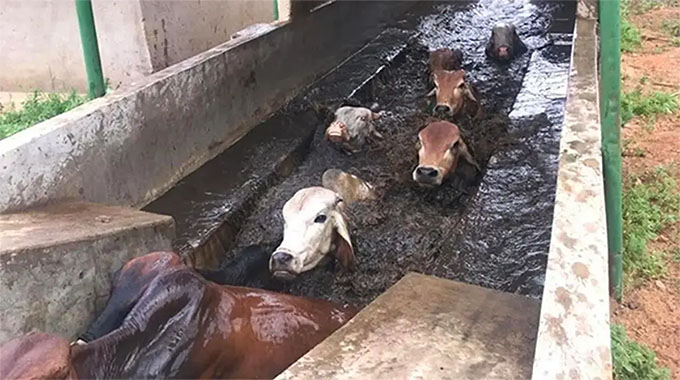
Elton Manguwo
CATTLE farmers must religiously follow strict dipping schedules to contain possible outbreaks of tick-borne diseases that are typical of wet seasons during which they cause high cattle mortalities, the Department of Veterinary Services (DVS) has warned.
In a statement, DVS chief director Dr Josphat Nyika encouraged farmers to dip or spray their cattle with acaricides regularly to control ticks.
“Tick-borne diseases, particularly (Theileriosis) January disease, Red water and heart water are a menace at this time of the year,” said Dr Nyika.
The need to improve animal health and reduce the high mortality rate is key to the growth of the national herd, something that has made it crucial for the Government to rehabilitate more than 500 dip tanks this year accompanied by boreholes to ensure uninterrupted water supply throughout the year. The department now has 4099 dip tanks countrywide.
“In areas where theileriosis is prevalent, intensive dipping intervals of three times in two weeks are encouraged,” said Dr Nyika.
In line with the push to secure the country’s herd, the Ministry of Lands, Agriculture, Fisheries, Water and Rural Development has since initiated the Dip Resuscitating Programme to improve basic dip tank infrastructure in the country.
Dr Nyika stressed that early detection of tick infestations helps save the animals but prevention is better than cure, which means farmers must dip animals regularly to prevent tick-borne diseases.
Additionally, farmers must work closely with extension personnel and other service providers for early detection of diseases.
The department has assured farmers that it has enough dipping chemicals to combat tick-borne diseases during this January disease period.
“The department is fully capacitated with chemicals to last throughout the rainy season,” revealed Dr Nyika.
More than 65 percent of cattle deaths in Zimbabwe are caused by tick-borne diseases including January disease with 500,000 cattle valued at more than US$150 million having died due to January disease from 2018 to 2022.
The cattle industry has recorded a two percent drop in cattle mortality, as the Government’s livestock recovery and growth plan takes effect in combating tick-borne related diseases.
Small-scale farmers own 90 percent of Zimbabwe’s herd, which makes it crucial to protect cattle, as they play a fundamental role in shaping their socio-economic realities. Cattle farming is a potentially profitable enterprise for small-scale agricultural operations. Farmers can get sizeable new revenue streams and affordable fertiliser options from cattle.
This is important as the country journeys towards achieving a middle income economy as envisaged under Vision 2030.



 Online Reporter