Online Reporter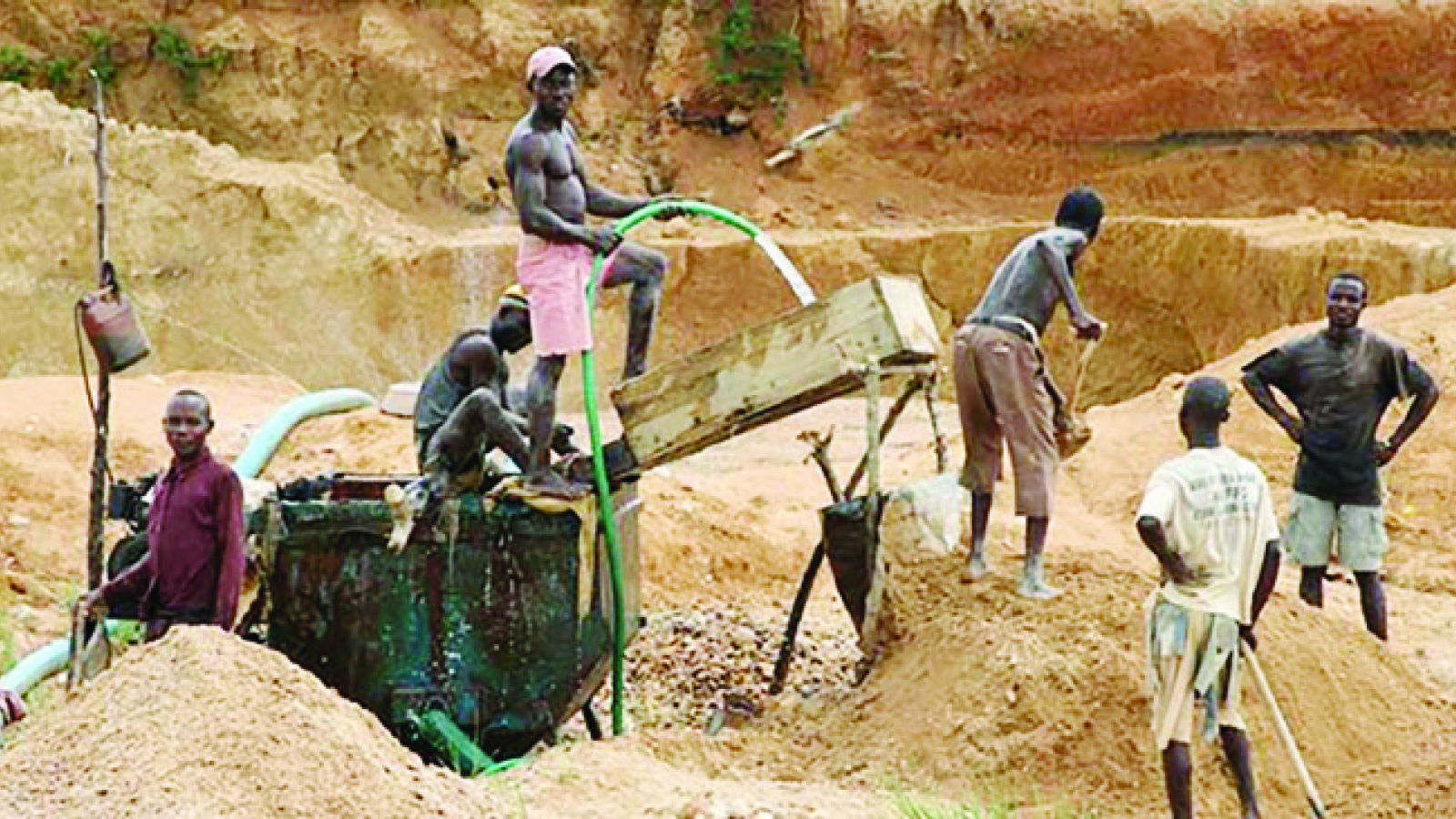
Judith Phiri-Zimpapers Business Hub
THE Ministry of Mines and Mining Development has said formalising artisanal and small-scale miners is critical to promote green mining.
Globally, there is a growing transition to green mining, which entails the adoption of environmentally sustainable, socially responsible and economically viable practices throughout the entire mining life cycle.
The responsible mining activities should extend from exploration and extraction to closure and restoration.
Key aspects of sustainable mining include minimising environmental impact by reducing emissions and waste, ensuring worker and community safety, improving resource efficiency, utilising renewable energy and engaging local stakeholders.
Speaking at the 2025 Zimbabwe Climate Change Sustainability Week (SW) and Green Business Expo in Bulawayo last week, the Ministry of Mines and Mining Development metallurgical engineer, Engineer Rachiel Bvurire, said there was need for collaborative efforts to ensure the formalisation of artisanal and small-scale miners.
“We need to come together to solve the issue of artisanal and illegal miners because they normally cause degradation when they follow hotspots. We should put our heads together so that we can regularise and bring together people who do artisanal mining,” she said.
“If you have artisanal and illegal miners in your area, you are free to report them to our ministry offices, Environmental Management Agency (EMA) and the Zimbabwe Republic Police (ZRP).”
She said sustainable mining entailed efficient extraction of minerals, noting that the challenge in the country was that artisanal and small-scale miners were using unsustainable methods of mineral extraction.
Eng Bvurire said the ministry was rolling out awareness campaigns through the Planet Gold initiative, which works with the authorities to advance sustainable mining practices, bringing in EMA and ZRP to engage the mining community.
She added: “We also have a lot of miners’ associations that are educating miners. So, if you know you have a relative who is carrying out artisanal and illegal mining, please refer them to our office so that we can assist them.
“There may be people who are mining in your farming area, homesteads, communal land and railway lines or close to pipelines; these should be reported so that they face the law.”
Eng Bvurire said mining was a critical sector of the global economy, providing the raw materials that drive modern society, while green mining was pivotal in protecting the environment and helping the industry to become more cost-efficient and economically sustainable.
EMA Bulawayo provincial manager Mrs Sithembisiwe Ndlovu said the country should start moving to mining for a greener future, aligning Zimbabwe’s mineral sector with climate goals.
“When we look at Zimbabwe as a country, our economy is largely based on agriculture and mining. Mining has a finite life and as such, mines are not permanent land use on the physical environment,” she said.
“However, they leave scars of environmental damage resulting from unsustainable exploration, extraction and processing of minerals.
“In some circles, they perceive mining as a hit-and-run industry. That comes from extracting what they want and leaving without considering what they leave behind.”
Mrs Ndlovu said there was need to transition from fossil fuels to renewable energy by investing in solar, wind and hydro power.
She said fossil fuels contributed to greenhouse gas emissions, adding it was critical to adopt green technologies that can reduce emissions during mining processes.
“Switch from fossil fuel to powered machinery and electric or hybrid equipment so that we reduce the emissions that go into the atmosphere,” she said.
“Quite a number of companies have embraced green energy, where most mining companies are investing in solar technology; one of these in Matabeleland North’s Bubi district is Turk Mine.
“They have transformed a tailings dam into a 4,4-megawatt solar farm, reducing their reliance on fossil fuels. Let’s use energy efficiently in our mining processes so that we can reduce greenhouse gas emissions.”
Mrs Ndlovu said implementing environmental, social and governance (ESG) reporting in mining ensures long-term operational sustainability.
Meanwhile, Young Miners Foundation (YMF) chief executive officer Mr Payne Kupfuwa called for mining experts and professionals to partner with small-scale miners to foster professionalism to maximise production.
“Skills and professionalism gap is the key factor stifling the growth of the mining industry, especially in the small- to medium-scale sector,” he said.
“Although the country possesses the most sought-after mineral deposits, there are serious gaps at the functional level to drive innovation required to optimise the performance of mining.”
Zimbabwe’s mining sector is a vital economic engine, contributing significantly to foreign direct investment, exports and Government revenue.