Online Reporter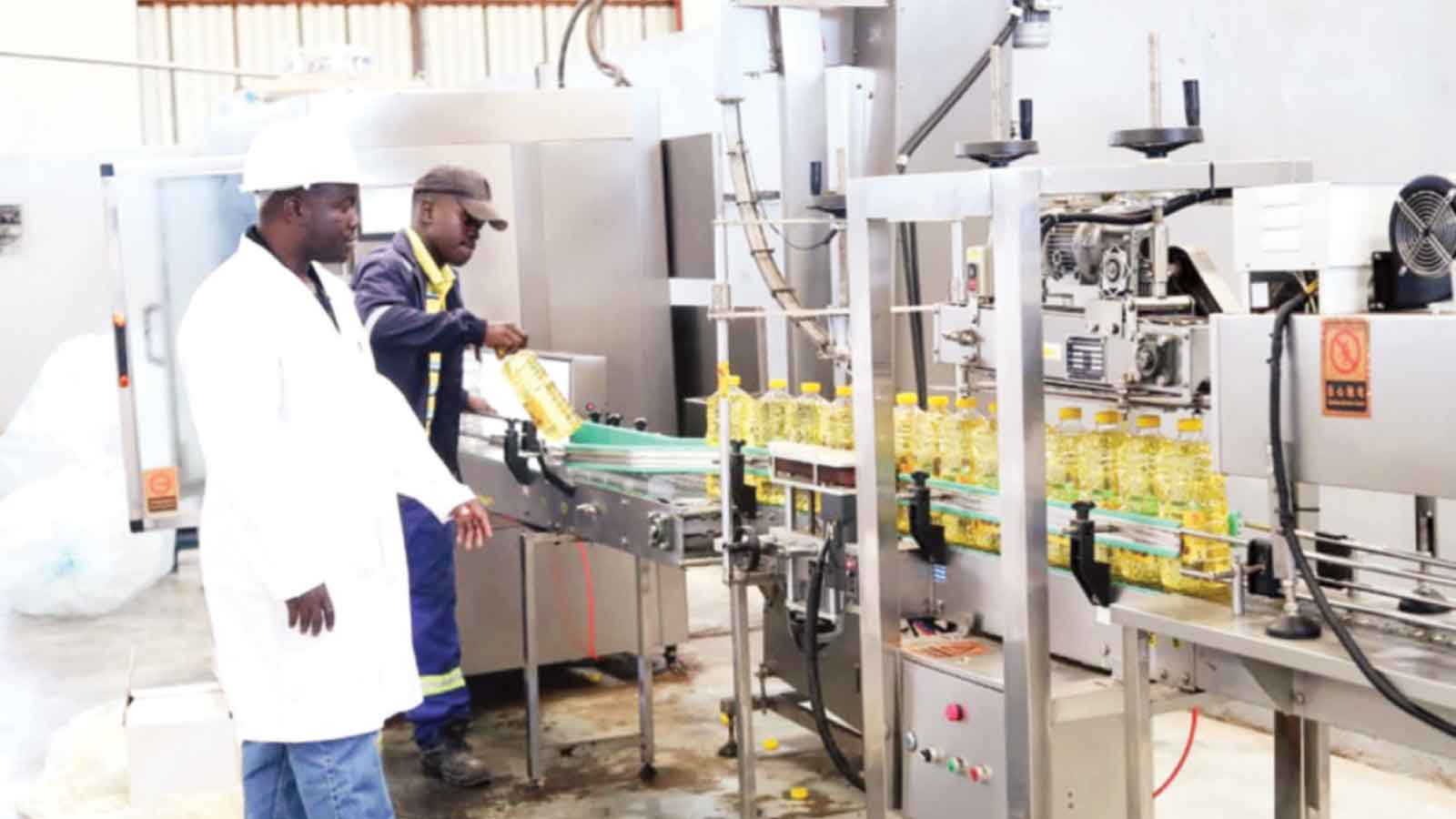
Theseus Shambare
Features Writer
DESPITE the lingering rainy season, the sun is already harsh over Mugumbere-Mutambwe Village in Mutoko by mid-morning — a stark reminder of the district’s increasingly erratic climate.
For farmers here, unpredictable weather is no longer just a seasonal inconvenience, but a growing threat to livelihoods.
Yet, from this uncertainty, a new rural industrial model is emerging, transforming lives and offering a blueprint for Zimbabwe and the wider Sadc region.
In her field, 57-year-old Mrs Marry Matekenya carefully harvests a weakened maize crop, her disappointment evident.
Once a reliable staple, maize has faltered under inconsistent rains.
“Maize is our staple, but this year, it has not done well,” she says.
Her thoughts drift to last season’s sunflower harvest — a turning point for her household.
The crop was processed into cooking oil at the Mutoko Bioeconomy Industrial Park, providing steady income and valuable by-products for her livestock.
“Last year, my sunflower crop carried us through. Watching the plant process our seeds into cooking oil and soap was unforgettable — it changed our lives,” she says.
The sunflower cake, a by-product, now feeds her animals, completing a cycle that links small-scale farming to industrial production.
“Seeing how a small farm can feed an industrial hub, and then feed our community, gives me hope — not just for my family, but for rural Zimbabwe and even our neighbours across SADC,” she adds.
Mutoko spans agroecological zones II, III and IV, where rainfall is often insufficient and erratic.
These conditions are pushing farmers to shift from traditional crops like maize to more resilient alternatives such as sunflower and jatropha.
A few kilometres away, 86-year-old Mr Caleb Rinomhota tends his two-hectare jatropha plot.
He has grown the drought-tolerant crop since 2006, turning it into a modest but reliable income stream.
“I was disappointed when the plant went silent a few years back due to financial constraints, but seeing it come back online gives me hope,” he says.
“Now I am preparing my field again. I feel part of something bigger — a local effort that could inspire rural industrialisation across SADC.”
Closer to the industrial hub, Mrs Gracion Mvundura oversees a 20-hectare plantation.
Employment at the park has transformed her life — she now owns a home in Mutoko Centre and can afford better education for her children while supporting her family.
For Zimbabwe and the SADC region, Mutoko is more than a local initiative; it is a model of rural energy and economic resilience, demonstrating how agricultural production can be integrated with industry to reduce dependence on volatile global fuel markets.
From pilot project to industrial hub
The Mutoko Bioeconomy project began in 2006 as a small jatropha pilot aimed at producing biodiesel.
Today, it has evolved into a fully integrated industrial park producing biodiesel, cooking oil and soap, with official commissioning by President Mnangagwa scheduled for next month.
Spearheaded by Finealt Engineering, a State-supported agency under the Ministry of Higher and Tertiary Education, Innovation, Science and Technology Development, the facility has significantly scaled up production.
Biodiesel output has grown from 3 000 litres to 22 000 litres per day, while the cooking oil plant processes 20 tonnes of sunflower seed into 5 000 litres daily.
The soap plant produces 800 bars and 2 000 tablets per hour.
With Zimbabwe spending about US$1,5 billion annually on refined fuel imports, according to the Zimbabwe Energy Regulatory Authority, the project carries strategic importance for national energy security.
Employing 68 people — including permanent staff, contract workers and interns — the park embodies the country’s rural industrialisation drive.
“Mutoko is proof that rural districts can not only produce crops but power industry, create skills and drive regional integration,” said Lands, Agriculture, Fisheries, Water and Rural Development Permanent Secretary Professor Obert Jiri during a recent visit.
For Mr Wilson Muyengwa, the transformation is personal.
Once a sunflower supplier, he now works as a buyer and warehouse stores manager.
“I was just supplying produce, but now I am part of the process,” he says.
“It has brought jobs and growth to our community.”
On the production floor, young engineer Ms Chantelle Paidamoyo Muketiwa, a graduate from Chinhoyi University of Technology, represents a new generation bridging education and industry.
“This project is giving us practical exposure in industrial production,” she says.
“We are learning how crude jatropha oil is processed, how by-products are reused, and how bio-glycerine feeds into soap production. It is a laboratory of possibilities.”
Students from Masvingo and Mutare polytechnics have also contributed to building and operating the plant under the Education 5.0 model, working alongside international and local experts to master industrial processes.
Daily operations integrate multiple value chains — from biodiesel production using jatropha oil and chemical blending, to sunflower oil refining and soap manufacturing.
By-products such as sunflower cake and glycerine are reintegrated into agriculture and research, reinforcing a circular economy.
Regional lessons and policy relevance
The Mutoko project aligns with the SADC Industrialisation Strategy and Roadmap (2015-2063), which prioritises rural industrial hubs and value addition.
Across southern Africa, countries spend billions on fuel imports — with estimates exceeding US$12 billion annually — placing strain on foreign currency reserves and exposing economies to global price shocks.
Against this backdrop, Mutoko offers a scalable model for alternative energy production and rural industrialisation.
The park also supports regional trade, with potential exports of biodiesel, cooking oil and soap strengthening cross-border economic integration.
Research by the University of Pretoria’s Institute for Southern African Studies shows that such rural industrial hubs can increase household incomes by up to 40 percent while boosting youth employment and skills transfer.
“Mutoko proves that rural industrialisation is not just policy — it delivers tangible jobs, skills and regional connectivity,” says regional development analyst Dr Benson Diaye.
Innovation and expansion
Plans are underway to replicate the model in Chirumhanzu, Midlands Province, where a second facility will process cooking oil and stock feed at scale.
The project is also moving towards energy self-sufficiency by integrating solar power and using biodiesel to run generators, reducing reliance on the national grid.
Currently, a 100kVA generator supports operations during power outages, but future plans aim to create a closed energy loop powered by the plant’s own fuel.
This approach positions Mutoko as a self-sustaining industrial ecosystem — a critical model for rural development in energy-constrained environments.
This transition not only strengthens operational resilience, but also positions the plant as a self-sustaining energy model, where locally produced fuel supports industrial production — a concept increasingly critical for rural industrialisation across the region as enshrined in the SADC Renewable Energy and Energy Efficiency Strategy.
Government support, strategic funding, and the active involvement of Education 5.0 interns ensure that Mutoko remains a living laboratory of innovation, linking rural skills development, climate‑resilient crop production and industrial output.
A future of possibility
For farmers, workers and engineers, the Mutoko Bioeconomy Industrial Park represents more than infrastructure — it is a pathway to opportunity.
It demonstrates how local agriculture, skills development and industrial production can be integrated to drive livelihoods, climate resilience and regional growth.
“As the engines rumble here, we are witnessing transformation,” says Ms Muketiwa.
“We are producing fuel, food and soap — but more importantly, we are producing skills, opportunities and hope that extend beyond Zimbabwe.”
For the SADC region, the lesson is clear: home-grown solutions, built on integrated value chains and local participation, can power both communities and economies.