Online Reporter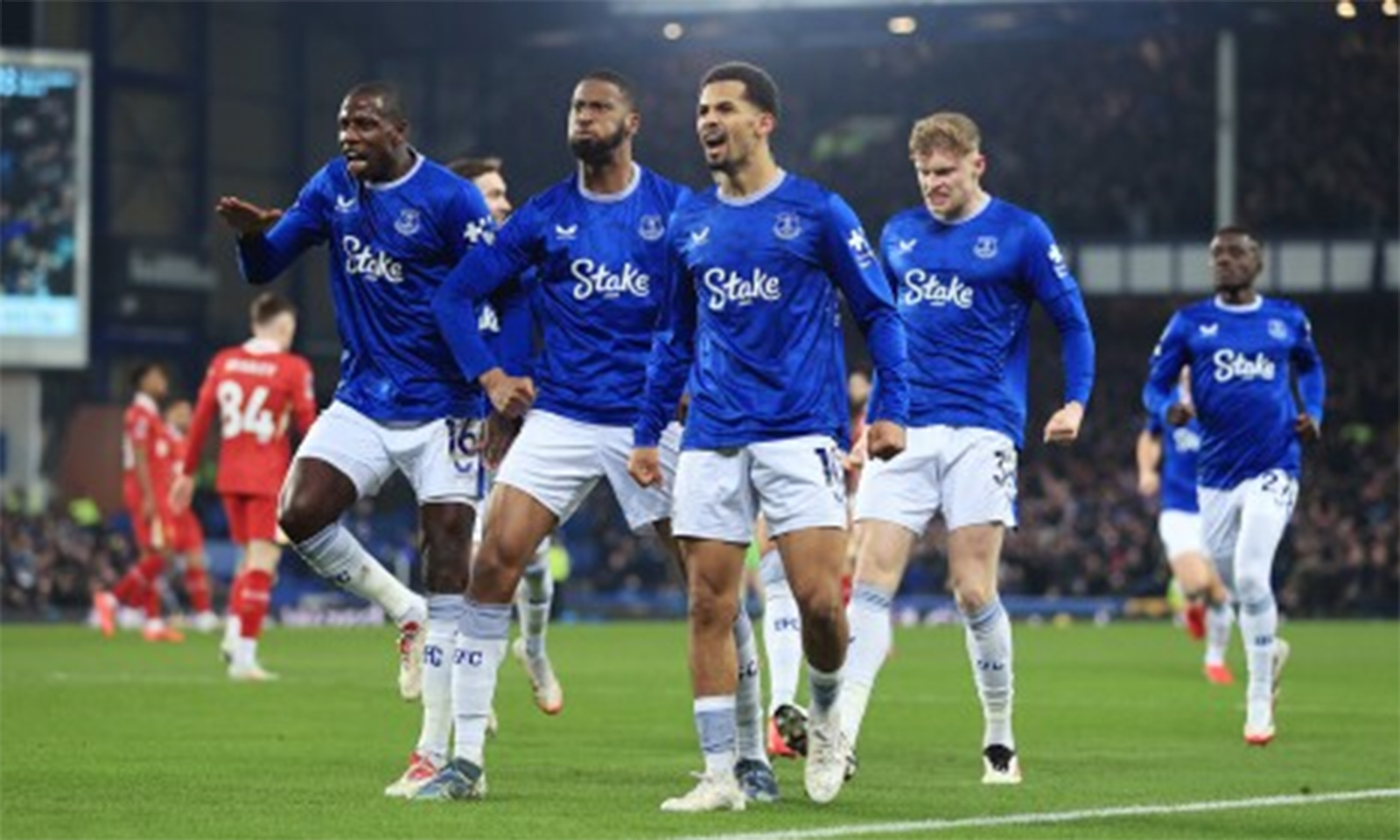
GOODISON Park is one of the grand sporting theaters, and the final Merseyside derby on Wednesday night played out at the old place and delivered the dramatic last act it deserved before the doors are finally locked.
The concluding scenes included a 98th-minute equaliser from James Tarkowski, only given after the stadium held its breath for several minutes while the video assistant referee checked for offside and a foul.
And then, when the goal was awarded to give Everton a deserved 2-2 draw, tempers boiled over with Abdoulaye Doucoure needlessly taunting Liverpool’s fans, to the annoyance of Curtis Jones, sparking a full-on brawl that saw both sent off.
They were followed by Liverpool head coach Arne Slot and his assistant Sipke Hulshoff, who were furious with referee Michael Oliver, as this derby descended into chaos with police, stewards, and players all involved.
Everton manager David Moyes said, “It was mayhem all game. A bit of a throwback. The place was boiling hot all night. It was an incredible atmosphere.”
And in those few words, Moyes summed up the special magic of Goodison Park.
It may be creaking in parts, but on fiery nights like this with Liverpool as the opposition, it literally rocks — parts of it really do — with a glorious support and naked hostility like few other places in world football.
Everton may have that state-of-the-art new stadium on Bramley-Moore Dock ready to go next season, but it is an almost impossible task to replicate what they have in this place — ramshackle and old-fashioned in parts, admittedly, hence the need to move. Goodison Park was never going to go quietly, but this was something else — full of emotion, passion and all the wild scenes of indiscipline Moyes called “toing and froing” after the final whistle.
It may have pillars blocking some of the views, but it still has so much that will be missed with its towering Main Stand and the criss-cross designs on the stands that are the trademark of famous Scottish architect Archibald Leitch. It has a heart and soul no architect can design.
Hours before the game, the special feel around this last derby was in the air as supporters gathered around the statue commemorating William Ralph “Dixie” Dean, standing on the corner of Walton Lane and Goodison Road.
It was the same around Everton’s Holy Trinity statue celebrating the legendary 1970 title-winning trio of Alan Ball, Howard Kendall, and Colin Harvey opposite St Luke the Evangelist church and on the corner of Gwladys Street.
Those monuments will stay in place as part of the Goodison Legacy Project, which is hoped will regenerate the local community in future years, Everton feeling this is only right because Goodison Park is the place where their greatest feats were performed. And Goodison’s centre circle will also stay as green space, not least because the area is regarded as sacrosanct, as this is where the ashes of Dean, Everton’s record scorer with 383 goals who is still in the history books for scoring 60 league goals in 1927-28, were scattered following his death at a Merseyside derby in March 1980. — BBC Sport/Sports Reporter.