Online Reporter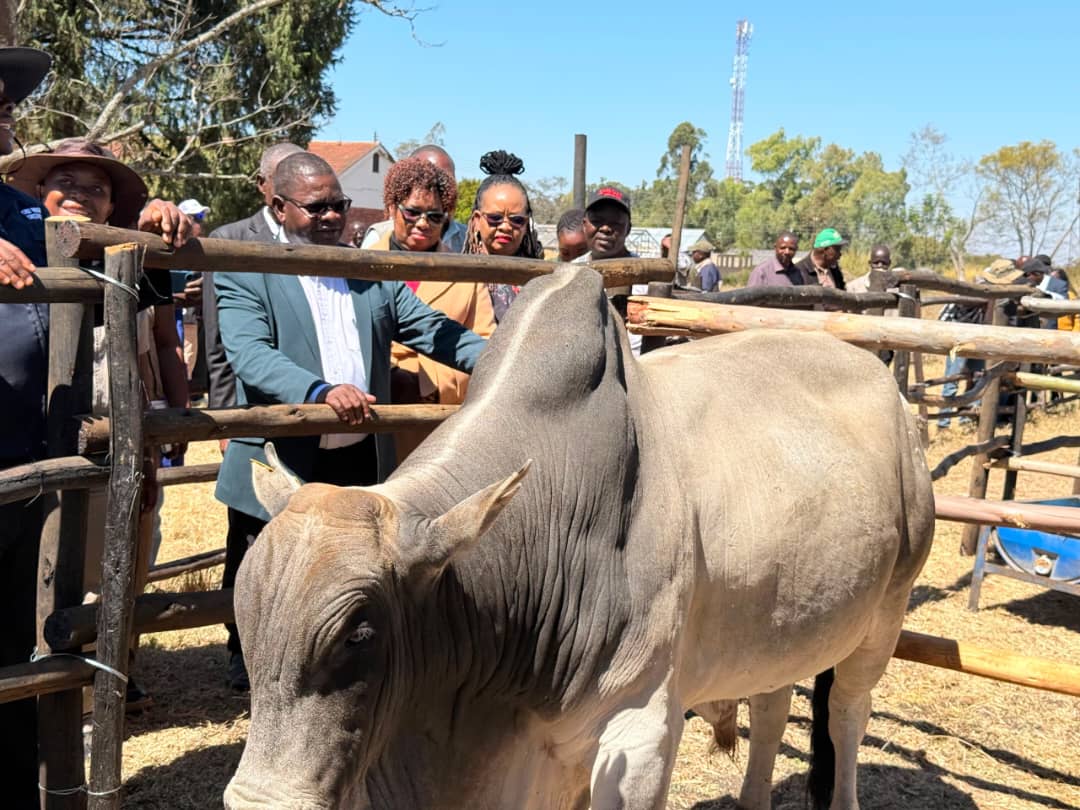
Nyasha Simbisai, Agriculture Correspondent
Government is stepping up efforts to harness Zimbabwe’s indigenous cattle genetics to build a climate-resilient national herd, with breeds such as Mashona and Tuli being prioritised as the country targets six million cattle by 2030.
Speaking at a livestock genetics workshop at Grasslands Research Institute in Marondera today, Agriculture, Mechanisation and Water Resources Development Permanent Secretary Professor Obert Jiri said genetic improvement was critical to building a productive and climate-resilient livestock sector.
Zimbabwe currently has about 5,7 million cattle and is steadily moving towards the six-million target, but Prof Jiri said increasing numbers alone would not guarantee a productive herd.
“As we modernise our agriculture, we must, of course, look at the livestock industry as well. We know our challenges in Zimbabwe in terms of livestock. First is the feed, second is the health and the third, of course, is the genetics.
“In the countryside, our livestock looks smaller. That is because of years of inbreeding. That is what we must correct,” he said.
Prof Jiri said Zimbabwe already possessed valuable genetic resources in indigenous and adapted breeds, with Government now focused on identifying superior animals and multiplying their genetics for wider distribution to farmers.
“Our Mashona cattle — we still have good genetics of those, and we must be able to disseminate that and ensure that our herd is improved in the rural areas,” he said.
Tuli, Boran and Nguni cattle also offer adaptable genetic resources, while commercial farmers with adequate feed and management systems can utilise breeds such as Brahman and Limousin.
Grasslands Research Institute head Mr Accadius Tegere said indigenous breeds could provide farmers with an important buffer against climate shocks because they had developed the ability to survive under local conditions.
He singled out Mashona cattle for their fertility, disease resistance, easy calving and ability to maintain body condition when grazing deteriorates.
“With the challenge of climate change, over time, the best cattle a farmer can employ are cattle which are resistant to diseases, cattle which can withstand drought in terms of nutrition.
“The Mashona is one of the best animals which can turn even rough roughage, poor grass and poor-quality grass into beef,” he said.
Mr Tegere said Zimbabwe should go beyond simply keeping indigenous cattle and systematically document, preserve and protect their genetics through stud breeding, creating opportunities for the country to develop its livestock genetics into an exportable resource.
“We need to harness, preserve and also look at the issue of intellectual property rights,” he said.
“It is a very big opportunity. We really need to safeguard our genetics because they are going to be in demand to address the challenges of climate change.”
Government is also strengthening artificial insemination infrastructure, with genetic centres at Mazowe and Matopos collecting semen from selected animals for multiplication and distribution.
Prof Jiri said Government was also exploring embryo transfer technology to accelerate the movement of superior genetics into areas where cattle quality had deteriorated.
Tuli breeder and Zimbabwe Herd Book chairperson Ms Anne Cooke said climate pressures strengthened the case for using cattle adapted to Zimbabwean conditions.
“They are much more tolerant of disease. They cope better, they grow faster and they produce more calves, and that means more money for me. At the end of the day, that is why we are farmers — we want to make money,” she said.
Prof Jiri said improved genetics could also support beef exports once animal-health challenges, particularly foot-and-mouth disease, were addressed.
“The beef that is produced in Zimbabwe is of extremely high quality. Our beef is in demand,” he said.
The Government, Prof Jiri said, was pursuing measures, including compartmentalisation, that could allow beef from eligible production zones to access international markets.