Chronicle Editor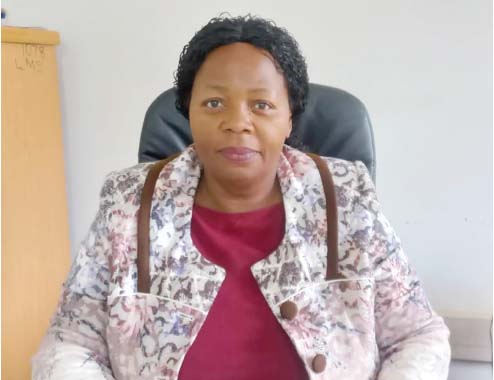
Sukulwenkosi Dube-Matutu, [email protected]
GOVERNMENT has raised a red flag over non-governmental organisations (NGOs) and civic society organisations, which are creating parallel programmes when implementing developmental programmes in communities.
Speaking during a recent Matabeleland South Provincial Development Committee meeting in Gwanda, Permanent Secretary for Matabeleland South Provincial Affairs and Devolution, Mrs Latiso Dlamini-Maseko said NGOs and civic society organisations have come under scrutiny for implementing projects without liaising with relevant Government ministries.
She urged NGOs and civic society organisations to complement Government and desist from creating parallel programmes, which have resulted in some form of duplication.
Mrs Dlamini-Maseko said operations of partners will be closely supervised by the monitoring and evaluation committee in the Office of the President and Cabinet.
“District Development Coordinators have to ensure that NGOs and civic society organisations adhere to requirements before entering into a Memorandum of Understanding with them. We are also saying memoranda of understanding signed between Government departments and should be revised to reflect set requirements,” she said.
“A specific needs assessment survey should be conducted per district or ward to motivate specific intervention. Interventions must be time bound with an annual calendar year to enable adequate monitoring and evaluation.”
Mrs Dlamini-Maseko said NGOs and their implementing partners should be vetted by the security department before an MOU is signed.
“NGOs are expected to complement Government departments in their activities rather than create parallel programmes. NGOs and civic society organisations must display satisfactory technical capacity in the areas where they intend to partner with Government departments,” she said.
“Any deviation from above can result in the programmes being reviewed and MoUs terminated.”
Mrs Dlamini Maseko also took NGOs and civic society organisations to task for implementing projects that the targeted beneficiaries cannot identify with.
“Some projects have been imposed on community members resulting in failure of beneficiaries to own the projects after the implementing partners would have left,” she said.
“This has seen some projects turning to white elephants. Some partners inform stakeholders at the inception of their projects but they do not come back with feedback during the implementation of the projects.”
Some NGOs and civil society organisations have reportedly been used as weapons of politicking by Western countries, forcing Government to tighten supervision on their programmes.
Mrs Dlamini-Maseko said District Development Coordinators have to ensure that NGOs and CSOs adhere to set requirements.
She said funding of a specific project should be commensurate with the scope of work intended.
Mrs Dlamini-Maseko said NGOs and civil society organisations will be expected to submit a statement of expenditure for the programmes they undertook in the preceding year together with the impact assessment reports.
She said all ongoing projects must be reviewed to ensure compliance with the 12 month programme for monitoring and evaluation.
Speaking at the recent 2023 United Nations Climate Change Conference (COP28) at Expo City, Dubai in the United Arab Emirates, President Mnangagwa said Zimbabwe is endowed with an array of vast natural resources, but lacks capital and technological expertise to fully exploit them.
He said Zimbabwe stood ready to welcome investors through Zimbabwe Investment Development Agency (Zida) which offers seamless processes to register and do business.
Government has identified private public partnerships as one of the key strategies to record significant development in the country.
The Second Republic has also created a conducive environment for ease of doing business to attract investment.–@DubeMatutu



 Online Reporter