Online Reporter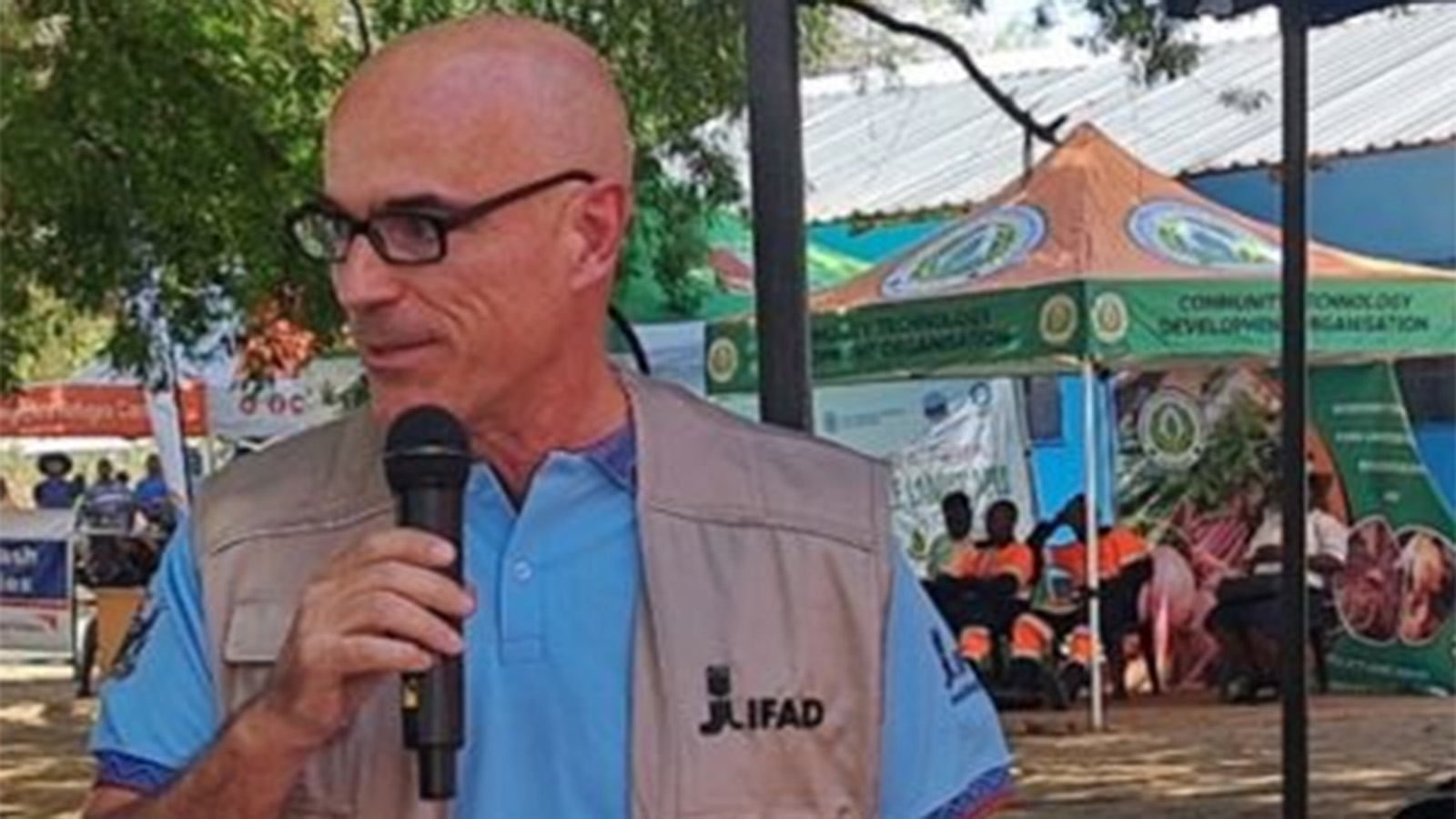
Ivan Zhakata-Herald Correspondent
Government has, in partnership with the International Fund for Agricultural Development, launched a pilot phase of the Food and Agriculture Resilience Mission Pillar 3, an initiative aimed at promoting post-harvest mechanisation across Zimbabwe’s sorghum value chain.
The pilot seeks to generate evidence and lessons for future private-sector investments, strengthen market links and support youth-led mechanisation service providers to improve productivity and income among smallholder farmers.
Speaking at the launch in Harare, IFAD Country Director Mr Francesco Rispoli said the initiative would not only test equipment that raised smallholder incomes but also work with value chain partners to make mechanisation more accessible and sustainable.
“Through FARM P3 we not only test equipment that raises smallholder incomes in Zimbabwe but also work with off-takers, financial institutions, youth entrepreneurs and farmers to build business models that create jobs and make mechanisation affordable, profitable and sustainable,” he said.
The one-year pilot will target about 6 000 smallholder farmers in high-potential sorghum-producing districts.
It will also identify and mentor at least 50 mechanisation service providers, including youth and lead farmers who will receive technical and financial support to develop viable agribusiness models.
IFAD senior value chain and agribusiness advisor Mr Alex Nyakatsapa said the pilot would address challenges that have constrained growth in the sorghum sector, including labour-intensive post-harvest processes and market mismatches between producers and buyers.
“Sorghum is central to Zimbabwe’s climate resilience, yet farmers struggle to scale up and markets remain untapped,” he said.
“By engaging private-sector partners from the start, the FARM P3 pilot opens a pathway to overcome these challenges and spread benefits across the entire supply chain.”
Mechanisation models to be tested include mobile threshers, transport solutions and no-till systems. These are expected to reduce the number of workers required per hectare from around 15 to just two or three operators while improving grain quality and competitiveness.
The FARM P3 pilot will work through public-private partnerships involving equipment suppliers, producer groups, financial institutions and off-takers, to ensure the models are market-driven and sustainable.
Launched by France under the Presidency of the Council of the European union and hosted by IFAD, FARM P3 is being piloted in Rwanda, Senegal, Sierra Leone and Zimbabwe to promote local food system resilience and reduce post-harvest losses.
In Zimbabwe, the project complements IFAD’s Smallholder Agriculture Cluster Project, implemented by the Ministry of Lands, Agriculture, Fisheries, Water and Rural Development, which supports market-oriented, climate-smart value chains across 18 districts.
The mechanisation pilot would build on SACP’s structures to create scalable, private-sector-led models that strengthen rural economies and enhance national food security.