George Maponga recently in CHIVI
AS climate change continues to batter Zimbabwe’s dry regions, a new innovation centre is demonstrating how indigenous knowledge and modern technology can be combined to build resilient, income-generating agricultural systems.
The Innovation Centre for Dryland Agriculture (ICEDA), being developed by Great Zimbabwe University (GZU) in Nzviyo village near the Mhandamabwe Business Centre, is fast emerging as a model for rural industrialisation, with the potential to transform livelihoods for more than 30 000 farmers in Chivi, Chirumhanzu and surrounding districts.
The centre, which is nearing completion, integrates research, production, processing and marketing of climate-resilient products such as traditional grains, honey, indigenous fish and free-range chickens.
Local farmers are at the heart of the model, supplying raw materials under structured contracts after receiving training and support from the university.
President Mnangagwa is expected to commission the facility around August this year.
ICEDA is a practical expression of the Government’s Education 5.0 policy, which redefines the role of universities to include not only teaching, research and community service, but also innovation and industrialisation.
Under this framework, institutions of higher learning are expected to produce goods and services that directly address community challenges while contributing to national economic growth.
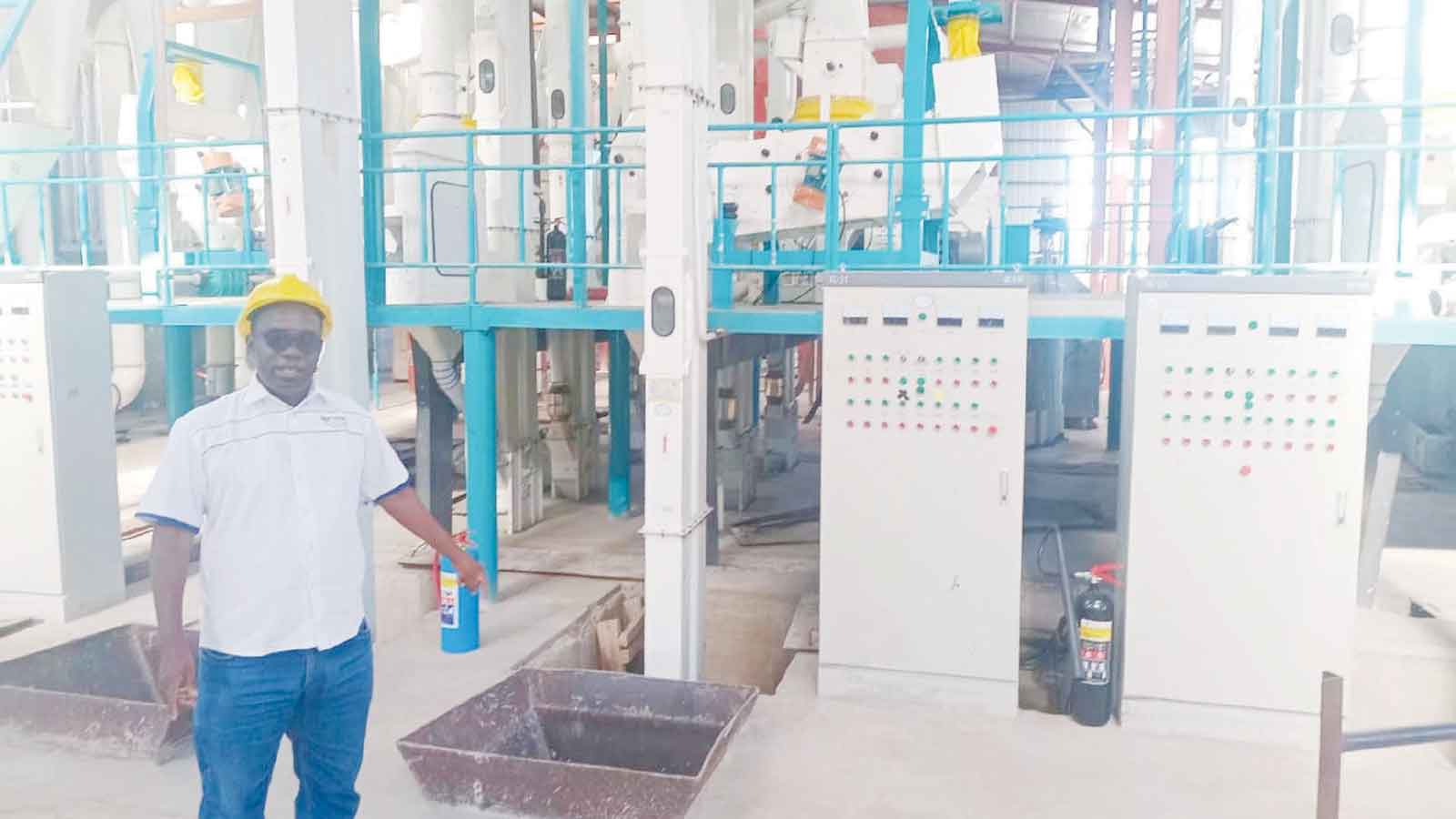
At the core of the project is a state-of-the-art milling plant with a capacity to process up to 150 tonnes of maize and traditional grains mealie meal per day.
Designed to replicate traditional processing methods such as threshing and roasting, the plant combines indigenous practices with modern technology to produce high-quality, nutritious mealie meal.
Branded “Guyo rekwaChivi”, the facility is expected to process about 20 000 tonnes of pearl millet (mhunga), finger millet (rukweza) and sorghum (mapfunde) annually at full capacity.
The final product, including blended mealie-meal varieties, will be packaged in various sizes and sold under GZU’s Afriblend brand.
Apart from grain processing, ICEDA is also driving aquaculture through a fish breeding project focused on indigenous species. The initiative will supply fish for commercial sale while producing fingerlings to support fish farming in surrounding communities.
Indigenous knowledge systems
GZU executive dean of agriculture and engineering Dr Xavier Poshiwa said the centre is designed to harness indigenous knowledge systems that have sustained communities in arid regions for generations.
“We are implementing the Government directive to use locally available resources to drive modernisation and industrialisation of rural areas, in line with Vision 2030,” he said.
“Our focus is on promoting healthy diets and improving incomes by tapping into traditional knowledge systems that have enabled communities to survive in harsh climatic conditions in arid areas like Chivi, Chiredzi, Buhera and others.”
Dr Poshiwa said ICEDA has already created more than 66 direct jobs while equipping local farmers with skills and integrating them into formal value chains.
“We are contracting farmers to produce millet, sorghum, honey, free-range chickens and fish, which we buy at competitive prices for value addition and supply to formal markets,” he said.
“Our goal is massification — ensuring that products from rural farmers reach supermarkets and shops after value addition.”
The university plans to expand its reach by working with farmers across Masvingo province and parts of Midlands and Manicaland, supported by a network of aggregation centres where produce can be collected and, in some cases, processed closer to the source. Infrastructure development at ICEDA is also gathering pace.
An abattoir with a capacity to process 3 000 free-range chickens daily is nearing completion, opening opportunities for exports to niche markets such as Angola.
The milling plant, constructed with the involvement of students from Masvingo Polytechnic, is equipped with modern dehullers, threshers and roasters.
GZU has also begun manufacturing some of this equipment locally for deployment to satellite centres.
“As a university, we are also happy that we have started manufacturing our own dehullers, thrashers and roasters that will be deployed to the first three aggregation centres to be opened in Gutu, Buhera and here in Chivi,” said Dr Poshiwa.
ICEDA is further contributing to skills development among rural youth through the Integrated Skills Outreach Programme, under which at least 70 young people have already received practical training and certification.
Plans are also underway to establish laboratories that will host international researchers focusing on crop and livestock varieties suited to arid environments.
Once fully operational, the facility is expected to evolve into an international centre of excellence in dryland agriculture.
For local communities, the impact is already evident.
Mrs Margaret Mutambu of Nzviyo village, who has worked at the centre for the past five years, said the project has created employment and improved livelihoods.
“I want to thank President Mnangagwa for driving a programme to build innovation centres such as this one that help create jobs and also produce healthy food for our communities and the whole nation,” she said.
Mr Francis Shamva of Denga village described ICEDA as a game-changer for traditional grain farmers, while 85-year-old beekeeper Sekuru Solomon Mugwegwe said the initiative has given him an opportunity to pass on his knowledge to younger generations.
“I am grateful for the chance to teach young people beekeeping skills so that this knowledge is not lost,” he said.
GZU Vice Chancellor Professor Rungano Zvobgo said the centre is already delivering tangible benefits.
“The centre has not just created jobs for our local people but it has also given them a place to supply their farming produce and earn some income, and this aligns with the vision of the President of leaving no one and no place behind,” he said.
He expressed confidence that the project would be completed in time for commissioning later this year, positioning ICEDA as a flagship model for sustainable agriculture and rural industrialisation in Zimbabwe.