Online Reporter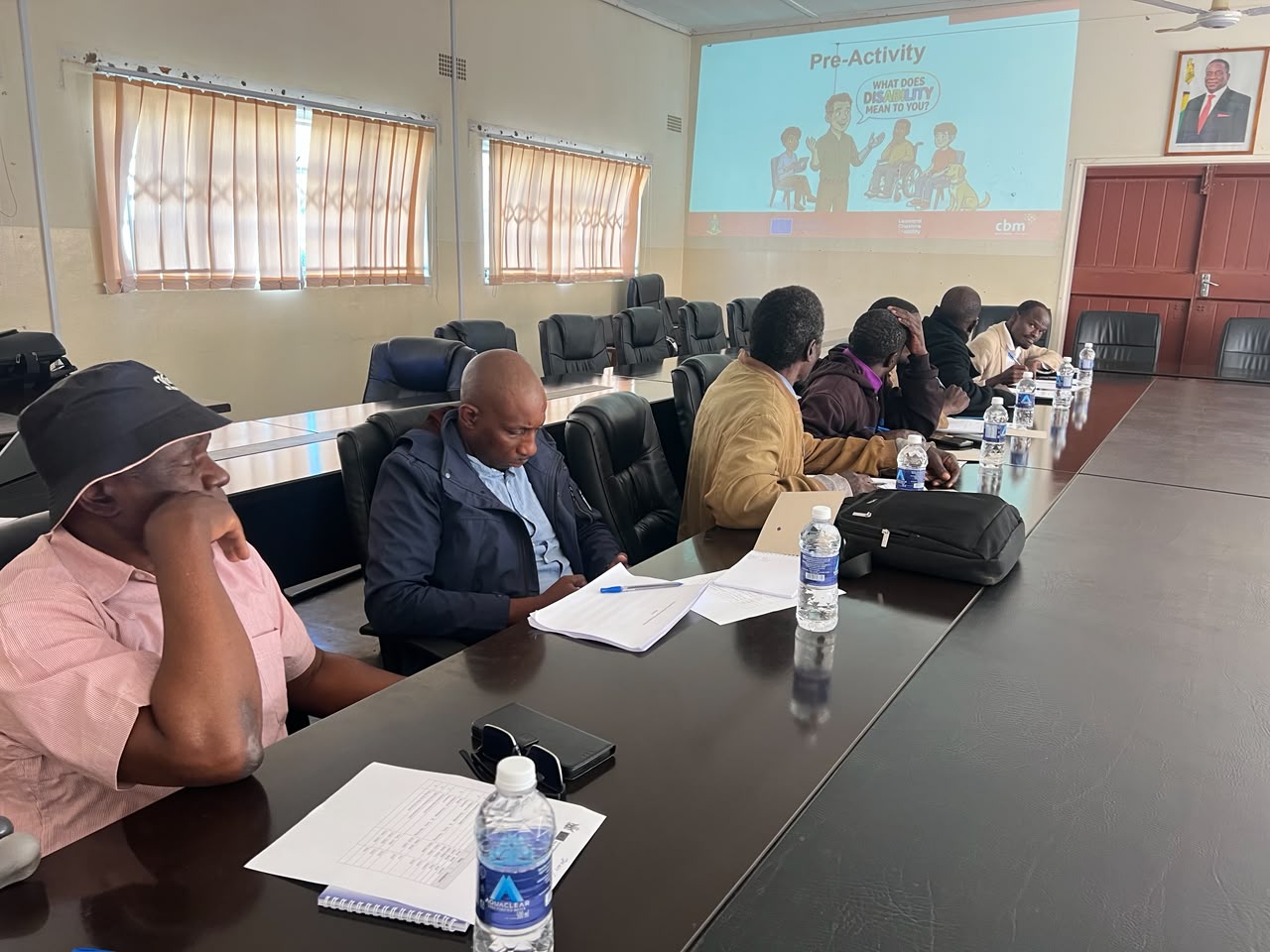
Sukulwenkosi Dube-Matutu
[email protected]
STAKEHOLDERS in Gwanda District are undergoing training on disability inclusion in disaster risk reduction as part of efforts to ensure disaster preparedness and response systems cater for the needs of persons with disabilities.
The two-day training programme, which started on Wednesday and ends on Thursday, is being conducted by Leonard Cheshire Disability Zimbabwe (LCDZ).
Under the programme, members of the Gwanda District Civil Protection Committee are being trained on Disability Inclusive Disaster Risk Reduction (DiDRR), while ward disability committees and Ward Disaster Risk Reduction committees are receiving training on indigenous knowledge systems and adapted early warning systems.
LCDZ is a non-profit disability services organisation dedicated to creating a society where every person with a disability enjoys their rights and fulfils their potential.
With support from the European Union and CBM Global Ireland, LCDZ has partnered with Disability Rights Agenda for Transformation (DRAFT) to implement a three-year project aimed at strengthening disability rights advocacy.
The programme, titled Strengthening the Capacity and Functional Effectiveness of Organisations of Persons with Disabilities to Promote the Rights of Women and Youth with Disabilities, commenced in March 2025 and will run until February 2028.
The initiative seeks to enhance the civic participation and advocacy reach of six partner Organisations of Persons with Disabilities (OPDs) to ensure the fulfilment of disability rights at both local and national levels.
As part of efforts to strengthen disability-inclusive disaster risk management systems in Gwanda District, a series of capacity-building and planning activities targeting key disaster risk governance structures at district and ward level will be undertaken, with the training programme marking the first phase of implementation.
The trainings are expected to influence the District Civil Protection Committee to develop and adopt disability-inclusive district disaster risk management plans.
The ward-level training sessions will help identify, strengthen and document indigenous and adapted early warning systems that support the localisation of disaster preparedness initiatives.
The programme will also contribute towards the development of an adapted indigenous early warning systems guideline to advocate for the institutionalisation of disability-inclusive indigenous knowledge and disaster risk management practices within communities.
The initiative is expected to improve the participation of persons with disabilities in disaster preparedness, response and recovery processes while ensuring that no one is left behind during emergencies and natural disasters.