Online Reporter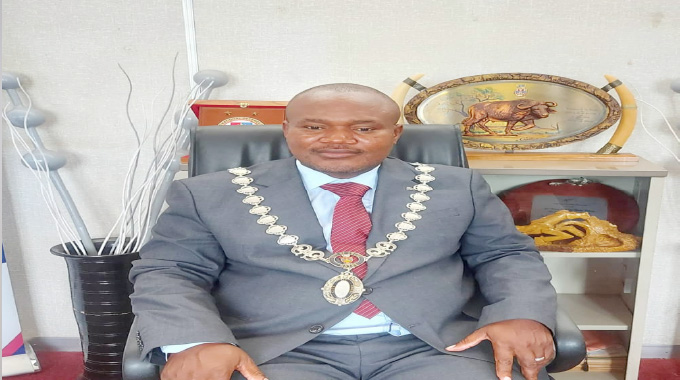
Patrick Chitumba, [email protected]
GWERU City Council has proposed a ZWG2,13 billion (US$71 million) budget for 2026, up from US$50,4 million this year, with the bulk of resources earmarked for improving water supply, roads, waste management and job creation.
City mayor, Councillor Martin Chivhoko said the city’s 2026 financial plan will be largely funded from council’s own revenue sources and reflects a shift from stabilisation to renewal.
“The total proposed budget for 2026 is ZWG2,13 billion, which translates to US$71 million, an increase from this year’s US$50,4 million.
“The 2026 plan shifts more resources into infrastructure, service rehabilitation and local economic development,” he said.
Clr Chivhoko said 10 percent of the budget will be dedicated to local economic development, targeting women, youth and small businesses to create sustainable livelihoods for residents.
“The total proposed budget for 2026 is ZWG 2,13 billion, which translates to US$71 million, an increase from this year’s US$50, 4 million. The 2026 plan shifts more resources into infrastructure, service rehabilitation and local economic development,” said Clr Chivhoko.
“While 2025 focused on stabilising services under difficult macroeconomic conditions, 2026 is about renewal, investing in water, roads, waste management and community-driven economic projects.”
Clr Chivhoko, however, noted that service delivery continues to be constrained by poor revenue collection. Between July and August 2025, collections averaged 40–50 percent, leaving the local authority with outstanding debtors of ZWG748 million, mostly from high-density households, Government departments, commercial enterprises and markets.
For instance, in July 2025, the local authority council billed ZWG110,6 million but only managed to collect ZWG75 million, leaving a ZWG35,6 million gap.
Despite these challenges, the city expects to raise ZWG1,62 billion from property rates, service charges, rentals, licenses and fees, with intergovernmental transfers – mainly road funds – contributing ZiG92,8 million. A planned land sale worth ZWG420 million has also been approved to balance the 2026 budget.
Clr Chivhoko said residents will be spared any major across-the-board tariff increases next year, although minor adjustments will be made to align some user charges with cost recovery.
“For example, there will be small indexation on waste collection tariffs and specific user fees, where subsidies are currently unsustainable,” he said.
Water and sewer infrastructure will receive ZWG54 million, targeting pump replacements at Gwenoro Dam, rehabilitation of treatment ponds, replacement of corroded steel pipes, automation of key pump stations and network repairs.
The council will also intensify its water-loss reduction programme through leak detection, pipe replacement, pressure management and prepaid metering in high-loss zones.
Roads have been allocated ZWG103 million for overlays, surfacing, culverts and drainage works, while waste management and landfill projects will receive ZWG60 million.
Health and social services, including clinics and laboratory upgrades, were allocated ZWG34,5 million.
On local economic development, ZWG213 million has been set aside for SME infrastructure, markets, revolving funds and skills development.
“This demonstrates a clear shift to capital investment that will improve service reliability and economic opportunity,” said Clr Chivhoko.
Gweru, has in recent years battled persistent water shortages, deteriorating roads, and ballooning debts that cripple service delivery.
The proposed 2026 budget comes at a time when urban councils across the country are under pressure to modernise services and create jobs in line with Vision 2030, which seeks to transform Zimbabwe into an upper middle-income economy within the next five years.