admin
admin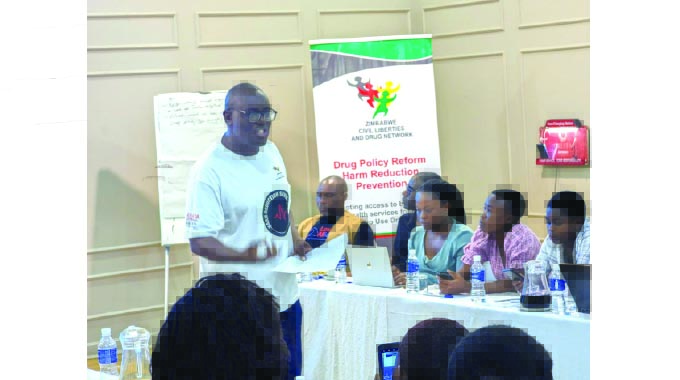
Catherine Murombenzi
Health Correspondent
Is the liver a neglected organ? Is there a thought spared on the liver from the effects of all that we eat and drink?
According to the World Health Organisation (WHO) data published in 2020, liver disease deaths in Zimbabwe reached 1 941 or 1,79 percent of total deaths.
The age adjusted death rate is 28.41 per 100 000 of population.
Zimbabwe ranks 59 in the world liver disease burden. With substance and drug abuse growing at an alarming rate, the numbers could have shot up since 2020.
Globally, April 19 is Liver Awareness Day.
For many people, the day passed by like any Friday on the calendar.
The few who marked the day did well, as the liver is one organ that requires awareness.
With some non-medical personnel in the dark of the uses and care of the vital organ, April 19 should stand out like World Aids Day, marked on December 1, TB Day (March 24) and Women’s Day (March 8).
World Liver Day concentrates around spreading awareness of liver-related issues and diseases. The liver is one of the crucial body organs, responsible for immunity, digestion and metabolism.
With more awareness campaigns, we stand to see better outcomes in the near future.
Good care of that vital organ is usually neglected and only begins after a liver ailment is diagnosed. At times, it is one moment too late. A stitch in time saves nine.
In an interview, public health specialist and physician, Dr Johannes Marisa, spoke on the importance of the liver, emphasising the dos and don’ts.
“The liver is an important organ with multiple functions, which include metabolism of fats, proteins, carbohydrates, detoxification, production of bile, secretion of bilirubin, enzyme activation etc.
“The liver is a vital organ of our bodies that can get affected by behavioural determinants of health like alcoholism, smoking, unprotected sexual intercourse, with catastrophic results.
“There are many causes of liver pathology, chief among them is alcoholism, which can give fulminant liver cirrhosis, viral infections like Hepatitis A, B, C, D, E, which can end in cirrhosis if not contained, abuse of substances and drugs, medical drugs, if not taken correctly, or even when one fails to tolerate a particular drug, can get toxic.
“It is thus prudent for people with high risk of liver damage to undergo routine tests, like Liver Function (LFT) Tests, to detect disease in its infancy, Ultra Sound Scans (USS) can be of use in cases of metastatic disease.
“Patients with jaundice should be investigated quickly to make sure there is no liver involvement.
“Serious damage to the liver can result in ripple effect on the kidneys, causing what is called hepato-renal syndrome, hence the need to check the liver constantly,” said Dr Marisa.
He elaborated on the liver’s power to correct damage.
“Yes the liver can self-repair if the damage is not advanced, especially when there is no scarring, fibrosis or cirrhosis, the liver regenerates. Sadly, in most instances, patients report to doctors when the damage is very advanced with little or no chance to save the vital organ,” he added.
With substance abuse cases on the rise, some youths are succumbing to liver damage through drug and substance abuse.
Mr Wilson Box, director of an organisation that seeks to alleviate drug abuse Zimbabwe, Civil Liberties and Drug Network (ZCLDN), advocates for harm reduction for drug and injecting users. His mantra is “Support, Don’t Punish”.
His organisation is a member of the Southern Africa Drug Policy and Harm Reduction Network.
“In harm reduction, we are looking at public policies, programmes and interventions. Programming entails compassion, fighting stigma and drug use education.
“It involves drug users’ communities being at the centre, with stakeholders helping in alleviating the scourge.
“In harm reduction, you don’t have to force anyone to stop using drugs, but to educate them. Highlighting the risks and dangers is pivotal to the success of harm reduction. Criminalisation drives drug users into hiding.
“Principles applied should encourage a user to come forward. Very few drug users are coming out.
“The punishing requires softening and reforming policies and laws to be non-criminalising. The users fear being arrested, and policy reform is needed urgently. As organisations working in harm reduction, we don’t judge, we don’t use coercion, we don’t stigmatise and discriminate, and we don’t use force anyone to stop using drugs. Rather, we educate by giving the benefits. We put justice and human rights as pillars in harm reduction.
“The access to anti-retroviral therapy, (ART) is important if we are to end AIDS. Access is one of the co pillars of harm reduction. The WHO approves 12 interventions, access to ART services, sexual reproductive health and rights (SRHR), agonistic therapy, sexual transmitted infections (STI) testing services, treatment, care and support, education, among many important others.
“Nurses and peer-led outreach programmes are important to harm reduction. Overdose management is effective, too. Harm reduction has proved effective in lessening the negative impacts of drug misuse. It’s high time we assist those using and injecting drugs in a compassionate manner,” he added.
Mr Box emphasised the unity of purpose being a cog in the wheel.
Drug users come from families and communities. Therefore, everyone should come on board.
“Everyone, families, the teachers, churches, community leaders and everyone influential needs to be aware of this important intervention. Our current policy, where drug users are arrested, will result in them hiding and continuing underground. It’s a no win-win for everyone if we continue on that route,” said Mr Box.
Harm reduction is a strategy meant to raise awareness.
With the internal organs being the most ravished if harm reduction is not drummed up, we stand to lose a sizeable number of our youths to substance and drug misuse.
Feedback: [email protected]


 Online Reporter